

How eSIM Technology Is Changing International Travel
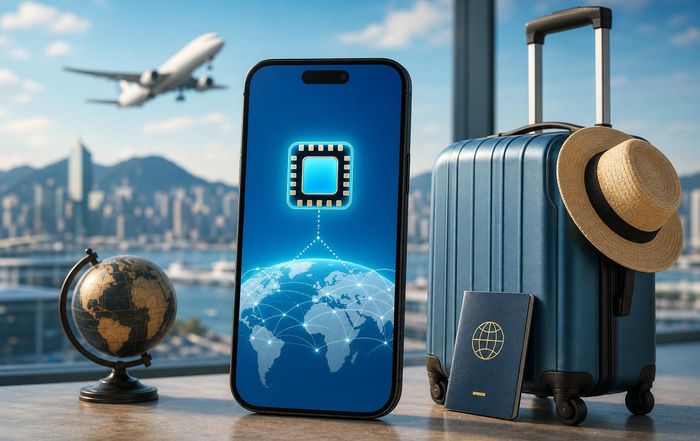
For decades, international travel has come with an annoying ritual: hunting for a local SIM card at the airport, swapping tiny plastic chips in and out of your phone, and hoping roaming charges do not explode your bill. eSIM-the embedded, programmable SIM built directly into many newer phones and devices-is quietly rewriting that experience. Instead of juggling physical cards, travelers can now download mobile plans like apps, often within minutes of landing.
This shift is not just about convenience. eSIM is reshaping how people stay connected across borders, how mobile operators compete, and how travelers budget, plan, and move around the world. Understanding what eSIM is, what it can and cannot do, and how to use it safely can make a noticeable difference on your next international trip.
What exactly is an eSIM?
A traditional SIM (Subscriber Identity Module) is a removable plastic card that stores your mobile identity and lets a network authenticate you. An eSIM (embedded SIM) is the same concept, but built into the device's hardware as a tiny chip that can be remotely programmed with different "profiles" from mobile operators.
The specifications are overseen by the GSMA, the global association of mobile operators, which defines how eSIM profiles are securely downloaded, stored, and managed. Instead of walking into a shop to buy a physical SIM, a traveler can scan a QR code, tap through a carrier app, or even purchase a plan directly from their phone's settings to activate service in another country.
Most major smartphone manufacturers now support eSIM on many models, including recent devices from Apple, Samsung, and Google. Several smartwatches, tablets, and some laptops also include eSIM capabilities, which is particularly attractive for frequent travelers who want connectivity on multiple devices without carrying multiple SIM cards.
Why eSIM matters for international travelers
For people crossing borders, the advantages of eSIM are less abstract and more practical. They touch almost every stage of the journey, from planning at home to moving between countries.
One of the biggest changes is the ability to set up local connectivity before departure. Instead of arriving in a new country with no data, travelers can buy an eSIM plan from an international provider or local operator in advance and activate it the moment their plane lands. This makes it easier to use maps, ride-hailing apps, translation tools, and digital boarding passes immediately, without relying on airport Wi-Fi or expensive roaming. For readers planning complex itineraries, this can be as important as choosing the right insurance or researching local health guidance, which we cover in more depth on our travel and health pages.
Flexibility is another major benefit. Many eSIM-enabled phones allow multiple profiles to be stored at once, even if only one or two can be active simultaneously. A traveler can keep their home number for calls and SMS while using a local data-only eSIM, or switch between regional plans when moving across borders in Europe or Southeast Asia. This is particularly useful for digital nomads, international students, and remote workers who need to manage connectivity across several countries without constantly swapping physical cards.
Cost control also improves. International roaming from home carriers has historically been expensive and unpredictable. With eSIM, travelers can compare prepaid plans from local operators and global providers, often seeing clear data allowances and durations upfront. Regulatory bodies like the European Commission and consumer groups such as Which? in the UK have highlighted how transparent prepaid options can help avoid "bill shock" from unexpected roaming fees. While prices vary widely, the ability to switch quickly between providers puts more leverage in the hands of consumers than in the era of locked-in roaming.
Finally, eSIM can be a quiet but important safety tool. Having reliable mobile data from the moment you arrive makes it easier to access local emergency numbers, maps, and health resources such as the World Health Organization or a national health service like NHS in the UK. For solo travelers, families, and people with health conditions, that immediate, dependable connectivity can be as reassuring as a well-researched itinerary or a carefully chosen neighborhood.
How eSIM compares with physical SIM cards and roaming
To understand the real impact of eSIM on international travel, it helps to compare it with the main alternatives travelers have used for years: physical local SIMs and home-network roaming.
Physical local SIM cards are often still the cheapest way to get data in a given country, especially for long stays. Buying directly from a local operator such as Orange, Vodafone, or T-Mobile can yield generous data bundles at domestic prices. But this approach comes with friction: finding a store that is open, presenting identification where required, dealing with language barriers, and physically swapping SIMs in and out of your phone. For people passing through several countries in a short time, repeating this process can be cumbersome and time-consuming.
Traditional roaming-using your home SIM abroad-is the most convenient but often the most expensive. Some operators have introduced roaming bundles or "roam like at home" offers in specific regions, particularly across the European Union. However, outside those zones, per-megabyte charges or daily roaming passes can add up quickly, especially for data-heavy activities like navigation, video calls, or sharing media. Consumer watchdogs and regulators, including the Federal Communications Commission in the United States, have repeatedly warned about unexpected roaming costs for international travelers.
eSIM sits between these two options. It offers near-roaming convenience with something closer to local-SIM pricing, particularly if travelers are willing to compare offers from both local and global eSIM providers. Instead of waiting in line at a kiosk, a traveler might open a carrier app, choose a regional plan, and activate it over Wi-Fi in minutes. For those interested in how this fits into wider lifestyle choices-like working remotely or structuring longer stays abroad-our lifestyle and world sections often explore the broader implications of staying connected across borders.
Practical benefits on the road
Once on the ground, the day-to-day advantages of eSIM become clearer. Many travelers now treat connectivity as a utility, like electricity or water, and eSIM helps it function more reliably and predictably.
Navigation is a prime example. Access to real-time mapping and traffic information from services like Google Maps or Apple Maps depends on a stable data connection. With eSIM, there is no need to wait until you find a café with Wi-Fi; your phone can connect to a local network as soon as the plane's doors open. This is particularly valuable in unfamiliar cities, where being able to see transit options, walking routes, and live updates can reduce both stress and the likelihood of getting lost.
Communication also becomes more flexible. Many travelers now rely on internet-based messaging and calling apps-such as WhatsApp, Signal, or WeChat-rather than traditional SMS or voice minutes. A data-only eSIM is usually enough to keep these services running, which can be cheaper than buying full voice and text packages. At the same time, keeping a home SIM active (physically or via a second eSIM where supported) allows important two-factor authentication messages from banks, airlines, or government services to continue arriving.
For people working on the move, eSIM can help sustain a remote work routine. Stable mobile data makes it easier to tether a laptop, join video conferences, upload files, and coordinate across time zones. This aligns with the growth of "work from anywhere" lifestyles and longer stays in destinations offering digital nomad visas. Topics like these connect naturally with broader conversations around business, society, and innovation, where connectivity is increasingly a basic requirement rather than a luxury.
Environmental and ethical angles: is eSIM more sustainable?
Beyond personal convenience, eSIM raises interesting questions about sustainability and resource use. Every traditional SIM card is a small piece of plastic with a metal chip, packaged in larger plastic carriers and cardboard, and shipped around the world. According to industry estimates shared by organizations such as the GSMA, billions of SIM cards are produced each year. While each card is tiny, the cumulative environmental footprint-from manufacturing to transport to disposal-is significant.
eSIM eliminates much of this physical waste. Profiles are delivered digitally; there is no plastic card, no packaging, and no need for distribution networks to move physical inventory across borders. For large operators and global travel eSIM providers, this can reduce logistical complexity and associated emissions. It also fits into broader efforts by telecom companies to lower their environmental impact, which are tracked and analyzed by groups like the International Telecommunication Union and environmental NGOs.
However, eSIM is not automatically a complete environmental solution. Devices still need to be manufactured, powered, and eventually recycled, and eSIM may encourage more frequent plan switching or device upgrades for some users. From an ethical standpoint, there are also questions about digital inclusion: not everyone can afford recent eSIM-enabled smartphones, and in some regions, physical SIMs remain the only accessible option. For readers interested in the intersection of technology, environment, and ethics, our dedicated environment and ethics coverage often explores how innovations like eSIM sit within larger sustainability debates.
Limitations, risks, and where eSIM still falls short
Despite its advantages, eSIM is not a universal fix for all connectivity problems. Understanding its limitations helps travelers avoid frustration and make better choices.
The most obvious limitation is device compatibility. Many newer smartphones support eSIM, but older models do not, and support can differ significantly between regions. Some manufacturers enable eSIM only on devices sold in specific markets, and certain budget phones omit it entirely. Travelers should check official resources from their device maker-such as apple.com, samsung.com, or google.com-to confirm whether their model supports eSIM and how many profiles it can store or run simultaneously.
Coverage is another constraint. While eSIM adoption is growing, not every mobile operator in every country offers eSIM plans, and not all plans are available to visitors. In some markets, regulations require in-person identity verification or local addresses, which can limit access for short-term tourists. International eSIM providers can bridge some of these gaps by reselling capacity from local networks, but that may come at a premium or with restrictions like lower priority during peak usage periods.
Security and privacy considerations also matter. eSIM profiles are governed by secure standards defined by the GSMA, and, in many ways, are harder to steal or clone than physical SIMs. However, the ability to provision SIM profiles remotely means that account security with your chosen provider becomes crucial. Using strong passwords, enabling multi-factor authentication where available, and buying plans from reputable operators or well-known aggregators can reduce the risk of fraud or unauthorized changes. Official regulators and consumer-protection agencies, such as the Federal Trade Commission in the United States or equivalents in other countries, provide guidance on avoiding scams related to mobile services and identity theft.
There are also practical quirks. Switching between multiple eSIM profiles can be confusing at first, especially on devices with mixed physical-SIM and eSIM setups. Travelers may accidentally disable their home SIM and miss important calls or messages. Some banking and government apps may behave unpredictably if phone numbers or primary SIMs change. In countries with strict telecom regulations or heavy content controls, eSIM plans may be more tightly managed or monitored, which raises further questions about privacy and access to information.
How to prepare and use eSIM effectively when you travel
For travelers considering eSIM, a bit of preparation can make the experience smoother and help avoid common pitfalls. This planning sits alongside other pre-departure tasks like understanding local customs, reading up on cultural norms, or checking visa and health requirements, which are covered across our culture and education sections.
The first step is to confirm device compatibility and network lock status. Even if your phone supports eSIM, it may be locked to a specific carrier, which can prevent the use of third-party eSIM plans. Checking with your home operator-via their official website or customer service-before departure can save time and frustration. Many carriers outline eSIM support and unlocking policies on their sites, including major international operators like att.com, verizon.com, vodafone.com, and orange.com.
Next, it is useful to compare plan types. Travelers can choose between local eSIMs from operators in their destination country and regional or global eSIMs from specialized providers. Local options often offer the best value for a single country, while regional plans may be more convenient for multi-country trips. Looking at data allowances, validity periods, hotspot/tethering rules, and whether incoming calls or SMS are included can help match a plan to your travel style. Independent consumer-advice outlets such as consumerreports.org or which.co.uk often publish general guidance on evaluating mobile offers, though they may not list every specific travel eSIM brand.
Timing matters as well. Many providers allow travelers to purchase and install an eSIM profile before departure, then activate it on a specific date or upon first connection in the destination country. This reduces the need to rely on airport Wi-Fi and can be reassuring for those arriving late at night or in unfamiliar places. Keeping your home SIM active initially, at least for SMS, can also help with receiving one-time passwords or airline updates.
Finally, it is wise to test and monitor usage. Once the eSIM is active, checking that calls, messages, and data are routing through the intended plan can prevent unexpected charges. Most operating systems offer tools to track data usage per SIM or per app, which can help avoid running out of data mid-trip. For longer journeys, travelers may find it helpful to revisit their connectivity setup as they move, adjusting plans and providers in the same way they might adapt accommodation, transport, or even dietary choices-topics that intersect with our 100% unique coverage of food, sustainable travel, and broader technology trends.
How eSIM could shape the next era of global travel
eSIM technology sits at the intersection of travel, telecoms, and digital life. As more devices support it and more operators embrace it, the experience of crossing borders is likely to change further. Travelers may see more seamless regional plans, where connectivity follows them across multiple countries without manual intervention, or dynamic pricing models where data costs adjust in near-real time based on network conditions. Some airlines and travel platforms are already experimenting with bundling eSIM data packages alongside flights or hotel bookings, integrating connectivity into the broader travel product.
At the same time, regulators and policymakers-from the European Commission to national telecom authorities-are watching how eSIM affects competition, consumer choice, and security. Their decisions on issues like unlocking requirements, roaming rules, and interoperability will shape how quickly and how fairly eSIM benefits are distributed. In regions where telecom markets are concentrated or heavily regulated, eSIM could either open doors to new entrants and cheaper options or reinforce existing power structures, depending on how rules evolve.
For individual travelers, the most immediate impact is simpler: fewer plastic cards, fewer queues at airport kiosks, and more control over how and when to connect. As with many technologies, the value of eSIM depends on how thoughtfully it is used-choosing reputable providers, understanding the limitations, and integrating it into a broader approach to responsible, sustainable, and informed travel.
In that sense, eSIM is not just a technical upgrade. It is part of a wider shift toward travel that is more connected, more flexible, and potentially more sustainable, if the environmental and ethical questions are handled well. For anyone planning to cross borders in the coming years, it is worth understanding how this small, invisible chip can quietly reshape the way the world stays in touch.