

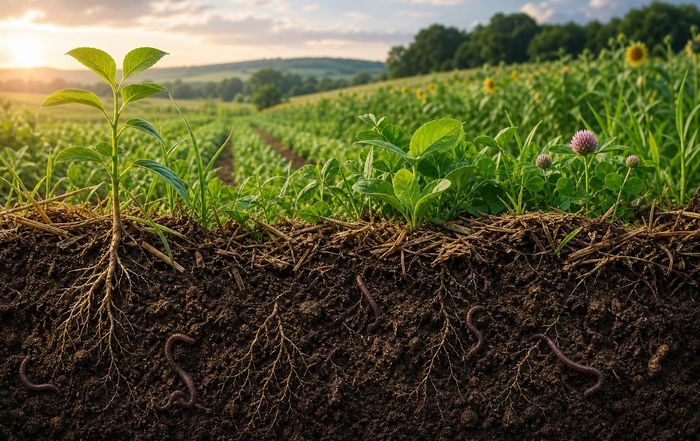
How Regenerative Agriculture Rebuilds Healthy Soil
A New Relationship With the Ground Beneath Our Feet
Across continents, from the vineyards of France to the rangelands of Australia and the prairies of the United States, farmers, scientists, and communities are quietly rewriting the story of how food is grown. At the centre of this transformation is regenerative agriculture, a holistic approach that treats soil not as an inert medium for crops, but as a living ecosystem whose health underpins food security, climate resilience, biodiversity, and human wellbeing. For travelling readers checking us out, who follow the daily changing intersections of travel, culture, health, lifestyle, environment, technology, and business, regenerative agriculture offers a powerful lens through which to understand how the world is changing in 2026 and how individuals and communities can participate in that change.
Regenerative agriculture is not a single technique or certification; rather, it is a set of principles and locally adapted practices designed to restore soil structure, increase organic matter, enhance biodiversity, and strengthen the resilience of farming systems to droughts, floods, and market shocks. While the term gained wider public recognition over the past decade, many of its core ideas draw on Indigenous knowledge, traditional land stewardship, and agroecology, now being re-examined through the tools of modern soil science and climate research. As organisations such as FAO and IPCC have increasingly emphasised the centrality of soil health to climate and food policy, regenerative agriculture has moved from the margins of experimental farms to the mainstream of national strategies and corporate commitments, although its definitions and metrics remain the subject of active debate.
For WorldsDoor, which explores how global trends shape everyday life, regenerative agriculture provides a compelling example of innovation that is at once technological and cultural, local and global, rooted in science yet deeply human in its implications for how people eat, travel, work, and care for the landscapes they call home.
What Makes Soil "Healthy" - And Why It Matters
To understand how regenerative agriculture rebuilds healthy soil, it is useful to clarify what soil health means in scientific and practical terms. Soil health, sometimes described as soil quality, generally refers to the capacity of soil to function as a living ecosystem that sustains plants, animals, and humans. Institutions such as the United States Department of Agriculture (USDA) emphasise characteristics such as soil structure, organic matter content, biological activity, nutrient cycling, water infiltration, and resistance to erosion as indicators of soil health. These features are interlinked: soils rich in organic matter tend to hold more water, host more diverse microbial communities, and resist compaction and erosion, while degraded soils are more prone to runoff, nutrient loss, and crop failure.
Researchers at bodies like the Food and Agriculture Organization of the United Nations (FAO) have warned that a large share of the world's agricultural soils are being degraded through erosion, salinisation, nutrient depletion, and loss of organic carbon. While exact figures vary depending on methodology and region, there is broad agreement that intensive tillage, monoculture cropping, overuse of synthetic inputs, and deforestation have contributed significantly to this decline. This degradation has implications well beyond the farm gate: it affects water quality downstream, biodiversity in surrounding landscapes, greenhouse gas emissions to the atmosphere, and the nutritional quality and security of food supplies. Those who wish to explore more about soil as a global resource can consult reports on global soil health and degradation.
Healthy soil is also increasingly recognised as a critical ally in climate mitigation and adaptation. Studies synthesised by the Intergovernmental Panel on Climate Change (IPCC) indicate that land-based measures, including improved cropland and grazing land management, agroforestry, and restoration of degraded soils, can contribute significantly to reducing net greenhouse gas emissions while enhancing resilience to climate extremes. Although scientists continue to debate the precise magnitude and permanence of soil carbon sequestration under different conditions, there is growing consensus that rebuilding soil organic matter is beneficial for both climate and agriculture, even as expectations must be tempered by local realities and careful monitoring. Readers interested in the broader climate context can review IPCC assessments on land use, land-use change and forestry.
The Principles of Regenerative Agriculture
Regenerative agriculture does not have a universally accepted formal definition, which has led to some confusion and, at times, concern about "greenwashing" when the term is adopted in marketing without clear criteria. Nevertheless, a set of widely referenced principles has emerged across research institutions, farmer networks, and organisations such as The Rodale Institute, Regenerative Organic Alliance, and The Nature Conservancy, all of which emphasise working with ecological processes rather than against them.
Commonly cited principles include minimising soil disturbance by reducing or eliminating intensive tillage, maintaining soil cover through living plants or residues to protect against erosion and temperature extremes, increasing plant diversity via crop rotations, cover crops, and intercropping to support diverse soil biota and break pest cycles, integrating livestock in ways that mimic natural grazing patterns to cycle nutrients and stimulate plant growth, and reducing reliance on synthetic inputs by enhancing natural nutrient cycling and biological pest control. These principles are implemented differently in a vineyard in Italy, a smallholder rice field in Thailand, or a mixed grain-livestock farm in Canada, but the underlying goal remains to build soil organic matter and biodiversity while maintaining or improving productivity.
As with any evolving field, there are ongoing discussions within the scientific and farming communities about how best to measure regenerative outcomes, how to balance short-term yields with long-term soil gains, and how to ensure that regenerative systems remain inclusive and accessible to farmers of different scales and regions. The Food and Land Use Coalition and research groups such as World Resources Institute (WRI) have highlighted both the promise and the need for robust, transparent metrics in their work on sustainable food and land systems. For WorldsDoor readers, these debates underscore that regenerative agriculture is not a fixed destination but a process of learning, experimentation, and adaptation.
How Practices Rebuild Soil Structure and Organic Matter
At the heart of regenerative agriculture's impact on soil is the rebuilding of soil structure and organic matter, which together determine how soil behaves under stress. Soil structure refers to the arrangement of mineral particles and organic matter into aggregates, which create pores for air and water movement. When soil is frequently tilled, compacted by heavy machinery, or left bare, these aggregates can break down, leading to crusting, poor infiltration, and increased erosion. Regenerative practices that reduce disturbance and keep living roots in the ground encourage the formation of stable aggregates, often through the action of fungal hyphae and microbial exudates that bind soil particles together.
Cover crops, which are grown not primarily for harvest but to protect and enrich the soil, play a particularly important role. Leguminous cover crops such as clover or vetch can fix atmospheric nitrogen, reducing the need for synthetic fertilisers, while deep-rooted species such as radish can break up compacted layers and improve infiltration. Diverse cover crop mixes provide a range of root architectures and exudates, feeding a broader spectrum of soil organisms and enhancing nutrient cycling. Research summarised by institutions like USDA's Agricultural Research Service and Europe's Joint Research Centre has documented improvements in soil organic carbon, infiltration rates, and erosion control under multi-species cover cropping systems, though the magnitude of benefits varies with climate, soil type, and management.
Reduced or no-till systems further protect soil structure, especially when combined with cover crops. By leaving residues on the surface and avoiding repeated mechanical disturbance, farmers can reduce erosion and fuel use and, over time, often observe increased earthworm activity and improved water retention. However, there is ongoing discussion among scientists and practitioners about trade-offs, particularly in systems where reduced tillage is accompanied by increased herbicide use, and about the time it takes for benefits to manifest in different climates. Meta-analyses in journals such as Nature and Global Change Biology have reported that no-till alone does not always increase soil carbon in deeper layers, underscoring the importance of combining multiple regenerative practices rather than relying on a single intervention.
Livestock integration, when carefully managed, can also contribute to soil rebuilding. Adaptive multi-paddock or rotational grazing systems, in which animals are moved frequently to allow pastures to recover, can stimulate plant growth, distribute manure more evenly, and increase root mass, thereby enhancing soil organic matter. Organisations like Savory Institute have promoted holistic planned grazing, while researchers have examined its outcomes across different rangeland contexts. Some studies report improved ground cover, water infiltration, and soil carbon in well-managed rotational systems compared with continuous grazing, though others note that outcomes are highly site-specific and depend on stocking rates, rest periods, and climate. This diversity of findings highlights the necessity of context-aware management and long-term monitoring rather than assuming uniform benefits.
For WorldsDoor, the key insight is that regenerative agriculture rebuilds soil not through a single silver bullet but through a suite of practices that, when combined and adapted to local conditions, gradually restore the living fabric of the ground.
Soil Biology: The Invisible Engine of Regeneration
Below the surface, an extraordinary web of life drives the regeneration process. Bacteria, fungi, protozoa, nematodes, arthropods, and earthworms interact in complex food webs that decompose organic matter, cycle nutrients, and influence plant health. Mycorrhizal fungi form symbiotic relationships with plant roots, extending their reach for water and nutrients, while receiving carbon compounds in return. Rhizobia bacteria in legume root nodules fix atmospheric nitrogen, making it available to plants. Predatory organisms help regulate pathogens and pests, providing natural disease suppression.
Regenerative agriculture deliberately fosters this biological diversity by avoiding practices that disrupt microbial communities, such as excessive tillage and over-application of broad-spectrum agrochemicals, and by providing continuous food sources through root exudates and residues. Studies in soil microbiology, many published by institutions like CABI, CIRAD, and leading universities, have documented increased microbial biomass, enzyme activity, and functional diversity in soils under conservation and regenerative practices compared with conventionally managed counterparts. These biological changes can translate into improved nutrient use efficiency, reduced disease pressure, and greater resilience to environmental stress.
Although the science of the soil microbiome is still developing, and causal pathways between specific management practices and microbial outcomes remain an active research frontier, there is growing recognition that soil biology is the engine of regeneration. Initiatives such as the Global Soil Biodiversity Initiative and platforms like Soil Health Institute provide resources for those seeking to learn more about soil biodiversity and ecosystem function. For readers of WorldsDoor, this invisible world offers a powerful reminder that seemingly modest changes in farming practices can ripple through entire ecosystems.
Human Health, Nutrition, and Lifestyle Connections
Healthy soil is not only an environmental or agronomic concern; it is intimately linked to human health, nutrition, and lifestyle, themes that resonate strongly with the WorldsDoor community. Soil influences the nutrient content of crops, the presence of beneficial phytochemicals, and the microbiological environment in which food is grown. While the relationship between soil management and human health is complex and still being clarified by research, several lines of evidence suggest that diversified, soil-building systems can support more nutrient-dense diets and reduce exposure to certain contaminants.
Some observational studies and trials, for example, have found differences in certain micronutrient and phytochemical levels between crops grown under organic or conservation-oriented systems and those grown under more intensive conventional systems, though results vary by crop, soil type, and management, and scientists caution against broad generalisations. Organisations such as Harvard T.H. Chan School of Public Health and World Health Organization (WHO) have highlighted the importance of diverse, plant-rich diets for health, while also acknowledging that environmental sustainability and nutritional quality must be pursued together, rather than in isolation. Readers can explore perspectives on healthy and sustainable diets.
Regenerative agriculture also intersects with lifestyle in more experiential ways. Farm-to-table movements, regenerative agritourism, and community-supported agriculture schemes invite people to reconnect with the sources of their food, often emphasising soil health as a foundation of flavour and wellbeing. Travellers seeking immersive experiences increasingly visit vineyards, orchards, and ranches that practice regenerative methods, whether in California's wine country, Tuscany's hills, or New Zealand's pastoral landscapes, combining travel with education and gastronomy. For those planning their next journey, WorldsDoor offers curated insights into such experiences on its travel and food pages, where soil-conscious destinations and culinary traditions are explored in depth.
In urban settings, regenerative principles inspire community gardens, rooftop farms, and school projects that teach children about composting, biodiversity, and seasonal eating. These initiatives not only improve access to fresh produce but also foster mental wellbeing and social cohesion, aligning with the broader themes discussed in WorldsDoor's health and lifestyle sections. As cities in Europe, North America, and Asia experiment with urban agriculture policies, soil health becomes a bridge between environmental goals and public health agendas.
Climate, Biodiversity, and the Wider Environment
In an era of intensifying climate impacts, regenerative agriculture's potential to enhance resilience is a major driver of interest among policymakers, scientists, and farmers. Soils with higher organic matter content can hold more water, reducing runoff during heavy rains and providing a buffer during droughts. This capacity is particularly relevant in regions such as the American Midwest, Southern Europe, parts of Australia, and many African and Asian agricultural zones, where extreme weather events are becoming more frequent and severe. Reports from organisations like UN Environment Programme (UNEP) and World Meteorological Organization (WMO) have underscored the importance of climate-resilient agriculture as part of broader adaptation strategies.
Regenerative systems often also support greater above-ground biodiversity. Fields that include hedgerows, flower strips, agroforestry components, and diversified rotations provide habitat and food resources for pollinators, birds, and beneficial insects. Conservation groups such as WWF and BirdLife International have documented declines in farmland biodiversity under intensive monoculture systems, while highlighting agroecological and regenerative approaches as pathways to reverse these trends. While not all regenerative farms incorporate the same level of landscape diversification, there is a growing body of case studies from Europe, North America, and Latin America demonstrating how integrating trees, perennial vegetation, and wildlife corridors can enhance both ecological and economic outcomes.
At the same time, it is important to note that regenerative agriculture is not a substitute for rapid decarbonisation in energy, transport, and industry. Soil carbon sequestration has biophysical limits and can be reversed if land management changes or extreme events occur. Scientists at institutions like Oxford University, CICERO, and Lawrence Berkeley National Laboratory have cautioned against over-reliance on soil carbon offsets as a primary climate solution, while still recognising the multiple co-benefits of soil restoration. For those interested in the intersection of agriculture and climate solutions, resources from Project Drawdown provide accessible overviews of land-based climate strategies.
WorldsDoor's environment and sustainable sections regularly explore these nuances, emphasising that genuinely sustainable transformation rests on aligning soil health with broader planetary boundaries.
Technology, Data, and Innovation in the Field
Although regenerative agriculture is often associated with low-tech, nature-based practices, it is also an area of significant technological and scientific innovation. Remote sensing, satellite imagery, and in-field sensors are increasingly used to monitor soil moisture, vegetation cover, and indicators of soil health at scale, enabling more precise and adaptive management. Companies and research groups are developing tools to measure soil organic carbon, microbial activity, and other parameters more accurately and affordably, which is essential for verifying outcomes in both public policies and private-sector initiatives.
Digital platforms and decision-support tools allow farmers to model the impacts of different rotations, cover crop mixes, and grazing regimes on soil and profitability, drawing on big data and machine learning. In regions such as the United States, Europe, and Australia, collaborations between universities, extension services, and tech firms are testing how artificial intelligence can guide regenerative transitions while respecting farmer knowledge and local context. Organisations like CGIAR and European Commission's Horizon Europe programme support research on climate-smart and regenerative agriculture, seeking to integrate cutting-edge science with farmer-led innovation.
At the same time, technology is not a panacea, and issues of data ownership, accessibility, and equity are central to the ethical deployment of digital tools. Smallholder farmers in Africa, Asia, and Latin America, who often manage some of the world's most biodiverse and carbon-rich landscapes, may face barriers to accessing advanced technologies, even as their traditional practices embody many regenerative principles. Ensuring that innovation serves diverse farming communities, rather than deepening existing inequalities, is a core concern for organisations working at the intersection of agriculture, ethics, and development. WorldsDoor's rather academic technology, innovation, and ethics pages provide ongoing coverage of how these questions are unfolding across different regions.
Economics, Business, and Global Food Systems
For regenerative agriculture to scale meaningfully, it must make economic sense for farmers, supply chains, and consumers. Transitioning away from input-intensive models often requires upfront investment in new equipment, learning, and temporary yield fluctuations, even if long-term profitability improves through reduced input costs, diversified income streams, and enhanced resilience. Financial institutions, insurers, and food companies are increasingly recognising the material risks of soil degradation and climate impacts, and some are beginning to support regenerative transitions through loans, incentives, and procurement commitments.
Major food and beverage companies, including several global brands, have announced regenerative agriculture targets across their supply chains, pledging to work with farmers to implement soil-building practices on millions of hectares. Independent evaluations by organisations such as Rainforest Alliance, Sustainability Consortium, and academic researchers have stressed the importance of transparent criteria, farmer inclusion, and third-party verification to ensure that such commitments translate into genuine improvements rather than marketing claims. Policy frameworks in regions like the European Union, North America, and parts of Asia are also evolving, with some governments introducing subsidies, tax incentives, or technical assistance for soil health and regenerative practices.
From a consumer perspective, interest in environmentally and socially responsible food is growing, though price sensitivity and access remain significant constraints in many markets. Labelling schemes, storytelling, and direct-to-consumer models allow some regenerative producers to capture price premiums, but there is ongoing debate about how to ensure that the benefits of healthier soils, cleaner water, and more resilient landscapes are equitably shared, rather than limited to niche markets. Organisations like EAT Foundation and World Economic Forum have convened dialogues on transforming food systems, highlighting regenerative agriculture as one pathway among several to align nutrition, environment, and livelihoods.
WorldsDoor's business and world educational sections regularly track how these economic and policy shifts are playing out from the United States and Europe to Asia, Africa, and South America, reflecting the platform's global perspective and its focus on practical, positive developments.
Culture, Education, and the Regenerative Mindset
Beyond techniques and markets, regenerative agriculture embodies a cultural and ethical shift in how societies relate to land. It invites a move from extractive thinking, in which soil is viewed primarily as a resource to be exploited, to a stewardship mindset that recognises interdependence among humans, other species, and ecosystems. This shift resonates with many Indigenous and local knowledge systems that have long emphasised reciprocity, respect, and long-term care in land management.
Educational institutions, from primary schools to universities, are increasingly incorporating soil health and regenerative principles into curricula. Agricultural colleges in the United States, United Kingdom, Germany, Australia, and other countries offer courses and field programs on agroecology and regenerative systems, while online platforms and farmer-to-farmer networks share practical knowledge across borders. Initiatives such as UNESCO's Education for Sustainable Development highlight the importance of integrating ecological literacy into broader educational frameworks, encouraging learners to see connections between soil, climate, culture, and justice.
For WorldsDoor, whose culture, society, and education key sections explore how values and ideas travel across regions, regenerative agriculture is emblematic of a broader cultural movement that seeks to align prosperity with planetary health. It brings together farmers in Brazil experimenting with syntropic agroforestry, communities in Kenya restoring degraded rangelands, vintners in France adopting cover crops between vines, and urban gardeners in Singapore building compost from food scraps, all contributing in distinct yet related ways to rebuilding the living ground.
A Doorway to Regeneration
As the world navigates the challenges and opportunities of 2026, regenerative agriculture offers not a simple solution but a hopeful and practical pathway toward healthier soils, communities, and ecosystems. Its strength lies in its grounding in ecological processes, its adaptability across climates and cultures, and its capacity to connect seemingly disparate domains: science and tradition, local practice and global policy, food and climate, economics and ethics.
For active online readers of WorldsDoor, this topic is more than an abstract policy debate; it is an invitation to consider how everyday choices - from the food placed on the table and the destinations selected for travel to the businesses supported and the stories shared - can either reinforce or transform the systems that shape the planet's soils. By learning about regenerative practices, supporting farmers and organisations committed to genuine soil health, and engaging in conversations that bridge disciplines and regions, individuals can participate in a quiet but profound shift already underway beneath our feet.
WorldsDoor will continue to follow and highlight this transformation across its interconnected topic domains of environment, sustainable futures, innovation, and beyond, opening doors to a world in which regeneration, rather than depletion, defines humanity's relationship with the land.