

How Cultural Landscapes Shape Regional Identity in a Connected World
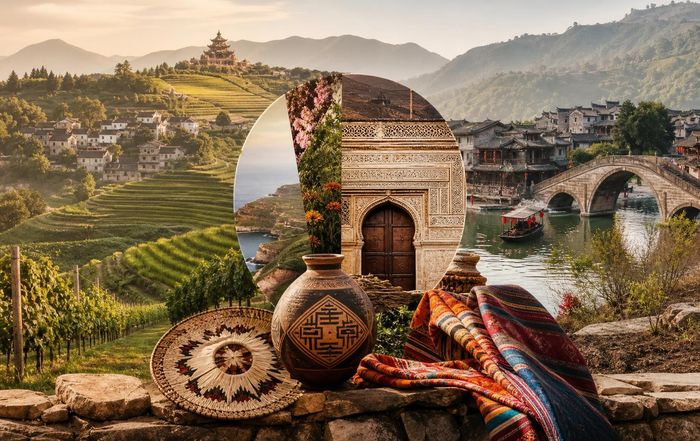
Human communities have always read their stories in the land. From terraced rice fields in Southeast Asia to vineyards in Italy and urban waterfronts in North America, cultural landscapes do more than frame daily life; they encode memory, values, and aspirations. As WorldsDoor opens windows onto travel, culture, environment, and innovation for a global audience, the question of how landscapes shape regional identity has never been more relevant, especially in an era when digital connectivity can flatten differences even as it showcases them.
Scholars, planners, and local communities increasingly recognize that cultural landscapes are not static backdrops but living tapestries woven from nature, built environments, and intangible heritage. Understanding this interplay is essential for anyone seeking to travel more thoughtfully, invest more responsibly, or simply make sense of how places come to feel like "home."
Defining Cultural Landscapes: Where Nature and Culture Intertwine
The term "cultural landscape" has a precise meaning in heritage studies, yet it also resonates intuitively with travelers and residents. The UNESCO World Heritage Centre describes cultural landscapes as combined works of nature and humankind that express a long and intimate relationship between people and their environment. Readers can explore this definition in greater depth through UNESCO's overview of cultural landscapes, which highlights their diversity from sacred mountains to industrial sites.
This concept emerged strongly in international discourse during the late twentieth century, building on earlier work by geographers such as Carl O. Sauer, who argued that culture is the agent, the natural area the medium, and the cultural landscape the result. Today, organizations like ICOMOS and the International Union for Conservation of Nature (IUCN) emphasize that cultural landscapes encompass both tangible elements-architecture, fields, roads, water systems-and intangible dimensions such as language, rituals, music, and traditional ecological knowledge. The Council of Europe's European Landscape Convention similarly underscores that all landscapes, whether exceptional or ordinary, contribute to people's sense of identity and well-being, and its guidance on landscape and identity has influenced policy from Spain to Norway.
For WorldsDoor readers interested in how these definitions translate into everyday experience, the key insight is that when people say a place "feels" like Kyoto, Cape Town, or Vancouver, they are responding not only to architecture or scenery but to the layered interaction between human practices and the physical environment over time.
Memory, Meaning, and the Making of Regional Identity
Regional identity emerges when communities recognize shared characteristics that distinguish their area from others, and cultural landscapes are central to how those characteristics are perceived, narrated, and contested. Identity is not merely inherited; it is constantly reinterpreted through stories, policies, and daily routines.
In many regions, landscapes act as repositories of collective memory. The terraced hillsides of Italy's Cinque Terre, the canals of Amsterdam, and the stone-walled fields of Ireland each encode centuries of adaptation to climate, terrain, and economic change. The UNESCO inscription of the Cinque Terre cultural landscape emphasizes how human ingenuity shaped steep coastal terrain into productive vineyards, and how this adaptation, in turn, produced a distinctive regional character that visitors now seek out.
Cultural geographers note that people often use landscape features as shorthand for regional identity: the English Lake District's fells and stone barns, the rice paddies of Japan's satoyama, or the red earth of South Africa's Highveld. These images are reinforced through literature, film, and tourism marketing, but they also carry deeper emotional weight for local residents. The European Environment Agency has documented how landscapes support a sense of belonging and mental well-being, especially when people feel they have a voice in how their surroundings evolve. Readers can explore how landscapes contribute to quality of life and identity in Europe through the agency's thematic reports.
For WorldsDoor, which connects global audiences to stories of place, this interplay between memory and landscape underscores why regional identity cannot be reduced to a list of attractions; it is grounded in how generations have worked, celebrated, and sometimes struggled within specific environments.
Travel, Place Attachment, and the Responsible Visitor
International travel exposes visitors to cultural landscapes that may differ dramatically from their own, from the fjords of Norway to the temple complexes of Thailand. As mobility has increased, so has the risk that tourism can erode the very qualities that make a landscape distinctive. Yet when approached thoughtfully, travel can also strengthen local identity and support conservation.
The World Tourism Organization (UNWTO) has published guidelines on sustainable cultural tourism that encourage destinations to protect heritage while enabling communities to benefit economically. These principles are particularly relevant in cities like Barcelona or Venice, where the influx of visitors has raised concerns about overcrowding, housing pressures, and the commercialization of public space. Scholars writing in journals such as Tourism Management have documented how overtourism can displace local residents and alter cultural practices, thereby weakening regional identity even as global visibility increases.
At WorldsDoor, the travel section at worldsdoor.com/travel.html emphasizes deeper engagement with local cultures and environments, encouraging readers to look beyond iconic viewpoints and consider how their choices affect communities. Concepts such as "slow travel," which prioritize longer stays, local businesses, and public transport, align with the broader movement toward responsible tourism promoted by organizations like Responsible Travel and the Global Sustainable Tourism Council. The council's criteria for sustainable destinations highlight the importance of safeguarding cultural heritage and landscape character.
In regions as diverse as the Scottish Highlands, the rice terraces of the Philippine Cordilleras, and the wine routes of South Africa, community-based tourism initiatives are demonstrating that visitors can contribute to preserving local identity when they respect traditional land use patterns, support small-scale producers, and engage with cultural narratives presented by local guides rather than external intermediaries.
Health, Well-Being, and the Therapeutic Power of Landscapes
Cultural landscapes influence not only identity but also physical and mental health. Research in environmental psychology and public health has shown that access to green spaces, water bodies, and culturally meaningful places can reduce stress, encourage physical activity, and strengthen social ties. The World Health Organization (WHO) has highlighted the health benefits of urban green and blue spaces, particularly in dense cities where residents may lack private outdoor areas.
In North America and Europe, initiatives to create or restore urban parks, waterfront promenades, and community gardens often draw explicitly on local history and culture. For example, the transformation of New York City's High Line from an elevated railway into a linear park preserved elements of industrial heritage while providing new public space, influencing similar projects in cities from Seoul to Paris. Urban planners and public health researchers have noted that such projects can strengthen place attachment when they reflect local stories and involve community participation, rather than importing generic design templates.
For readers exploring WorldsDoor's health coverage at worldsdoor.com/health.html, the link between landscape and well-being underscores why conversations about healthy lifestyles increasingly extend beyond diet and exercise to include the quality of everyday environments. In regions like Scandinavia, concepts such as friluftsliv in Norway and allemansrätten in Sweden, which emphasize outdoor life and public access to nature, illustrate how cultural norms and legal frameworks intertwine with landscapes to shape both identity and health outcomes.
Urban Cultural Landscapes: Cities as Evolving Identities
While many people associate cultural landscapes with rural or traditional settings, cities are among the most dynamic examples of how built and natural environments encode regional identity. Urban skylines, waterfronts, street markets, and neighborhood patterns tell stories of migration, industry, and governance. In global hubs such as Singapore, Toronto, and Berlin, urban cultural landscapes reflect layered histories of colonialism, industrialization, and multicultural integration.
The United Nations Human Settlements Programme (UN-Habitat) emphasizes the role of public space and heritage in creating inclusive, resilient cities, and its guidance on public space and urban identity highlights how design decisions can either reinforce or erode local character. Meanwhile, the World Bank has documented cases where heritage-led urban regeneration in cities like Fez, Quito, and George Town has supported both economic revitalization and cultural continuity, as outlined in its reports on culture in sustainable development.
In many metropolitan regions, debates over gentrification, historic preservation, and urban renewal are essentially debates about whose identity the city should reflect. Neighborhoods such as London's Brixton, New York's Harlem, or Berlin's Kreuzberg illustrate how immigrant communities and subcultures imprint their own meanings onto existing urban fabrics, creating hybrid landscapes that evolve over decades. For WorldsDoor readers interested in culture at worldsdoor.com/culture.html, these examples demonstrate that regional identity is not monolithic; it is negotiated among groups with different histories, aspirations, and levels of power.
Indigenous and Traditional Landscapes: Custodians of Knowledge
Across continents, Indigenous and traditional communities maintain cultural landscapes that embody sophisticated ecological knowledge and spiritual relationships with land and water. From the First Nations of Canada's Pacific coast to Aboriginal communities in Australia, Sámi reindeer herders in northern Scandinavia, and Indigenous groups in the Amazon, these landscapes are often central to regional identity even when their custodians have faced historical marginalization.
The United Nations Permanent Forum on Indigenous Issues and the Convention on Biological Diversity have highlighted how Indigenous-managed territories often coincide with areas of high biodiversity, emphasizing that cultural diversity and biological diversity are interlinked. Readers can explore this connection further through the CBD's materials on traditional knowledge and biodiversity. In places like New Zealand, the recognition of Māori concepts such as kaitiakitanga (guardianship) has begun to influence national environmental policy, shaping how rivers, forests, and coastal areas are managed and narrated.
However, tensions remain between development pressures, resource extraction, and the rights of Indigenous peoples. Courts and international bodies have increasingly recognized the importance of free, prior, and informed consent, yet implementation varies widely. For regional identities in countries such as Brazil, Canada, and South Africa, the future of Indigenous cultural landscapes will significantly influence how these nations understand themselves at home and abroad.
At WorldsDoor, coverage of environment and society at worldsdoor.com/environment.html and worldsdoor.com/society.html can help readers follow these evolving conversations, which are reconfiguring national narratives from North America to Oceania.
Climate Change and the Transformation of Cultural Landscapes
Climate change is reshaping cultural landscapes in ways that are already altering regional identities. Rising sea levels threaten historic coastal settlements from the Netherlands to Bangladesh; changing precipitation patterns affect vineyards in France and grain belts in Canada; and melting glaciers are transforming the alpine environments that underpin tourism in Switzerland, Austria, and parts of South America.
The Intergovernmental Panel on Climate Change (IPCC) has documented these impacts in its assessment reports, including sections on impacts, adaptation, and vulnerability. Cultural heritage organizations such as ICCROM and the International Council on Monuments and Sites (ICOMOS) have launched initiatives to help communities adapt heritage sites and cultural landscapes to climate risks, emphasizing both physical protection and the preservation of intangible practices that may need to migrate or transform.
In regions like the Arctic, where Indigenous communities rely on ice-dependent practices, the loss of familiar landscapes is not only an environmental crisis but also an identity crisis. Similarly, small island states in the Pacific and Caribbean face the prospect of losing ancestral lands, graves, and sacred sites to erosion and storm surges. These changes challenge traditional notions of place-based identity and raise complex questions about how communities can maintain continuity when landscapes are forced to change.
For WorldsDoor readers exploring sustainability and innovation at worldsdoor.com/sustainable.html and worldsdoor.com/innovation.html, the emerging field of climate heritage offers examples of how communities from Italy's lagoon cities to Japan's coastal towns are experimenting with adaptive designs, digital documentation, and community-led planning to safeguard both heritage and livelihoods.
Technology, Digital Mapping, and the Virtual Sense of Place
Digital technology is transforming how people perceive and interact with cultural landscapes. High-resolution satellite imagery, virtual reality tours, and user-generated mapping platforms mean that individuals can explore distant regions without physically traveling, while residents can document their own neighborhoods in unprecedented detail.
Organizations such as Google Arts & Culture collaborate with museums and heritage bodies to create virtual exhibits of world heritage sites, and while these tools cannot replace embodied experience, they can broaden access and awareness. The Stanford Spatial History Project and similar initiatives use geospatial analysis to visualize historical changes in landscapes, enabling new forms of research and public engagement. Interested readers can explore examples of digital humanities and spatial history that reveal how railways, migration, or environmental policies have reshaped regions over time.
At the same time, social media platforms influence how landscapes are represented and consumed, sometimes encouraging homogenized "Instagrammable" views that overlook local complexity. Researchers in media and cultural studies have warned that such trends can compress diverse regions into a few iconic images, reinforcing stereotypes. Yet digital storytelling also enables local voices to challenge these simplifications, sharing nuanced perspectives on everyday life, environmental justice, and cultural practice.
For WorldsDoor, which curates stories across travel, lifestyle, and technology at worldsdoor.com/technology.html and worldsdoor.com/lifestyle.html, the challenge and opportunity lie in using digital tools to deepen, rather than flatten, the sense of place-highlighting underrepresented narratives and encouraging readers to see beyond surface aesthetics.
Food, Agriculture, and the Taste of Place
Culinary traditions are among the most tangible ways that cultural landscapes express regional identity. Terroir, a concept developed in French wine culture but now widely applied, encapsulates how soil, climate, and human practices give distinctive character to food and drink. From olive groves in Greece and Italy to maple syrup forests in Canada and rice paddies in Thailand, agricultural landscapes shape regional cuisines that, in turn, reinforce local identity and attract visitors.
The Food and Agriculture Organization (FAO) has created the Globally Important Agricultural Heritage Systems program to recognize landscapes where traditional farming supports biodiversity, food security, and cultural heritage. Examples include the rice-fish systems of China's Qingtian, the Andean potato terraces of Peru, and the dehesa agroforestry landscapes of Spain and Portugal. These systems illustrate how long-term stewardship can produce both ecological resilience and strong regional identities centered on distinctive foodways.
For WorldsDoor readers exploring culinary culture at worldsdoor.com/food.html, these landscapes demonstrate that tasting a region's specialties is also a way of engaging with its history and environmental context. Movements such as slow food, community-supported agriculture, and geographical indication labeling in the European Union all seek to protect the links between product, place, and culture, offering pathways for rural regions to sustain livelihoods while preserving identity.
Education, Ethics, and the Future of Cultural Landscapes
As societies navigate rapid urbanization, climate change, and technological disruption, education plays a crucial role in helping new generations understand and value cultural landscapes. Schools, universities, and informal learning programs increasingly incorporate place-based education, encouraging students to study local ecosystems, architectural heritage, and community histories. Organizations like UNESCO's Education for Sustainable Development program promote learning that connects culture, environment, and citizenship, helping young people see their surroundings as both inheritance and responsibility.
Ethical questions arise when decisions about landscapes pit economic development against cultural continuity, or when marginalized groups are excluded from planning processes. Debates over wind farms in scenic rural areas, mining projects in sacred sites, or luxury resorts in fragile coastal zones all revolve around whose values and identities are prioritized. International frameworks such as the UN Declaration on the Rights of Indigenous Peoples and national heritage laws provide some safeguards, but outcomes depend heavily on local governance and civic engagement.
At WorldsDoor, the sections on ethics and education at worldsdoor.com/ethics.html and worldsdoor.com/education.html offer spaces to reflect on these dilemmas and to highlight examples where communities have successfully negotiated balanced solutions. From German cities integrating industrial heritage into green infrastructure, to South Korean villages revitalizing traditional hanok architecture, to Brazilian communities defending quilombo territories, these stories show that cultural landscapes can evolve without losing their core identities when change is guided by inclusive dialogue and long-term vision.
A Shared Doorway to the World's Cultural Landscapes
Cultural landscapes are among humanity's most profound collective achievements, embodying the intricate interplay of environment, technology, belief, and creativity. They anchor regional identities in ways that resist easy replication, even in a globalized era when information and capital flow across borders at unprecedented speed. For travelers, citizens, and policymakers alike, recognizing the depth of these connections can transform how places are experienced and how decisions about land use, conservation, and development are made.
As WorldsDoor continues to explore travel, culture, health, lifestyle, environment, and innovation at worldsdoor.com, the platform stands as an invitation to engage with cultural landscapes not as passive scenery but as living texts. By listening to local voices, seeking out underrepresented narratives, and supporting practices that align economic opportunity with cultural and ecological stewardship, readers can help ensure that the world's diverse regions retain their distinctive identities while contributing to a shared global future.
In doing so, individuals and communities alike affirm that identity is not merely inherited from the past but actively shaped through present choices, inscribed in the fields, streets, coasts, and cityscapes that define everyday life. Cultural landscapes thus become both mirror and compass: reflecting who people have been, and guiding who they might yet become.