

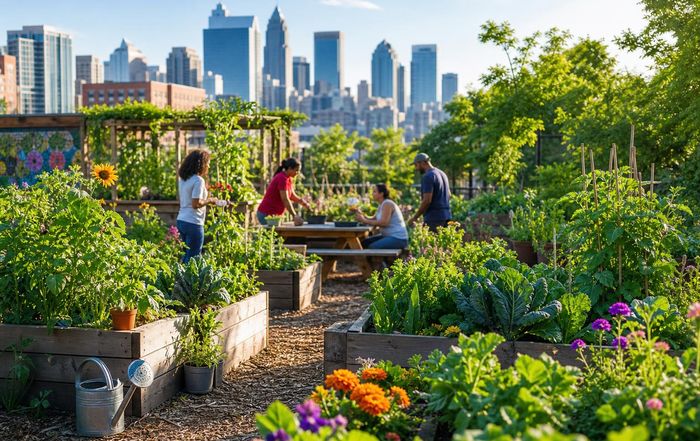
Why Community Gardens Improve Urban Quality of Life
Community gardens have moved from the margins of urban life to its very heart. Across cities in North America, Europe, Asia, Africa and beyond, modest plots of shared soil are reshaping how people eat, interact, move, and even govern their neighborhoods. In 2026, as urban populations continue to grow and the pressures of climate change, social isolation, and rising living costs intensify, these spaces are increasingly recognized not as pleasant extras, but as essential elements of resilient and humane cities. For readers of WorldsDoor, who are drawn to travel, culture, health, lifestyle, environment, technology and the broader global story of how people live, community gardens offer a powerful lens on how urban life can be reimagined.
This article explores how community gardens are improving quality of life around the world, why they matter for the next generation of cities, and how they fit into the broader themes that WorldsDoor covers, from sustainable travel and cultural exchange to public health and innovation.
Reclaiming Urban Space for People and Nature
Modern cities often grew around cars, concrete, and commercial real estate, leaving limited room for greenery or informal gathering spaces. Community gardens invert that logic by turning vacant lots, rooftops, schoolyards, and even former industrial sites into shared, living landscapes. Organizations such as UN-Habitat emphasize that access to green public spaces is a core component of inclusive, sustainable urban development, and community gardens are increasingly cited in their reports as practical, low-cost tools that cities can adopt. Readers interested in the broader global context can explore how urban green space fits into the New Urban Agenda and related frameworks.
From New York City's long-established community garden network to emerging initiatives in Berlin, Barcelona, Johannesburg, Bangkok, and São Paulo, the pattern is similar: residents and local groups negotiate with city authorities or private owners to secure underused land, then transform it into a shared garden that blends food production with social and cultural functions. In many European cities, planners now integrate community gardens into long-term land-use strategies, and research summarized by the European Commission's Joint Research Centre notes that these spaces contribute to urban biodiversity, microclimate regulation, and social cohesion. Those interested in the broader environmental implications can further explore European research on urban green infrastructure.
For WorldsDoor readers who follow global travel and urban culture, these gardens increasingly feature in alternative city itineraries, offering a different way to experience neighborhoods beyond the usual tourist paths. Articles on urban culture and community can be enriched by visiting such gardens, which often host public events, art installations, and local markets that reveal the everyday life of a city.
Food Security, Nutrition, and the Urban Diet
One of the most direct contributions of community gardens is their impact on urban food systems. In many cities, especially in low-income neighborhoods, access to fresh fruits and vegetables is limited by cost, distance, or the dominance of highly processed foods. Studies compiled by organizations such as the World Health Organization (WHO) and FAO indicate that urban agriculture, including community gardens, can improve dietary diversity and reduce food insecurity for participating households. Readers can explore more about healthy diets and urban food systems to understand how these local efforts fit into global public health strategies.
In cities from Detroit to Cape Town, community gardeners report that their plots supplement household food budgets, provide culturally important crops that are not easily found in supermarkets, and encourage children to try new fruits and vegetables that they helped to grow. The FAO highlights how urban agriculture supports localized supply chains, reduces food miles, and strengthens resilience during crises, such as pandemics or extreme weather events, by diversifying where food comes from. Those interested in broader sustainable food systems can learn more through FAO's urban food agenda.
For WorldsDoor, which regularly explores health, lifestyle and food, community gardens bridge these themes in a uniquely tangible way. Articles on healthy living and wellness and food culture can illustrate how gardening encourages people to cook more at home, experiment with seasonal produce, and reconnect with traditional recipes. In London, for example, community gardens in diverse boroughs often dedicate beds to herbs and vegetables from South Asian, Caribbean, African, and Eastern European cuisines, turning the garden into a living archive of migration and memory.
Mental Health, Wellbeing, and Social Connection
The mental health benefits of contact with nature are now widely documented, with research from sources such as Harvard T.H. Chan School of Public Health and University College London finding associations between green space exposure and lower levels of stress, anxiety, and depression. Community gardens extend these benefits by adding a strong social dimension. People do not simply walk through these spaces; they co-create and maintain them, share tools and knowledge, and build relationships across age, ethnicity, and social background. Those interested in the scientific evidence can explore more about nature and mental health and related studies.
In cities where loneliness has been described as a public health concern, including in the United Kingdom, Japan, and parts of North America, community gardens function as informal social infrastructure. They offer low-cost, low-pressure opportunities for interaction, where conversation arises naturally while watering, weeding, or harvesting. Research summarized by the American Public Health Association notes that community gardening is associated with higher levels of social capital, perceived neighborhood safety, and civic engagement. More information on community-based public health interventions helps place gardens within a broader landscape of health-promoting environments.
For WorldsDoor, which often highlights lifestyle trends and personal wellbeing, community gardens illustrate a shift from individualized wellness toward community-based wellbeing. Articles on lifestyle and balance can show how gardening complements practices like walking, mindfulness, and outdoor exercise, offering a grounded, accessible form of self-care that is deeply embedded in place and community.
Culture, Identity, and Intergenerational Exchange
Community gardens are also cultural spaces where identities are negotiated, celebrated, and sometimes contested. In multicultural cities such as Toronto, Amsterdam, Sydney, and Singapore, gardens frequently become sites where migrant communities cultivate crops from their homelands, teach younger generations about traditional agricultural practices, and share stories of adaptation and resilience. The Migration Policy Institute and other research centers have documented how such spaces support integration while allowing minority communities to maintain important aspects of their heritage. Readers can explore more about migration, culture, and community spaces to understand these dynamics in greater depth.
Intergenerational exchange is another defining feature. Older residents often bring extensive knowledge of gardening, seed saving, and weather patterns, while younger participants contribute digital tools, social media outreach, and new ideas about design or ecological practices. This blend of experience and innovation aligns closely with the values WorldsDoor promotes in its coverage of society and culture, where tradition and modernity are seen not as opposites but as partners in shaping the future.
In cities across Europe, local governments and cultural organizations sometimes support community gardens as part of heritage programs, recognizing them as living museums of working-class, immigrant, or indigenous histories. In Berlin, for example, projects like Prinzessinnengarten (a well-known urban garden initiative) have been studied by academic institutions and urban planners as models of participatory culture and experimental urbanism. Institutions such as Humboldt University and other European universities have published research on how these spaces foster new forms of citizenship and local identity, which interested readers can investigate via academic open-access portals.
Environmental Benefits and Climate Resilience
From an environmental perspective, community gardens contribute to urban sustainability in several interlinked ways. They increase vegetation cover, which can help mitigate the urban heat island effect, particularly during increasingly frequent heatwaves in regions like Southern Europe, North America, and parts of Asia. The Intergovernmental Panel on Climate Change (IPCC) notes that nature-based solutions, including urban green spaces and community gardens, are essential components of climate adaptation strategies for cities. Those who wish to delve deeper can consult IPCC reports on cities and climate.
Gardens also enhance biodiversity by providing habitats for pollinators, birds, and soil organisms, especially when managed with organic or low-chemical approaches. Organizations such as the Royal Horticultural Society in the UK and National Wildlife Federation in the US encourage gardeners to create wildlife-friendly spaces, and community gardens often adopt these principles collectively, amplifying their impact. Interested readers can explore more about gardening for wildlife and biodiversity to see how small urban plots can support wider ecological networks.
Water management is another important aspect. Some community gardens incorporate rainwater harvesting, permeable surfaces, and small-scale wetlands or bioswales, which help absorb stormwater and reduce flooding risk. This is particularly relevant in cities facing more intense rainfall due to climate change. The United States Environmental Protection Agency (EPA) and similar agencies in Europe and Asia highlight community-based green infrastructure as part of integrated stormwater management. Those interested in these technical and policy dimensions can learn more about green infrastructure in cities.
For WorldsDoor, which covers the intersection of environment, sustainability, and innovation, these gardens exemplify how everyday citizens are participating in climate action. Articles on sustainability and environmental stewardship and sustainable living can use community gardens as concrete examples of how local choices contribute to global environmental goals.
Technology, Innovation, and Data-Driven Gardening
Although community gardens are rooted in age-old agricultural practices, they are also sites of technological experimentation. In recent years, low-cost sensors, smartphone apps, and open-source platforms have made it easier for gardeners to monitor soil moisture, track plant growth, and coordinate volunteer schedules. Platforms like OpenFarm, GrowStuff, and community-developed tools hosted on GitHub provide shared knowledge bases for crop planning, pest management, and climate-adapted varieties. Those interested can explore open-source tools for urban agriculture to see how citizen developers and gardeners collaborate.
In some cities, universities and civic tech groups partner with gardens to collect environmental data, such as air quality or temperature, turning these spaces into micro-labs for urban science. Projects supported by organizations like C40 Cities and ICLEI - Local Governments for Sustainability have explored how community-led green infrastructure can be integrated into broader climate and resilience strategies, with community gardens often serving as pilot sites. Readers can learn more about city networks and climate innovation.
At the same time, there is a growing interest in blending community gardens with more advanced forms of urban agriculture, such as hydroponics, vertical farming, and controlled-environment agriculture. While large-scale vertical farms are often operated by private companies, some community initiatives experiment with small hydroponic units in containers or rooftops, sharing technical knowledge and exploring how these systems can complement soil-based gardening. Organizations such as The Ellen MacArthur Foundation discuss how circular economy principles can be applied to food systems, including nutrient cycling and waste reduction in urban agriculture. Readers can explore circular food systems to understand these emerging models.
For WorldsDoor, these developments resonate strongly with its focus on technology and innovation as tools for human-centered progress. Community gardens demonstrate that innovation is not limited to high-tech labs or corporate campuses; it can emerge from local experimentation, open knowledge sharing, and the creative adaptation of simple tools to real-world needs, a theme also reflected in the platform's coverage of grassroots innovation.
Education, Youth Engagement, and Lifelong Learning
Community gardens serve as powerful educational environments, offering experiential learning that complements formal schooling. Schools in countries such as Canada, Germany, Japan, and Australia increasingly integrate garden-based learning into their curricula, using these spaces to teach biology, ecology, nutrition, mathematics, and even language arts through hands-on activities. Organizations like Edible Schoolyard Project, founded by Alice Waters, and similar initiatives in Europe and Asia have inspired thousands of school gardens worldwide. Those interested can learn more about garden-based education models.
Beyond formal education, community gardens provide lifelong learning opportunities for adults, including workshops on composting, seed saving, climate-resilient gardening, and cooking. Public health agencies and non-profits sometimes partner with gardens to deliver programs on diabetes prevention, mental health, and physical activity, recognizing that these spaces attract diverse participants who might not engage with traditional health services. The Centers for Disease Control and Prevention (CDC), for example, has highlighted community gardens as part of strategies to promote healthy eating and active living. Further information on community-based health promotion helps situate these efforts within national and international public health frameworks.
For WorldsDoor, which covers education and learning and their intersection with travel and culture, community gardens represent a form of place-based education that travelers can also experience. Volunteering in a garden while visiting another country, for instance, can offer deeper insight into local environmental concerns, food traditions, and community dynamics than many conventional tours, aligning with the platform's encouragement of more meaningful cultural exchange.
Governance, Equity, and the Politics of Urban Land
While the benefits of community gardens are widely recognized, their existence often depends on complex questions of land tenure, governance, and equity. In some cities, gardens occupy land that is temporarily allocated and may be reclaimed for development, creating uncertainty and tension. Research from institutions such as The Lincoln Institute of Land Policy and various urban planning departments shows that secure land tenure, supportive zoning, and clear governance structures are crucial for the long-term success of community gardens. Readers can explore more about urban land use and public space governance.
Equity is another key issue. Without intentional policies, community gardens can sometimes cluster in already advantaged neighborhoods, leaving marginalized communities underserved. Conversely, well-resourced gardens can inadvertently contribute to "green gentrification," where improved amenities make neighborhoods more attractive, potentially raising property values and displacing long-term residents. Scholars and organizations such as The Urban Institute and ICLEI have emphasized the need for inclusive planning that ensures the benefits of urban greening, including community gardens, are distributed fairly. Those interested can learn more about equitable urban development.
For WorldsDoor, which also considers ethics and global justice in its coverage, including through its focus on ethics and responsibility and world affairs, these questions highlight that community gardens are not just technical or lifestyle projects; they are political spaces where decisions about who has access to land, resources, and power in the city are negotiated. Stories of successful collaborations between residents, municipalities, and civil society can inspire readers to advocate for policies that protect and expand such spaces in their own cities.
Travel, Place-Making, and Experiencing Cities Differently
For travelers, community gardens offer an increasingly popular way to experience cities from the inside. Rather than observing urban life solely through monuments, museums, and commercial districts, visitors can spend an afternoon volunteering in a neighborhood garden, attending a harvest festival, or joining a public workshop. Platforms like Visit Berlin, NYC Parks, and various local tourism boards now occasionally highlight community gardens as part of cultural or eco-tourism routes, recognizing their appeal to visitors interested in authenticity, sustainability, and community engagement. Those planning trips can look for local tourism information on community-based experiences in their destination cities.
This approach to travel aligns closely with the values of WorldsDoor, which encourages readers to move beyond surface-level sightseeing and engage with the deeper cultural and social fabric of the places they visit. Articles on travel and place-making can spotlight how participating in a community garden, even briefly, allows travelers to contribute positively to local initiatives while gaining a grounded understanding of everyday urban life, from Bangkok to Barcelona, Cape Town to Copenhagen.
Looking Ahead: Community Gardens in the Future City
As cities navigate the intertwined challenges of climate change, public health, social fragmentation, and economic inequality, community gardens stand out as versatile, human-scale responses that address multiple issues simultaneously. They provide fresh food, green space, social connection, cultural expression, environmental services, and educational opportunities, often with modest financial investment and high levels of community ownership. International frameworks such as the UN Sustainable Development Goals (SDGs) explicitly recognize the importance of inclusive, safe, resilient, and sustainable cities, and community gardens contribute directly to several goals, including those related to hunger, health, sustainable cities, and climate action. Readers can explore more about SDGs and urban initiatives.
In 2026, the momentum behind community gardens is supported by a growing body of research, policy interest, and grassroots energy. Yet their future is not guaranteed. Protecting and expanding these spaces will require thoughtful urban planning, legal frameworks that secure land for public and community use, and continued investment in community capacity and leadership. Technology and innovation can enhance their impact, but the core of their success remains profoundly human: people coming together to care for a piece of land and, in doing so, to care for one another.
For WorldsDoor, community gardens embody the interconnected themes that define its editorial vision: they are simultaneously about lifestyle and health, culture and society, environment and sustainability, technology and innovation, business and governance, travel and global understanding. As readers explore stories from cities across the world, from New York and London to Singapore, Stockholm, Johannesburg, and São Paulo, these shared gardens offer a hopeful, practical example of how urban life can be more connected, more equitable, and more alive. In a century that will be shaped overwhelmingly by cities, community gardens remind everyone that even in the densest urban landscapes, it is still possible to open a door to the living world-and to one another.