

Scenic Rail Journeys Through Germany's Lesser-Known Regions
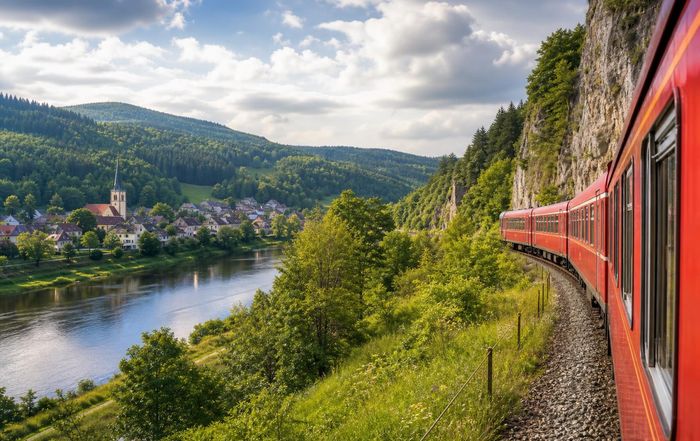
Germany's famous rail routes along the Rhine or between Berlin and Munich are well known to international visitors. Yet away from the high-speed lines and cruise-packed river valleys, a quieter rail network threads through upland forests, volcanic landscapes, half-timbered towns, and North Sea marshes. For travellers who enjoy slow journeys, regional culture, and low-impact transport, these lesser-known lines can be a way to see a very different side of the country.
This guide focuses on regional and scenic routes that can be comfortably explored by visitors using regular scheduled services rather than luxury tourist trains. It brings together practical travel detail with cultural context, and highlights how rail can be an environmentally conscious way to explore Germany beyond the usual city circuit. Throughout, it assumes travellers may be combining these rail journeys with broader interests in travel, culture, environment, and sustainable tourism.
Planning scenic rail travel in Germany's regions
Germany's rail system is anchored by Deutsche Bahn (DB), but regional governments and private operators also run services, particularly on rural lines. Timetables across almost all operators are integrated into the national journey planner on the Deutsche Bahn website and app, which is usually the best starting point for planning routes and connections. The federal transport ministry, Bundesministerium für Digitales und Verkehr, provides broader policy and infrastructure information on bmvi.de, useful for understanding how regional services are being modernised or protected.
For visitors, one of the most important developments in recent years has been the introduction of flat-fare regional tickets, such as the nationwide Deutschlandticket and various state passes. These tickets typically cover local and regional trains (no ICE or IC) and make it feasible to treat a scenic line as a flexible day trip rather than a tightly scheduled excursion. While the precise products change over time, the Deutsche Bahn site and state transport associations like VBB for Berlin-Brandenburg or Bayern Fahrplan for Bavaria provide up-to-date fare and validity details.
For broader orientation, Germany Travel (the German National Tourist Board) highlights rail-accessible regions and themed routes, while independent planning tools such as Rome2Rio can help combine trains with buses or ferries when reaching more remote destinations. Travellers interested in sustainable transport can also follow organisations such as Allianz pro Schiene at allianz-pro-schiene.de, which campaigns for rail-based mobility and often features examples of revived regional lines.
Harz Mountains: narrow-gauge nostalgia and forested peaks
The Harz in central Germany is one of the country's most atmospheric upland regions, yet it remains under the radar for many international visitors. Its mixture of medieval towns, dense forests, and former East German border history makes it particularly rewarding for those combining landscape with culture.
The most distinctive rail experience here is the Harzer Schmalspurbahnen (HSB), a network of narrow-gauge lines centred on the historic town of Wernigerode. Steam locomotives still haul regular services up to the Brocken, the region's highest peak, as well as along quieter branches to places like Nordhausen and Quedlinburg. While the HSB is not part of the regular DB tariff system, it is integrated physically with standard-gauge stations, making it easy to connect from regional trains. The line offers open views across the Harz plateau, but also passages through thick spruce and beech forest, with stations that feel almost frozen in time.
Beyond the steam trains, standard regional services link Goslar, Bad Harzburg, Wernigerode, and Quedlinburg, passing former mining areas, reservoirs, and small spa towns. Many of these places have UNESCO-listed or well-preserved historic centres, and the Harz is also a hub for hiking and cycling. Visitors interested in the region's mining heritage can reach the Rammelsberg mine museum near Goslar by local bus or on foot from the station, while those drawn to Cold War history can visit former border installations scattered along the old inner-German frontier.
The Harz works well for travellers who want to stay several nights in one town and make different day trips by rail and bus. It also connects naturally to broader themes of culture and society, from legends about witches on the Brocken to the more recent history of division and reunification.
The Black Forest beyond the clichés: valleys, viaducts, and quiet villages
The Black Forest (Schwarzwald) in southwest Germany is well-known as a holiday region, but many visitors experience it mainly by car or on coach tours. For those travelling by train, however, a network of regional lines offers varied and often dramatic scenery without requiring a vehicle.
The Höllentalbahn between Freiburg im Breisgau and Donaueschingen is among the steepest standard-gauge lines in Germany, climbing through narrow gorges, passing viaducts, and skirting high plateaus. Electric regional trains make the ascent feel effortless, but the views-especially between Freiburg and Titisee-are striking, with deep forest on one side and sudden clearings on the other. From Titisee and Seebrugg, buses connect to lakes, ski areas, and hiking trails, making this line a practical backbone for a car-free Black Forest stay.
Further north, the Schwarzwaldbahn between Offenburg and Singen crosses the forest from west to east, using tunnels and sweeping curves to manage the gradients. The line offers long views into valleys dotted with traditional farms and small villages. Because this is a regular inter-regional route rather than a tourist train, it is included in most regional passes and is easy to combine with visits to Baden-Baden, Strasbourg (via Offenburg), or Lake Constance.
Regional tourism boards such as Schwarzwald Tourismus provide detailed hiking and cycling suggestions accessible from these rail lines, and the Baden-Württemberg state portal includes transport and environmental information relevant to sustainable travel. For those interested in low-carbon holidays, the Black Forest has been a pioneer of guest cards that include local public transport, which can complement broader rail tickets and align with a more sustainable style of travel.
Franconian and Bavarian byways: rivers, vineyards, and small cities
When many travellers think of Bavaria, they picture Munich, Neuschwanstein, or the Alps. Yet some of the most characterful rail journeys in the state lie further north in Franconia and in the less-frequented foothills east of the main tourist corridors.
The line from Bamberg through Ebern to Hofheim in Unterfranken, for example, follows quiet valleys and farmland dotted with small villages and orchards. Bamberg itself, with its UNESCO-listed old town, is a major rail hub, but the branch lines leading away from it quickly feel rural and slow-paced. To the west, trains along the Main river connect wine towns such as Kitzingen, Ochsenfurt, and Karlstadt, where terraced vineyards rise above the river and half-timbered houses line the main squares. These routes are particularly attractive in late summer and autumn, when wine festivals and harvest events bring local culture to the fore.
Further south, regional lines in Eastern Bavaria link Regensburg, Cham, and Furth im Wald, running close to the Czech border and the forested hills of the Bavarian Forest National Park. These trains serve small towns and hiking gateways rather than major tourist resorts, so they are rarely crowded with international visitors. For those interested in cross-border travel, some services and bus links continue into the Czech Republic, illustrating how regional rail underpins everyday mobility as well as tourism.
The Bavarian transport ministry and the Free State of Bavaria portal provide information on regional rail projects, including efforts to electrify or reactivate certain lines, which is relevant for travellers conscious of transport emissions. For broader context on how rail supports regional economies and tourism in Germany, the German National Tourist Board at germany.travel regularly highlights examples from Franconia and other lesser-known areas.
North Sea and Baltic coasts: marshes, islands, and edge-of-land journeys
Germany's northern coasts along the North Sea and Baltic Sea are better known domestically than internationally, and the rail journeys here feel quite different from those in the country's interior. Rather than forests and mountains, the scenery is often about big skies, flat marshes, and the interplay between land and water.
In Schleswig-Holstein, regional trains run from Hamburg towards Westerland on the island of Sylt, crossing the Hindenburgdamm, a causeway that cuts across tidal mudflats. While Sylt itself can be busy in high season, the approach offers a sense of travelling to the literal edge of the country, and intermediate stops serve quieter coastal towns and villages. To the east, lines from Lübeck to Travemünde or Neustadt in Holstein bring travellers to Baltic seaside resorts, with sandy beaches, promenades, and historic spa architecture.
In Lower Saxony, the rail line to Norddeich Mole is primarily functional-serving ferries to the East Frisian Islands-but it traverses characteristic North Sea landscapes of dykes, pastures, and wind turbines. These coastal regions are central to Germany's renewable energy transition, and travellers interested in the intersection of environment and innovation can see how wind and, increasingly, hydrogen projects are reshaping rural economies. The Federal Environment Agency at umweltbundesamt.de and the Federal Maritime and Hydrographic Agency at bsh.de offer background on coastal protection and offshore energy, which frame the landscapes visible from these trains.
On the Baltic, routes in Mecklenburg-Western Pomerania connect Rostock, Stralsund, and Greifswald with peninsulas and islands such as Rügen and Usedom. Here, seaside resorts mix with national parks and bird reserves, and local trains are the main public transport spine. Because these lines are relatively flat and often single-track, journeys can feel unhurried, lending themselves to travellers who are content to watch the landscape change slowly between wetlands, fields, and stretches of forest.
The Moselle and lesser-known wine valleys: slow curves and river views
While the Rhine Gorge between Koblenz and Bingen is a classic scenic route, its popularity can make it feel crowded, and the parallel motorway and freight traffic somewhat diminish the atmosphere. Travellers looking for a quieter, more intimate river journey often find the Moselle (Mosel) line more appealing.
Regional trains between Koblenz and Trier follow the Moselle's tight loops and bends, passing steep vineyards, castles, and small wine towns such as Cochem, Bullay, and Traben-Trarbach (the latter reached via a branch line). The pace is gentle, and because the valley is narrower and less industrial than the Rhine, the views often feel closer and more immersive. Many stations are within walking distance of river promenades and historic centres, making it easy to combine train travel with short hikes, cycling, or leisurely wine tastings.
Further south, smaller railways along tributaries like the Nahe and Ahr (where services are being rebuilt after severe flooding in 2021) provide access to additional wine regions and spa towns. These lines illustrate how climate, topography, and human land use intersect: steep slopes that make road building difficult have historically favoured rail and river transport, and the microclimates that support viticulture also raise questions about climate adaptation. The German Weather Service at dwd.de and the Federal Agency for Nature Conservation at bfn.de publish information on climate impacts in river valleys, which can be relevant for travellers curious about how these landscapes are changing.
For those planning a multi-day route, the Moselle line connects naturally with the Eifel uplands to the north and with Luxembourg to the west, offering a variety of scenery without long distances. It is also well-suited to travellers who prefer to base themselves in one town and use the train for day trips, aligning with a slower, more lifestyle-oriented approach to travel.
Ore Mountains and Saxon Switzerland: borderlands and sandstone cliffs
Eastern Germany offers some of the country's most dramatic rail scenery, yet many international visitors see it only in passing between Berlin, Dresden, and Prague. Two regions stand out for those willing to explore further: the Ore Mountains (Erzgebirge) along the Czech border, and the Elbe Sandstone Mountains in so-called Saxon Switzerland.
The Erzgebirgsbahn network, centred on Chemnitz and Aue, serves former mining towns, forested ridges, and valleys that open towards the Czech Republic. Lines such as those from Chemnitz to Cranzahl and Olbernhau feel distinctly regional, with small stations, modest trains, and a strong sense of local identity. In winter, some routes serve ski areas and Christmas markets known for traditional woodcarving and handicrafts; in summer, they provide access to hiking and cycling paths. The cross-border character of the region is evident in the way rail lines and bus routes interconnect with Czech services, reflecting broader European integration.
Closer to Dresden, regional trains follow the Elbe river through Saxon Switzerland, where sandstone cliffs and rock formations rise abruptly from the valley. The line towards Bad Schandau and the Czech border is one of the most scenic short journeys in Germany, with frequent local and long-distance services. From stations along the route, ferries and buses connect to trailheads, rock climbing areas, and viewpoints such as the Bastei. The Saxon Switzerland National Park administration, via the Saxony state portal, provides guidance on visitor management, conservation, and sustainable access, which is increasingly important as the area faces pressure from both domestic and international tourism.
These eastern regions also illustrate how rail can support not only tourism but broader social and economic cohesion. Many lines in Saxony and neighbouring states have been modernised or reactivated since German reunification, with EU funding playing a role. For readers interested in the intersection of world politics, regional development, and transport, these networks embody wider debates about investment, depopulation, and the future of rural Europe.
Industrial heritage and green corridors: Ruhrgebiet and Saarland
Scenic rail does not have to mean mountains or coastlines. In western Germany's former heavy-industry heartlands, disused railways have been transformed into cycle paths, and active lines now pass repurposed mines, steelworks, and modern cultural venues. The resulting journeys are visually striking in a different way, highlighting how landscapes shaped by coal and steel are being reimagined.
In the Ruhrgebiet, regional trains criss-cross a dense web of cities-Duisburg, Essen, Bochum, Dortmund, and others-passing slag heaps turned into parks, converted gasometers, and former collieries now serving as museums or event spaces. While the scenery is urban and industrial rather than conventionally picturesque, it is compelling for those interested in contemporary society, business, and the environment. The Route of Industrial Heritage, coordinated by the Regionalverband Ruhr and presented on ruhr-tourismus.de, ties many of these sites together and explicitly encourages travel by public transport.
Further southwest in Saarland, regional trains follow the Saar river and its tributaries, connecting Saarbrücken, Völklingen, and Mettlach. The Völklingen Ironworks, a UNESCO World Heritage Site, looms directly beside the tracks and vividly shows the scale of 19th- and 20th-century industry. Today, the region is also involved in hydrogen and renewable energy projects, and the Saarland state government at saarland.de provides information on these initiatives, which can frame travellers' impressions of wind farms and industrial facilities seen from the train.
For many visitors, these journeys challenge conventional distinctions between "scenic" and "industrial," showing how cultural landscapes are layered and how rail can provide a front-row seat to economic and environmental change.
Practical tips for enjoying Germany's lesser-known rail routes
Travelling regional rail in Germany is generally straightforward, but a few practical considerations can make scenic journeys smoother and more rewarding. Timetables and fares are best checked using the Deutsche Bahn planner or regional transport association websites; these will show whether a train is a local (RB/RE) service covered by regional passes or a long-distance (IC/ICE) train requiring separate tickets. For those basing themselves in one state, local transport associations such as VBB in Berlin-Brandenburg or their equivalents in Bavaria and Baden-Württemberg often sell day or group tickets that integrate buses and trams with regional trains.
Because many scenic lines are single-track and serve small communities, service frequency can be limited, especially on weekends or in the late evening. It is wise to note the time of the last train back and to allow extra time for connections when changing between branch lines. In some rural areas, on-demand buses or shared taxis supplement rail, and these may require advance booking; local tourism offices and state portals such as bayern.de or baden-wuerttemberg.de usually provide English-language summaries of how these systems work.
From an environmental perspective, regional rail is already a relatively low-carbon mode of travel, and Germany is expanding electrification and experimenting with alternative propulsion such as hydrogen and battery trains. The Federal Environment Agency at umweltbundesamt.de offers comparative data on transport emissions, useful for those trying to minimise their footprint. Aligning scenic rail journeys with stays in locally run guesthouses, visits to regional food producers, and off-season travel can further enhance the sustainability of a trip, tying in with broader interests in health, food, and responsible tourism.
Finally, travellers who enjoy understanding the places they pass through may find it worthwhile to read up on regional history and culture before departure. Resources from the German National Tourist Board at germany.travel, state cultural portals, and reputable news organisations such as Deutsche Welle or BBC can provide context on everything from post-industrial change in the Ruhr to conservation debates in Saxon Switzerland. Seen through this lens, Germany's lesser-known railways become more than just pretty routes: they are moving vantage points on how landscapes, communities, and infrastructure evolve together.