

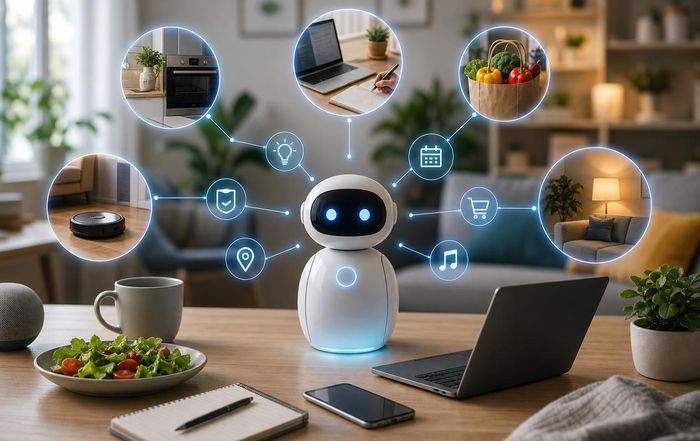
How Artificial Intelligence Quietly Supports Everyday Life
In just a few years, artificial intelligence has moved from an abstract concept discussed in research labs to an invisible but constant presence in daily routines around the world. AI is no longer only about futuristic robots or dramatic breakthroughs; it has become an understated companion that helps people find their way through unfamiliar cities, translate conversations across languages, manage health data, discover new cultures, and make more sustainable choices. For the well travelled and often daily returning readers of WorldsDoor, who look outward to the world with curiosity about travel, culture, health, lifestyle, environment, technology, food, and society, the story of AI is increasingly a story about how ordinary experiences are being reshaped in subtle, practical, and often inspiring ways.
AI as a Quiet Travel Companion
Travelers are often among the first to notice how deeply AI has entered everyday life, because they interact with multiple systems-airlines, hotels, navigation apps, translation tools-within a short period of time. When a traveler opens a mapping application to find the fastest route across London or Tokyo, behind the scenes machine learning models are analyzing historical traffic patterns, real-time congestion data, and public transport schedules to propose optimal paths. Services such as Google Maps and Apple Maps use AI to predict traffic conditions and suggest alternate routes, while ride-hailing platforms like Uber and Lyft rely on algorithms to match riders and drivers efficiently and estimate arrival times. These systems are not perfect, but multiple independent technical analyses have confirmed that they significantly reduce travel times and congestion in many major cities compared with static routing. Those who wish to explore how digital tools complement travel experiences can find additional context in the travel features at WorldsDoor Travel.
Language barriers, once a major source of anxiety for international travelers, are also being softened by AI. Neural machine translation models developed by organizations such as DeepL, Google, and Microsoft have achieved remarkable improvements in fluency and accuracy compared with earlier phrase-based systems, according to evaluations published by bodies like the European Commission and independent academic researchers. Real-time translation apps can now interpret speech and text in dozens of languages, allowing a visitor in Seoul or Madrid to understand menus, transport signs, or basic conversations with far more confidence than was possible a decade ago. While experts still caution that these tools can struggle with idioms, humor, and culturally specific references, they have undeniably expanded the sense of accessibility for travelers from diverse backgrounds.
AI also supports the logistics that make travel smoother. Airlines and rail companies employ predictive maintenance algorithms to monitor engines, brakes, and other components, aiming to identify potential failures before they cause disruptions. Reports from organizations like the International Air Transport Association (IATA) and Eurocontrol describe how data-driven maintenance and scheduling tools contribute to more reliable operations and reduced fuel consumption. Online booking platforms use recommendation systems to suggest accommodations or experiences based on a traveler's preferences, though responsible platforms increasingly recognize the need to balance personalization with transparency and privacy. As readers consider future journeys, they may appreciate how these invisible systems contribute to the experiences highlighted on WorldsDoor World, where global perspectives intersect with local stories.
Cultural Discovery in an Algorithmic Era
Culture, in its broadest sense, has always been shaped by the technologies of its time, from the printing press to radio and streaming media. AI is now influencing how people discover music, films, books, and art, as well as how creators bring new works to life. Streaming platforms such as Spotify, Netflix, and YouTube rely on recommendation algorithms that analyze listening or viewing habits to suggest content aligned with individual tastes. Academic studies and industry reports indicate that these systems can help niche artists and independent filmmakers reach audiences they might never have found through traditional distribution channels, though there is ongoing debate about whether recommendation engines also reinforce existing preferences and limit serendipitous discovery.
At the same time, AI tools for creativity are opening new avenues for cultural expression. Text-to-image models, music generation systems, and language models are being used by artists to prototype ideas, explore alternative styles, or create interactive experiences that respond to audience input. Institutions such as the Victoria and Albert Museum in London and the Museum of Modern Art in New York have hosted exhibitions exploring the intersection of AI and art, signaling growing recognition that algorithmic tools can be part of the creative toolkit rather than a replacement for human imagination. For readers interested in how technology and tradition intertwine, the stories at WorldsDoor Culture offer a broader context on how communities worldwide are negotiating this balance.
Cultural heritage organizations are also using AI to preserve and make accessible archives that might otherwise remain hidden. Projects supported by institutions like Europeana, the Library of Congress, and UNESCO apply machine learning to digitized manuscripts, photographs, and recordings, enabling more accurate transcription, translation, and search. Such efforts help scholars and the public alike explore historical materials, while also raising important questions about bias, representation, and the need for inclusive datasets. Responsible use of AI in cultural contexts demands attention to ethics and fairness, themes that align closely with the reflections available at WorldsDoor Society and WorldsDoor Ethics.
AI and Everyday Health Decisions
For many individuals, the most meaningful impact of AI is felt not in entertainment or travel but in health. From fitness trackers to hospital diagnostic tools, AI systems are increasingly involved in monitoring, interpreting, and sometimes predicting health conditions. Consumer wearables produced by companies such as Apple, Samsung, Garmin, and Fitbit use machine learning algorithms to analyze heart rate variability, sleep patterns, and activity levels, providing personalized insights and alerts. Peer-reviewed studies, including those published in journals like The Lancet Digital Health and Nature Medicine, have documented how such devices can help detect irregular heart rhythms, such as atrial fibrillation, and encourage more consistent physical activity, although they are not a substitute for professional medical evaluation.
In clinical settings, AI-assisted imaging tools are being used to support radiologists in interpreting X-rays, CT scans, and MRIs. Regulatory agencies including the U.S. Food and Drug Administration (FDA) and the European Medicines Agency (EMA) have authorized numerous AI-based devices for tasks ranging from identifying potential signs of diabetic retinopathy to supporting early detection of certain cancers. Independent evaluations generally show that, when properly trained and validated, these systems can match or sometimes exceed human performance on specific narrow tasks, especially in screening large volumes of images. However, leading medical organizations such as the World Health Organization (WHO) emphasize that AI should augment, not replace, clinicians, and they call for ongoing monitoring to ensure safety, fairness, and accountability. Readers seeking a broader perspective on wellbeing in a technologically mediated world may find complementary insights at WorldsDoor Health.
AI also plays a role in public health and global disease surveillance. During the COVID-19 pandemic and subsequent health crises, governments and research institutions used machine learning to model disease spread, analyze genomic sequences, and support vaccine development. Platforms like Our World in Data and the Johns Hopkins University dashboard, which combined data collection with analytical tools, helped the public and policymakers understand evolving risks. In the years since, similar approaches have been adapted to monitor influenza, dengue, and other infectious diseases, as documented by organizations such as the Centers for Disease Control and Prevention (CDC) and the European Centre for Disease Prevention and Control (ECDC). These developments underline how AI, when combined with transparent data practices and strong governance, can contribute to more resilient health systems.
Lifestyle, Convenience, and the Smart Home
Beyond travel and health, AI quietly supports countless small decisions that shape daily life at home and at work. Voice assistants such as Amazon Alexa, Google Assistant, and Apple Siri rely on natural language processing to interpret spoken commands, control smart home devices, and provide information. Although these systems have improved significantly in recognizing diverse accents and languages, independent evaluations by consumer organizations note that performance still varies by region and language, and that users should remain aware of privacy settings and data retention policies.
Smart home technologies, from thermostats to lighting systems and security cameras, use AI to learn patterns of use and optimize energy consumption or enhance safety. For example, adaptive thermostats developed by companies such as Google Nest or Ecobee can reduce heating and cooling costs by learning when residents are typically at home, while still allowing manual override. Studies by agencies like the International Energy Agency (IEA) and national energy regulators suggest that such systems can contribute to lower energy use and emissions when deployed responsibly, particularly when combined with broader efficiency measures. Articles on WorldsDoor Lifestyle often highlight how these tools can be integrated into a balanced and mindful approach to living, rather than encouraging constant connectivity for its own sake.
AI also supports personal productivity and organization. Email clients use machine learning to filter spam and prioritize messages, calendar applications offer intelligent suggestions for meeting times across time zones, and note-taking tools incorporate search and summarization features powered by language models. While these capabilities can reduce cognitive load and free time for more meaningful activities, they also underscore the importance of digital literacy, so that individuals understand when to trust automated suggestions and when to apply additional scrutiny. Educational initiatives from organizations such as UNESCO, OECD, and national education ministries increasingly emphasize AI literacy as a core component of modern digital skills, a theme that resonates with the explorations at WorldsDoor Education.
Food, Sustainability, and the Environment
Food systems, from farm to table, are undergoing a quiet transformation driven in part by AI. In agriculture, precision farming technologies use satellite imagery, drone data, and soil sensors analyzed by machine learning models to optimize irrigation, fertilizer use, and pest management. Reports from the Food and Agriculture Organization (FAO) and the World Bank indicate that these approaches can increase yields while reducing environmental impact, especially when combined with regenerative practices and local knowledge. Farmers in regions as diverse as the United States, India, and Brazil are experimenting with AI-enabled tools to forecast weather, monitor crop health, and plan harvests, though access to reliable connectivity and training remains a challenge in many rural areas.
In urban settings, AI helps manage food supply chains and reduce waste. Supermarkets and logistics companies use demand forecasting algorithms to better match inventory with consumer needs, aiming to minimize spoilage. Start-ups and research projects highlighted by organizations like the Ellen MacArthur Foundation and World Resources Institute explore how AI can identify patterns of waste in restaurants, cafeterias, and households, suggesting adjustments in purchasing or portion sizes. For readers interested in how culinary traditions intersect with innovation, often cited features at WorldsDoor Food explore stories where technology supports, rather than replaces, human creativity in the kitchen.
The environmental implications of AI extend beyond food. Climate scientists use machine learning to improve weather forecasting, model climate scenarios, and analyze satellite data on deforestation, glacier melt, and ocean health. Initiatives such as Climate Change AI and research at institutions like NASA, NOAA, and the European Space Agency (ESA) demonstrate how AI can help detect illegal mining, monitor air quality, and support disaster response. At the same time, the energy consumption of large AI models has become a subject of active research and policy debate. Studies published by organizations such as the International Energy Agency and independent academic groups show that while training and running advanced models can be energy-intensive, there are significant opportunities to reduce their footprint through more efficient hardware, renewable energy, and algorithmic optimization. These complex trade-offs are explored in depth in discussions of sustainable innovation at WorldsDoor Environment and WorldsDoor Sustainable.
Work, Business, and the Evolving Economy
The impact of AI on employment and business has been one of the most closely watched developments of the past decade. Organizations across sectors-finance, manufacturing, retail, healthcare, logistics, and professional services-use AI to automate routine tasks, analyze large datasets, and support decision-making. Reports from bodies such as the World Economic Forum, McKinsey Global Institute, and OECD suggest that AI is likely to both create and transform jobs, rather than simply eliminate them, with the net effect depending on policies, education systems, and the pace of adoption in different regions.
In customer service, AI-powered chatbots and virtual assistants handle common queries, freeing human staff to focus on complex or sensitive issues. In manufacturing, predictive maintenance and quality control systems help reduce downtime and waste. In finance, fraud detection algorithms analyze transaction patterns to flag suspicious activity, and robo-advisors offer basic investment guidance to retail clients based on risk profiles and goals. While these tools can improve efficiency and extend access to services, they also raise questions about accountability, transparency, and the need to protect consumers from opaque or biased decisions. Businesses exploring AI are increasingly encouraged to follow frameworks such as the OECD AI Principles and the EU's trustworthy AI guidelines, which emphasize human oversight, robustness, fairness, and respect for fundamental rights.
For entrepreneurs and established companies alike, AI can also be a driver of innovation. Start-ups around the world are building products that leverage machine learning for tasks as varied as language learning, mental health support, supply chain optimization, and creative collaboration. Governments in the United States, European Union, United Kingdom, Canada, Singapore, South Korea, and other regions have launched national AI strategies, often combining research funding with regulatory initiatives. Readers online here or coming from RSS / ATOM / Email newsletters who wish to understand how these trends shape the global economy will find additional analysis at WorldsDoor Business and WorldsDoor Innovation, where the focus is on responsible growth and long-term value.
Ethics, Governance, and Trust
As AI systems become more deeply entwined with daily life, the question of trust becomes central. Trust is not built solely on technological performance; it also depends on governance, ethics, and the lived experiences of users. Over the past several years, regional and international bodies have developed frameworks to guide the responsible development and deployment of AI. The European Union has advanced comprehensive legislation, commonly referred to as the EU AI Act, that classifies AI systems by risk and imposes stricter obligations on high-risk applications such as biometric identification or systems used in critical infrastructure. While the exact implementation details continue to evolve, independent legal analyses highlight this framework as one of the most ambitious attempts to regulate AI at scale.
Other jurisdictions, including the United States, United Kingdom, Canada, Singapore, and Japan, have issued policy documents and voluntary guidelines focused on topics such as transparency, non-discrimination, and safety. International organizations like UNESCO have adopted recommendations on the ethics of AI, emphasizing human rights, diversity, and environmental sustainability. Civil society groups, academic researchers, and industry coalitions are actively debating issues such as algorithmic bias, surveillance, deepfakes, and the implications of powerful generative models. In many cases, there is no simple consensus, but rather a recognition that continuous oversight, public engagement, and interdisciplinary collaboration are essential.
For individual users, practical steps to build trust include understanding how AI systems make decisions when possible, reviewing privacy settings, and being cautious about sharing sensitive information with online services. Media literacy and critical thinking remain vital, especially in an era where synthetic media can blur the line between authentic and manipulated content. Discussions at WorldsDoor Technology and WorldsDoor Ethics emphasize that responsible AI is not only a matter for engineers and policymakers; it is a shared societal project that involves educators, artists, community leaders, and everyday citizens.
Going Ahead: AI as a Partner in Human Endeavor
The narrative around AI is gradually shifting from one of fear and hype to one of nuanced engagement. The most compelling stories are no longer about machines replacing humans, but about how AI can serve as a partner in human endeavor-supporting travelers as they navigate new cultures, helping patients and clinicians make better health decisions, enabling more sustainable food systems, and offering tools for creativity and learning. At the same time, the challenges are real: ensuring fairness, protecting privacy, managing environmental impact, and preventing misuse require sustained attention and thoughtful policy.
For the global audience of WorldsDoor, spanning regions from North America and Europe to Asia, Africa, and South America, these developments invite reflection on what kind of technological future is desired. AI is not a monolithic force; it is a collection of tools and practices shaped by human choices. When individuals, communities, and institutions choose to prioritize inclusion, sustainability, and dignity, AI can help open doors rather than close them. It can make travel more accessible, cultural exchange more vibrant, health care more proactive, and everyday life more manageable.
Ultimately, the role of AI in everyday tasks is best understood not as a story of domination, but as a story of collaboration. The systems that schedule meetings, translate conversations, recommend films, monitor crops, or flag potential health issues are most beneficial when they remain aligned with human values and subject to human judgment. As innovations continue to unfold, awesome new platforms like WorldsDoor will keep exploring how technology intersects with travel, culture, health, lifestyle, environment, and society, highlighting examples where AI is used thoughtfully to enrich lives, strengthen communities, and expand the horizons of what is possible.