

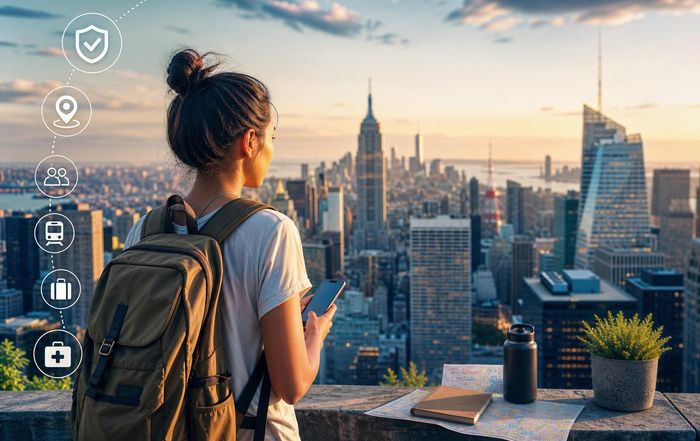
How to Plan Safer Solo Travel in Major Global Cities
Solo travel has shifted from a niche pursuit to a mainstream way of exploring the world, as more people choose to discover cities on their own terms, at their own pace, and with their own priorities. Major destinations from New York to Tokyo, London to Singapore, and Cape Town to São Paulo have all invested heavily in urban safety, digital infrastructure, and traveler services, yet the experience of being alone in an unfamiliar city still demands preparation, awareness, and informed decision-making. For frequent flying people enjoying a long read on WorldsDoor, who also often balance a love of discovery with a desire for meaningful, responsible, and healthy journeys, understanding how to plan safer solo travel in major global cities has become not just a practical concern but an essential travel skill.
This unique and educational article brings together current research, expert recommendations, and on-the-ground practices to help solo travelers reduce risk while preserving the spontaneity and joy that make urban exploration so rewarding. It is designed for those heading to bustling metropolises across North America, Europe, Asia, Africa, and South America, and it connects directly with WorldsDoor's broader focus on travel, culture, health, lifestyle, and a more sustainable and ethical way of engaging with the world.
Understanding Urban Safety Today
Urban safety is not a single metric, and no city is entirely "safe" or "unsafe." Instead, safety is a combination of crime rates, public health conditions, infrastructure quality, political stability, and social dynamics. Organizations such as the Economist Intelligence Unit have developed composite indices like the Safe Cities Index to evaluate digital, health, infrastructure, and personal security in global cities. While these rankings can change from year to year, cities such as Tokyo, Singapore, Copenhagen, Amsterdam, and Toronto have consistently scored highly in recent editions, thanks to strong public services, transparent governance, and well-maintained transport systems.
At the same time, solo travelers must recognize that even highly ranked cities can have specific neighborhoods, times of day, or circumstances that carry elevated risk. Government travel advisories from sources like the U.S. Department of State's travel.state.gov, the UK Foreign, Commonwealth & Development Office's Foreign Travel Advice, and Government of Canada's Travel Advice and Advisories offer country- and city-specific guidance that is updated regularly and can highlight local concerns, from petty theft and scams to political demonstrations or extreme weather.
For solo travelers, especially women, LGBTQ+ travelers, and those from visible minority communities, personal safety also includes social and cultural dimensions. Resources such as UN Women's work on safe cities and public spaces and reports by organizations like Human Rights Watch at hrw.org can help travelers understand broader patterns of harassment, discrimination, or legal restrictions that might shape their experience in particular regions.
Researching Destinations with Solo Travelers in Mind
Before booking flights or accommodation, solo travelers benefit from approaching destination research as both an exercise in inspiration and a safety audit. Official tourism boards, such as VisitBritain at visitbritain.com, Tourism Australia at australia.com, or Japan National Tourism Organization at japan.travel, increasingly include safety and accessibility information that can be especially useful for people traveling alone. Many major cities now publish English-language guides to public transport, emergency services, and neighborhood profiles on their municipal websites, which can often be found by searching for the city name alongside terms like "visitor safety" or "tourism information."
Independent organizations and media outlets provide complementary perspectives. Publications such as Lonely Planet at lonelyplanet.com and National Geographic Travel at nationalgeographic.com/travel offer narrative insights, while forums like Tripadvisor at tripadvisor.com or Reddit's r/solotravel at reddit.com/r/solotravel aggregate recent traveler experiences. Because online reviews can be anecdotal or biased, it is wise to cross-check claims against multiple sources, paying special attention to patterns that recur across different platforms and timeframes.
Readers of WorldsDoor who are already accustomed to exploring intersections between travel, society, and world issues can approach this research as a way to understand not only risks but also the social fabric of a city, including how residents use public spaces, which neighborhoods are known for nightlife versus quiet residential life, and how local customs might affect dress, behavior, or photography.
Choosing Accommodation Strategically
For solo travelers, accommodation is more than a place to sleep; it is a base of operations and often a first line of support in unfamiliar surroundings. In major cities, a central but not overly tourist-dense neighborhood can offer a balance between convenience and authenticity, with better access to public transport and services that remain open late. Safety-conscious travelers tend to look for properties that offer 24-hour reception, secure entry systems, good lighting around entrances, and clear policies on visitors and key management.
Reputable booking platforms such as Booking.com at booking.com and Airbnb at airbnb.com provide filters and verified reviews that can help identify properties where solo travelers have felt secure. When reading reviews, it is useful to search for terms like "solo traveler," "safe area," "late arrival," or "security" to identify relevant experiences. Many hostels and guesthouses now explicitly market themselves to solo travelers, offering female-only dorms, social events, and staff trained to support guests who are navigating the city on their own.
Travelers can also look for accommodations with strong health and hygiene standards, a concern that has remained prominent after the COVID-19 pandemic. Organizations such as the World Health Organization at who.int and the U.S. Centers for Disease Control and Prevention at cdc.gov continue to publish guidance on disease prevention and travel health, which can help solo travelers evaluate whether a city or property aligns with their risk tolerance and health needs. On WorldsDoor, readers will find complementary perspectives on health and lifestyle that support a holistic approach to travel well-being.
Navigating Public Transport and Urban Mobility
Public transport is often the most efficient and sustainable way to move through a major city, and it can be safer than relying on unlicensed taxis or walking long distances late at night. Transit authorities in cities such as London, Berlin, Seoul, and Singapore provide official route planners and safety information on their websites, and many offer real-time updates via apps or social media. In London, for example, Transport for London at tfl.gov.uk publishes maps, accessibility information, and advice on avoiding unlicensed minicabs, while Singapore's Land Transport Authority at lta.gov.sg provides detailed guidance on MRT and bus operations.
Ride-hailing services like Uber at uber.com and Bolt at bolt.eu have introduced features specifically aimed at solo travelers, such as trip-sharing options that allow riders to send their route and driver details to trusted contacts, in-app emergency buttons in some jurisdictions, and driver ratings that offer a measure of accountability. However, safety experts consistently advise confirming vehicle details before entering, sitting in the back seat, and avoiding the sharing of personal information with drivers.
Walking remains one of the most rewarding ways to experience a city's culture, architecture, and street life, and many cities have invested in pedestrian infrastructure, lighting, and surveillance. Tools such as Google Maps at maps.google.com and local mapping apps can be used to pre-plan routes that avoid poorly lit or isolated areas, especially at night. In some cities, official police or municipal apps provide information on safer routes and emergency contacts, though availability varies widely and should be confirmed through official city websites.
Digital Tools, Data Security, and Smart Preparation
The rise of smartphones and connected devices has transformed solo travel, offering real-time navigation, translation, and communication. At the same time, digital dependence introduces new vulnerabilities, from data theft on unsecured Wi-Fi networks to location tracking and phishing scams. Organizations such as Europol at europol.europa.eu and INTERPOL at interpol.int regularly warn about cybercrime trends that can affect travelers, including fraudulent booking sites and malicious QR codes in public spaces.
Solo travelers can reduce digital risk by using virtual private networks (VPNs) when accessing public Wi-Fi, enabling two-factor authentication on key accounts, and keeping operating systems and security software up to date. Official app stores remain the safest place to download travel apps, and it is wise to review permissions and privacy policies, particularly for apps that request location access or contact lists. Backing up essential documents-such as passport scans, visas, and insurance policies-to secure cloud storage or encrypted drives can provide an extra layer of resilience in case of loss or theft.
For readers of WorldsDoor who follow developments in technology and innovation, the intersection of digital tools and travel safety is an evolving frontier. Cities are experimenting with smart-city initiatives, including sensor-based street lighting, AI-driven traffic management, and integrated emergency alert systems, though the effectiveness and privacy implications of these technologies are still being studied by researchers and civil society organizations.
Health, Well-Being, and Solo Travel Resilience
Travel safety is not solely about avoiding crime; it also encompasses physical and mental health. Solo travelers do not have immediate companions to help if they fall ill, become dehydrated, or experience stress and anxiety, making self-care and preparation particularly important. Health authorities such as the World Health Organization and national bodies like Public Health England (now part of the UK Health Security Agency) emphasize basic measures including up-to-date vaccinations, awareness of local health risks, and knowledge of how to access medical care abroad.
Travel insurance that covers medical emergencies, trip interruptions, and theft can be a crucial safety net. Consumer advocacy organizations and financial regulators in various countries advise travelers to read policy details carefully, paying attention to exclusions, coverage limits, and requirements for pre-existing conditions. In some destinations, private hospitals and clinics may offer higher standards of care but require proof of insurance or upfront payment, making documentation and emergency contact information essential components of a solo traveler's preparation.
Mental well-being is another pillar of safe solo travel. Urban environments can be stimulating but also overwhelming, especially for those unaccustomed to dense crowds, noise, or unfamiliar languages. Solo travelers can benefit from building routines that include adequate sleep, hydration, balanced nutrition, and regular digital check-ins with friends or family back home. On WorldsDoor, features on health and lifestyle regularly highlight practices such as mindfulness, journaling, and moderated screen time, which can help travelers stay grounded and attentive to their surroundings.
Cultural Awareness, Respect, and Social Safety
Safety in major global cities is deeply intertwined with cultural norms, legal frameworks, and social expectations. Travelers who understand and respect local customs can often avoid misunderstandings that might escalate into conflict or draw unwanted attention. Reputable cultural institutions such as UNESCO at unesco.org and national cultural institutes like the Goethe-Institut at goethe.de or the British Council at britishcouncil.org provide resources that help visitors appreciate local heritage, etiquette, and artistic expression.
Dress codes, public behavior, and norms around alcohol or nightlife can vary significantly between cities such as Dubai, Stockholm, Bangkok, and New York. In some countries, modest dress is expected in religious or conservative areas, while in others, certain forms of public expression may be protected by law but still carry social implications. Solo travelers who take time to understand these nuances, including laws related to photography, public demonstrations, and interactions with authorities, can navigate urban environments with greater confidence and respect.
For women and LGBTQ+ travelers, social safety includes awareness of gender dynamics and legal protections. Organizations like ILGA World at ilga.org publish maps and reports on the legal status of LGBTQ+ people worldwide, while initiatives such as UN Women's safe cities programs highlight efforts to reduce gender-based harassment in public spaces. Cross-checking information from advocacy groups, official government sources, and recent traveler accounts can help individuals make informed decisions about where and how they feel comfortable traveling alone.
Within WorldsDoor's focus on culture and society, solo travel is seen not only as a personal adventure but also as an opportunity to build cross-cultural understanding, provided that travelers approach new cities with humility, curiosity, and a willingness to listen.
Sustainable and Ethical Choices that Enhance Safety
Sustainable and ethical travel practices are often aligned with safer solo travel, because they encourage deeper engagement with local communities, support for responsible businesses, and a slower, more observant approach to movement through the city. International frameworks such as the UN World Tourism Organization's Global Code of Ethics for Tourism and the UN Sustainable Development Goals at sdgs.un.org encourage travelers and industry stakeholders to prioritize environmental protection, social inclusion, and economic fairness.
Solo travelers who choose locally owned accommodations, dine in neighborhood restaurants, and participate in community-based tours often find that they build relationships that contribute to a sense of belonging and informal safety networks. Responsible tour operators, many of whom follow guidelines from organizations like Travelife at travelife.info or Global Sustainable Tourism Council at gstcouncil.org, tend to invest in training guides, maintaining group safety standards, and providing accurate information about local conditions.
At WorldsDoor, the commitment to sustainable and ethical exploration is central to how travel is covered. Articles and guides often emphasize that safety is not only about self-protection but also about minimizing harm to host communities, respecting local regulations, and being mindful of the environmental footprint of urban travel. Choosing public transport over private cars, avoiding overtouristed neighborhoods during peak times, and supporting cultural institutions and small businesses can all contribute to a safer and more balanced urban experience.
Building a Personal Safety Plan for Solo City Travel
A practical safety plan does not have to be complicated, but it should be intentional. Solo travelers can begin by sharing itineraries and accommodation details with a trusted contact at home, establishing regular check-in times, and agreeing on how to respond if communication is unexpectedly interrupted. Many governments, including those of the United States, Canada, and Australia, offer citizen registration services for international travel, such as the Smart Traveler Enrollment Program (STEP) at step.state.gov, which can facilitate communication in emergencies.
On arrival in a new city, taking time to understand the local emergency number-such as 112 in much of Europe, 911 in the United States and Canada, or 000 in Australia-can save critical seconds if assistance is needed. Some cities operate dedicated tourist police units or visitor centers that provide safety information and support in multiple languages; official tourism board websites are usually the most reliable place to confirm these services.
Solo travelers can also benefit from setting personal boundaries and trusting their instincts. This might mean declining invitations that feel rushed or unclear, avoiding excessive alcohol consumption when alone, and having a clear plan for returning to accommodation at night. Pre-booking airport transfers through reputable providers, using hotel-recommended taxi companies, or arranging rides through recognized apps can reduce uncertainty during the most disorienting phases of a trip.
For WorldsDoor readers planning trips that weave together travel, food, education, and broader world exploration, integrating such a safety plan into the early stages of trip design can free mental space to focus on learning, connection, and enjoyment once on the ground.
Embracing the Rewards of Safer Solo Exploration
Solo travel in major global cities offers a unique combination of independence, immersion, and personal growth. When travelers take the time to research destinations, choose accommodations thoughtfully, navigate transport systems wisely, protect their digital and physical health, and engage with local cultures respectfully, they create conditions in which spontaneity becomes safer rather than reckless. The goal is not to eliminate all risk-an impossible task in any vibrant urban environment-but to transform potential vulnerabilities into informed choices.
Cities across continents are continuing to evolve, investing in safer public spaces, smarter technologies, and more inclusive cultural institutions. At the same time, travelers themselves are becoming more knowledgeable, connected, and conscious of their impact. For those who love to read WorldsDoor to discover completely new perspectives on environment, innovation, and the intricate tapestry of human societies, solo travel can be a powerful way to translate ideas into lived experience.
By approaching solo city travel with preparation, curiosity, and respect, individuals can step through the "door" of the world not as passive spectators but as engaged, responsible participants. The safer their journeys, the more confidently they can explore, learn, and share, helping to build a global culture of travel that is not only adventurous but also compassionate, informed, and deeply connected.