

Precision Agriculture in the American Midwest: Opening a New Door for Global Food, Technology, and Sustainability
A New Agricultural Frontier for Worldsdoor.com
As the world enters 2026, precision agriculture in the American Midwest has moved from experimental promise to operational reality, reshaping how food is grown, how technology is deployed in rural regions, and how global supply chains think about resilience, climate risk, and human wellbeing. For readers of Worldsdoor.com, whose interests span health, travel, culture, lifestyle, business, technology, environment, innovation, ethics, society, education, food, and global affairs, the transformation underway across the vast agricultural landscapes of states such as Iowa, Illinois, Nebraska, Minnesota, Kansas, and Indiana offers a uniquely integrated story. It is a story where satellites and soil microbes, artificial intelligence and ancestral farming knowledge, Wall Street investors and small-town cooperatives are becoming part of one interconnected system that is redefining what it means to feed a growing world sustainably.
The American Midwest has long been the breadbasket of the United States and a cornerstone of global food security, supplying a significant share of the world's corn, soybeans, and wheat. In an era of climate volatility, geopolitical tension, and shifting consumer expectations about health and sustainability, the region is now a living laboratory for a new model of data-driven, climate-aware, and ethically conscious agriculture. Precision agriculture, often described as site-specific or smart farming, is the framework through which this transformation is unfolding, and it is increasingly influencing how businesses, policymakers, and citizens think about the future of food and rural development from North America to Europe, Asia, Africa, and South America.
For Worldsdoor.com, which aims to connect global audiences with in-depth perspectives across domains, precision agriculture in the Midwest is not merely a technological trend; it is a window into how innovation intersects with culture, environment, and human health. Readers exploring broader coverage of sustainability and technology on Worldsdoor can see how this agricultural revolution fits into the platform's wider lens on environmental change and resilience, technological transformation, and sustainable business models.
Defining Precision Agriculture in a Midwestern Context
Precision agriculture refers to the use of digital technologies, data analytics, and automated systems to monitor and manage variability in fields, enabling farmers to apply inputs such as seeds, fertilizers, irrigation water, and pesticides at the right place, at the right time, and in the right quantity. Organizations such as USDA describe it as a management strategy that gathers, processes, and analyzes temporal, spatial, and individual data to support decisions that improve resource use efficiency, productivity, quality, profitability, and sustainability. Interested readers can explore how federal agencies frame this evolution by reviewing current guidance on modern agricultural practices.
In the American Midwest, precision agriculture is expressed through a combination of satellite-based positioning systems, high-resolution remote sensing, sensor-equipped farm machinery, drones, soil probes, and cloud-based platforms that integrate weather, market, and agronomic data. Companies like John Deere, Case IH, Bayer Crop Science, and Corteva Agriscience have invested heavily in connected equipment and digital agronomy platforms, while technology firms such as Microsoft, Alphabet's Google, and IBM are increasingly providing cloud infrastructure, machine learning tools, and edge computing solutions tailored to agricultural datasets. Those seeking a broader technology industry context can review global tech trends that frame agriculture as a critical frontier of the so-called Fourth Industrial Revolution.
The Midwestern version of precision agriculture is shaped by the region's large field sizes, relatively consolidated farm structures compared with many parts of Asia or Africa, and a long tradition of mechanization. Farmers have been early adopters of GPS-guided tractors and combines, variable-rate application systems, and yield monitors that map productivity across every pass of the harvester. What has changed in the past decade, and accelerated into 2026, is the layering of real-time data analytics, artificial intelligence, and connectivity that allows farms to operate as integrated digital enterprises, with decisions increasingly informed by predictive models rather than intuition alone.
Technology Stack: From Satellites to Soil Sensors
The technological backbone of precision agriculture in the American Midwest is multi-layered, spanning space-based observation, aerial imaging, ground-based sensors, and sophisticated analytics. At the broadest level, satellite constellations operated by organizations such as NASA and the European Space Agency provide frequent, high-resolution imagery that allows farmers and agronomists to monitor vegetation health, soil moisture, and crop development stages across millions of acres. Those interested in the science behind these observations can learn more about Earth observation for agriculture and how it supports climate-smart decision-making.
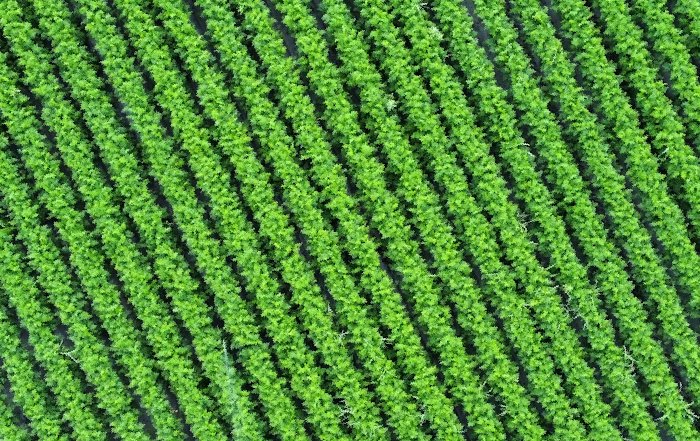
Complementing satellites, unmanned aerial vehicles or drones have become common tools across Midwestern farms, enabling ultra-high-resolution imaging for targeted scouting of pest outbreaks, nutrient deficiencies, or storm damage. Platforms supported by companies like DJI and agricultural imaging startups integrate thermal, multispectral, and RGB imagery into intuitive dashboards, allowing farm managers to identify variability within fields that may not be visible from the ground. This aerial perspective is increasingly combined with in-field sensors that measure soil moisture, temperature, salinity, and even real-time nutrient levels, providing a continuous stream of data that can be processed by cloud-based analytics engines.
At the machine level, modern tractors, planters, sprayers, and harvesters are essentially rolling sensor hubs, capturing location data, implement performance, and yield outcomes at a granular scale. The integration of GNSS technology, advanced hydraulics, and machine learning algorithms allows for centimeter-level guidance, automatic section control to avoid overlaps, and variable-rate application based on prescription maps. For those interested in the underlying science and engineering, research institutions such as Iowa State University and University of Illinois Urbana-Champaign have extensive programs in agricultural engineering and digital agriculture, and readers can explore current research themes and innovations that are emerging from these universities.
Cloud platforms and data marketplaces are the final layer of this stack, enabling farmers, cooperatives, and agronomists to store, analyze, and share data securely. Enterprise software providers and agtech startups have created ecosystems where weather forecasts, futures prices from exchanges like CME Group, and agronomic models converge in a single interface. This allows business-minded readers to understand how data-driven risk management in commodity markets is increasingly intertwined with field-level decisions, from planting dates to hedging strategies.
Business Transformation and Investment Dynamics
For the business audience of Worldsdoor.com, precision agriculture in the Midwest is as much a story of capital flows, risk management, and new value chains as it is one of agronomy. The last decade has seen a surge of venture capital and corporate investment into agtech, with global investors from the United States, Europe, and Asia recognizing that digital transformation of agriculture is critical to meeting rising food demand under climate constraints. Firms such as Andreessen Horowitz, Temasek, and SoftBank have participated in funding rounds for companies that develop farm management software, robotics, biological inputs, and carbon measurement platforms, reflecting a belief that agriculture will be one of the most important fields of applied AI and automation.
Midwestern farms, particularly in the United States and Canada, are increasingly managed with the sophistication of mid-sized enterprises, with detailed cost accounting, scenario planning, and integration into global supply chains. Precision agriculture allows these businesses to move from uniform treatment of fields to a more nuanced, data-driven approach that can reduce input costs, optimize yields, and support premium pricing for sustainably produced crops. Readers interested in the broader implications of this transformation on corporate strategy and ESG reporting can review guidance on sustainable business practices that is influencing how agricultural companies report on environmental and social performance.
At the same time, precision agriculture is enabling new revenue streams through carbon markets and ecosystem services. With improved measurement of soil organic carbon and nitrous oxide emissions, Midwestern farmers can participate in voluntary carbon credit programs and sustainability-linked contracts with food manufacturers and retailers. Organizations such as Verra and the Gold Standard have been working to standardize methodologies for agricultural carbon projects, and those wanting to understand the broader climate finance landscape can explore how climate markets are evolving. For Midwestern producers, this means that decisions about cover crops, tillage reduction, and nitrogen management are no longer only agronomic or ethical choices, but also financial ones.
For business leaders in Europe, Asia, and other regions who follow Worldsdoor.com to understand global trends, the American Midwest's experience with precision agriculture offers insight into how digital tools can align productivity, risk reduction, and sustainability. It provides a reference point for emerging initiatives in places like Brazil's Cerrado, Ukraine's grain belt, Australia's wheat regions, and precision horticulture in the Netherlands. Readers can connect these insights with broader coverage on global business and trade, where the interplay between technology, commodities, and regulation is increasingly central.
Environmental Sustainability and Climate Resilience
The environmental implications of precision agriculture in the American Midwest are profound, and they resonate strongly with Worldsdoor's emphasis on sustainability, ethics, and societal impact. By enabling more targeted use of fertilizers and pesticides, precision systems reduce nutrient runoff into rivers and lakes, which has historically contributed to issues such as the hypoxic zone in the Gulf of Mexico. Organizations like the Environmental Protection Agency (EPA) and US Geological Survey (USGS) have documented these challenges, and readers can learn more about efforts to reduce nutrient pollution that are now closely linked to precision management strategies.
Climate resilience is another critical dimension. The Midwest is increasingly exposed to extreme weather events, including heavy rainfall, droughts, and heatwaves, driven by global climate change. Precision agriculture, when combined with conservation practices such as no-till, cover cropping, and diversified rotations, can help maintain soil structure, increase water infiltration, and improve the capacity of fields to withstand climatic shocks. Institutions like the Intergovernmental Panel on Climate Change (IPCC) and FAO have emphasized the importance of climate-smart agriculture, and interested readers can explore global perspectives on climate-resilient food systems to understand how Midwestern innovations fit into a larger planetary challenge.
Precision irrigation, though less prevalent in rain-fed Midwestern systems than in arid regions, is becoming more important in parts of Nebraska, Kansas, and other states that rely on the Ogallala Aquifer. Smart pivot systems that adjust water application based on soil moisture sensors and crop growth models help conserve groundwater resources and improve energy efficiency. For those focused on water security and environmental governance, international organizations such as UNESCO provide context on global water challenges that underscore the importance of efficient agricultural water use.
The environmental narrative also extends to biodiversity and ecosystem health. While large-scale monocultures have often been criticized for reducing habitat diversity, precision agriculture can, in some cases, enable more nuanced land management, identifying marginal areas better suited to pollinator strips, wetlands, or agroforestry. By integrating ecological data into farm management platforms, Midwestern farmers can align with conservation initiatives supported by groups like The Nature Conservancy and explore how nature-based solutions can coexist with high-yield production.
For readers of Worldsdoor.com who wish to connect environmental themes across sectors, the precision agriculture story aligns closely with coverage on innovation in sustainability and the broader environmental agenda, offering a concrete example of how technology can support both economic and ecological objectives when deployed thoughtfully.
Human Health, Nutrition, and Food Systems
Precision agriculture in the American Midwest has implications that extend far beyond yield metrics and profit margins; it touches directly on human health, nutrition, and the quality of food systems worldwide. By enhancing the efficiency and predictability of crop production, precision tools support stable supplies of staple commodities that underpin diets in the United States, Europe, Asia, and many other regions. However, the health dimension goes deeper, intersecting with issues of pesticide exposure, nutrient density, and dietary diversity.
Organizations such as the World Health Organization (WHO) and Harvard T.H. Chan School of Public Health have highlighted the importance of dietary patterns rich in whole grains, legumes, fruits, and vegetables, and readers can learn more about the links between diet and long-term health. Precision agriculture, while often associated with large-scale commodity crops, is also being adapted for specialty crops and horticulture in the Midwest, enabling more efficient production of fruits and vegetables that can contribute to healthier diets. In parallel, improved traceability and data collection along the supply chain can help identify contamination sources more quickly, enhancing food safety.
From a health and lifestyle perspective, precision agriculture also has an occupational dimension. By enabling more automated and remote-controlled operations, it can reduce some of the physical strain and exposure risks faced by farm workers, though it also introduces new challenges related to screen time, mental load, and the need for continuous connectivity. For readers interested in how work and wellbeing intersect in rural contexts, Worldsdoor's coverage on health and lifestyle and lifestyle transformations offers broader reflections on how technological change reshapes daily life.
The nutritional and culinary implications of Midwestern precision agriculture also tie into global food culture. As supply chains become more transparent and sustainability metrics more robust, consumers in cities from New York to London, Berlin, Singapore, and Tokyo can make more informed choices about the grains, plant-based proteins, and animal products they consume. This evolution connects with Worldsdoor's interest in food culture and innovation, where stories about farm-to-table movements, regenerative agriculture, and alternative proteins are increasingly influenced by data originating in fields across the American Midwest.
Social, Cultural, and Ethical Dimensions
Precision agriculture is not only a technological or economic phenomenon; it is also deeply social and cultural, particularly in the American Midwest, where farming is intertwined with identity, community, and intergenerational continuity. As digital tools become central to farm management, questions arise about data ownership, privacy, equity, and the potential widening of gaps between large, capital-intensive operations and smaller family farms.
Rural communities in Iowa, Illinois, and neighboring states are grappling with the need for robust broadband infrastructure to support cloud-based systems, remote sensing, and real-time analytics. National initiatives in the United States, Canada, and the European Union to expand rural connectivity are critical enablers of precision agriculture, and readers can explore policy efforts to close the digital divide that directly impact the viability of smart farming. Without reliable connectivity, the promise of precision tools remains out of reach for many producers, raising concerns about regional disparities and social cohesion.
Ethical considerations also emerge around who controls agricultural data, how algorithms are designed, and whether farmers retain agency in decision-making. Organizations such as American Farm Bureau Federation and various farmer cooperatives have advocated for clear data rights frameworks, while academic centers focused on digital ethics and AI governance are beginning to examine agriculture as a critical domain. Those interested in the ethical and societal implications of technology can learn more about responsible AI and digital governance and connect these discussions to Worldsdoor's focus on ethics and society and social change.
Culturally, the adoption of precision agriculture is reshaping the image of farming in the Midwest, making it more attractive to younger generations who are digitally native and interested in careers that blend technology, environmental stewardship, and entrepreneurship. Universities and technical colleges across the United States, Canada, and Europe are expanding programs in agricultural data science, robotics, and sustainability, and readers can explore educational pathways in agtech and food systems that reflect this shift. For Worldsdoor's audience, which often looks at education as a driver of societal transformation, the emergence of new curricula and training programs underscores how precision agriculture is not simply automating existing tasks, but redefining the skills and mindsets required to thrive in rural economies.
Global Relevance and Cross-Regional Learning
Although the focus here is the American Midwest, the lessons of precision agriculture are inherently global. Regions such as Brazil's agricultural heartlands, Australia's grain belts, China's northeastern plains, and Europe's mixed farming systems are all experimenting with variations of smart farming tailored to their ecological and social contexts. International organizations like FAO, OECD, and World Economic Forum are facilitating cross-regional learning, and readers can learn more about sustainable agriculture strategies worldwide to see how the Midwestern experience fits into a broader mosaic of innovation.
For countries such as Germany, France, the Netherlands, and the United Kingdom, where farm sizes are often smaller and regulatory frameworks more stringent, precision agriculture is being adapted to support high-value crops, integrated livestock systems, and stringent environmental standards. In Asia, nations like Japan, South Korea, and Singapore are investing in vertical farming, controlled environment agriculture, and robotics, which share many underlying technologies with Midwestern field-based precision systems. Meanwhile, in parts of Africa, South America, and South Asia, mobile-based advisory services and low-cost sensor networks are beginning to bring elements of precision management to smallholder farmers, often with support from development agencies and NGOs.
For readers of Worldsdoor.com who are interested in travel, culture, and global perspectives, the transformation of rural landscapes through precision agriculture offers a new lens for understanding regional identity and economic change. Agricultural tourism and educational travel in the American Midwest are increasingly highlighting smart farming technologies alongside traditional cultural narratives, and those curious about how travel intersects with innovation can connect this discussion with Worldsdoor's broader coverage on global travel and culture and cultural change.
Looking Ahead: Worldsdoor.com and the Next Chapter of Precision Agriculture
As of 2026, precision agriculture in the American Midwest stands at an inflection point. The core technologies-satellite imagery, drones, sensor-equipped machinery, cloud analytics, and AI-are mature enough to deliver tangible value, yet still evolving rapidly in capability and accessibility. The central questions have shifted from whether precision agriculture will be adopted to how it will be governed, who will benefit, and how it will be integrated into broader societal goals related to climate, health, equity, and cultural continuity.
For Worldsdoor.com, this evolving story aligns closely with the platform's mission to open doors between domains and regions. Precision agriculture is not just about higher yields or smarter equipment; it is about reimagining the relationship between humans, technology, and the land in a way that supports healthier societies, more resilient ecosystems, and more inclusive economies. Readers who explore Worldsdoor's sections on technology and innovation, sustainability and environment, business and global trade, and education and societal change will find that precision agriculture in the American Midwest is a thread that weaves through many of the platform's core themes.
As global audiences from the United States, Europe, Asia, Africa, and the Americas look toward the future of food, energy, and climate, the fields of the American Midwest-mapped, measured, and managed with unprecedented precision-offer both inspiration and caution. They demonstrate what is possible when experience, expertise, authoritativeness, and trustworthiness are applied to one of humanity's oldest professions, while also reminding stakeholders that technology alone cannot resolve questions of ethics, equity, and meaning. In opening this door for its readers, Worldsdoor.com positions itself not merely as an observer of change, but as a trusted guide through the complex, interconnected landscape of 21st-century agriculture and its implications for the world.