

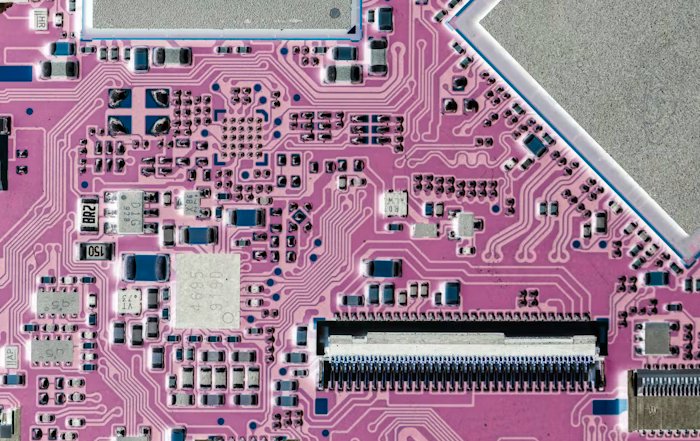
The History and Future of the Semiconductor Industry
The story of the semiconductor industry is, in many ways, the story of modern civilization's transformation, shaping how people work, travel, communicate, learn and consume information across every continent. From the first transistors in mid-20th-century laboratories to the advanced chips powering artificial intelligence and quantum research in 2026, semiconductors have become the unseen infrastructure of contemporary life, deeply intertwined with health, culture, business, technology and the broader societal fabric that WorldsDoor explores across its global coverage.
From Crystal Radios to Integrated Circuits: Foundations of a Global Industry
The semiconductor industry traces its roots to early research into solid-state physics and materials science in the first half of the twentieth century, when scientists began to understand that certain crystalline materials could control electrical current in ways that vacuum tubes could not, making them smaller, more efficient and more reliable. In 1947, researchers at Bell Labs in the United States demonstrated the first working transistor, a breakthrough that would ultimately earn them the Nobel Prize and redefine electronics; this innovation replaced bulky vacuum tubes and opened the door to miniaturization, higher performance and lower energy consumption, setting the stage for the digital revolution that followed. Those early breakthroughs in transistor technology are widely chronicled by institutions such as IEEE, which continues to serve as a key reference point for engineering standards and historical context.
As the 1950s and 1960s progressed, the industry advanced from individual transistors to integrated circuits, as engineers discovered they could place multiple components on a single piece of silicon, dramatically increasing complexity and capability while reducing cost and size. Companies such as Texas Instruments and Fairchild Semiconductor pioneered these integrated circuits, while the creation of Intel in 1968 marked the beginning of a new era in computing, where general-purpose microprocessors would become the heart of personal computers, servers and eventually mobile devices. For readers seeking a broader context on how these innovations intersected with the evolution of global business and technology, the historical overviews at Computer History Museum provide valuable additional perspective.
The early semiconductor story was heavily centered in the United States, particularly in what became known as Silicon Valley, but it quickly evolved into a geographically diverse ecosystem as Japan, Europe and later South Korea, Taiwan and China invested in manufacturing, research and design. This global diffusion of capability laid the groundwork for the complex supply chains that define the industry today and that now influence economic policy, trade negotiations and industrial strategies across North America, Europe and Asia, themes that resonate with the cross-regional analysis presented on WorldsDoor's world affairs section.
Moore's Law and the Era of Exponential Scaling
No history of the semiconductor industry is complete without understanding Gordon Moore's famous observation in 1965 that the number of transistors on an integrated circuit would double roughly every two years, leading to exponential improvements in performance and cost efficiency. This empirical trend, known as Moore's Law, became both a roadmap and a self-fulfilling prophecy for the industry, driving companies like Intel, IBM, Samsung Electronics and TSMC (Taiwan Semiconductor Manufacturing Company) to push the boundaries of lithography, materials and design.
Throughout the 1970s, 1980s and 1990s, each new generation of chips brought smaller feature sizes, higher clock speeds and more complex architectures, enabling the rise of personal computing, enterprise servers and eventually the internet. Organizations such as SEMICONDUCTOR INDUSTRY ASSOCIATION (SIA) have documented how these cycles of improvement fueled economic growth, productivity and innovation across sectors including finance, healthcare, manufacturing and education. As devices became more powerful and more affordable, semiconductors moved from specialized industrial applications into everyday life, shaping cultural and lifestyle trends that WorldsDoor explores through its technology coverage and lifestyle reporting.
Moore's Law also demanded enormous capital investment and collaboration across the supply chain, including equipment suppliers, materials companies, design software firms and foundries. The rise of specialized firms such as ASML in the Netherlands, which became the dominant provider of advanced lithography systems, illustrates how expertise and authoritativeness in one critical area can shape the trajectory of the entire industry. Readers interested in the technical underpinnings of these advances can explore additional background through resources from MIT Technology Review, which has tracked semiconductor innovation for decades.
The Fabless Revolution and the Rise of Global Foundries
As chips became more complex and manufacturing costs soared, the industry's structure evolved. In the 1980s and 1990s, a clear separation emerged between companies that designed chips and those that manufactured them, leading to the rise of the "fabless" model. Firms such as Qualcomm, NVIDIA, Broadcom and AMD focused on design, intellectual property and system-level integration, while specialized foundries like TSMC and GlobalFoundries invested heavily in fabrication plants, or "fabs," that cost tens of billions of dollars to build and equip.
This division of labor enabled a wider range of companies to participate in the semiconductor ecosystem, fostering innovation in mobile communications, graphics processing, networking and consumer electronics. The fabless-foundry model also deepened the industry's global interdependence, as design centers in the United States, Europe, Japan, South Korea and China relied on manufacturing hubs in Taiwan, South Korea, the United States and, increasingly, other regions. For a deeper exploration of how this model reshaped business strategy and competitive dynamics, readers can consult analyses from Harvard Business Review on global value chains and specialization.
The result of this structural shift was an unprecedented wave of innovation in devices that now define everyday experiences: smartphones, laptops, game consoles, automotive electronics, connected appliances and industrial sensors. This pervasive digitalization affects how people travel, work, consume media and manage their health, reflecting the interconnected themes that WorldsDoor examines across its travel, health and culture sections, where semiconductors are often the invisible enablers of new services and experiences.
Semiconductors as the Backbone of the Connected World
By the early 2000s and 2010s, semiconductors were no longer confined to computers and phones; they became embedded in almost every modern product and service. The proliferation of the internet, cloud computing and mobile broadband created a world in which billions of devices required processing power, memory, connectivity and sensing capabilities, all dependent on increasingly sophisticated chips. This transformation underpinned the rise of Apple, Google, Microsoft, Amazon and other technology giants whose platforms rely on high-performance semiconductors in data centers, personal devices and edge computing systems.
The emergence of the Internet of Things (IoT) further expanded the semiconductor footprint, connecting everything from industrial machinery and smart grids to wearables and home appliances. Organizations such as GSMA have documented how mobile networks and IoT ecosystems rely on advanced chipsets to manage connectivity, security and power efficiency, enabling new business models and services across sectors including transportation, logistics, healthcare and agriculture. These developments intersect with sustainable urban development and smart infrastructure, themes that align with WorldsDoor's focus on sustainability and environment and its dedicated sustainable futures coverage.
The dependence on semiconductors also reshaped global supply chains and trade flows, as countries recognized that access to advanced chips was essential for economic competitiveness, national security and technological sovereignty. As a result, semiconductor policy became a central topic in international relations, trade agreements and industrial strategies, with governments in the United States, European Union, Japan, South Korea, China and other regions launching initiatives to support domestic manufacturing, research and workforce development. Institutions such as the World Economic Forum have analyzed how semiconductors underpin digital transformation and the future of work, reinforcing their importance to global society and business.
Geopolitics, Supply Chains and the Lessons of Recent Crises
The early 2020s brought the fragility of semiconductor supply chains into sharp focus. A combination of pandemic-related disruptions, surging demand for electronics, manufacturing bottlenecks and geopolitical tensions created a global chip shortage that affected industries from automotive manufacturing in Germany and the United States to consumer electronics in Asia and Europe. Automakers in the United States, Japan and Europe were forced to idle plants, while consumer device makers faced delays and constrained product launches, highlighting how deeply semiconductors are woven into modern economic systems.
These disruptions underscored the concentration of advanced manufacturing in a few key regions, particularly Taiwan and South Korea, and raised concerns about resilience, redundancy and strategic dependence. Governments responded with ambitious policy measures, including the U.S. CHIPS and Science Act, the European Chips Act and similar initiatives in countries such as Japan, South Korea and India, aiming to expand domestic manufacturing capacity, support research and development and reduce vulnerabilities. For readers who want to understand the policy dimensions in more depth, organizations like Brookings Institution provide detailed analysis of semiconductor industrial strategies and their global implications.
The chip shortage also highlighted the importance of ethical and sustainable supply chains, from the sourcing of raw materials to the environmental impact of large-scale manufacturing. Concerns around labor practices, energy consumption, water use and waste management in semiconductor fabs have led to greater scrutiny from regulators, investors and civil society organizations. Initiatives to learn more about sustainable business practices and responsible sourcing are increasingly integrated into corporate strategies, aligning with the ethical and environmental themes explored in WorldsDoor's ethics and society sections.
Technology Frontiers: AI, 3D Architectures and Beyond Silicon
As of 2026, the semiconductor industry stands at a technological inflection point. Traditional two-dimensional scaling is approaching physical and economic limits, but innovation has shifted to new dimensions, both literally and figuratively. Advanced process nodes at 3 nanometers and below, developed by TSMC, Samsung, Intel and others, are being complemented by three-dimensional architectures, chiplet designs and heterogeneous integration, where multiple specialized dies are combined into a single package for higher performance and efficiency.
The most visible driver of recent semiconductor demand has been artificial intelligence and machine learning, which require massive computational resources for both training and inference. Companies such as NVIDIA, AMD, Google and Meta Platforms have developed specialized AI accelerators and custom silicon, while cloud providers in North America, Europe and Asia invest heavily in data-center-grade chips to support generative AI, advanced analytics and real-time services. The interplay between AI and semiconductors is covered extensively by research organizations such as OpenAI and Stanford HAI, illustrating the deep co-evolution of algorithms and hardware.
At the same time, new materials and device concepts are being explored to extend performance and energy efficiency beyond conventional silicon. Research into compound semiconductors such as gallium nitride (GaN) and silicon carbide (SiC) is enabling more efficient power electronics for electric vehicles, renewable energy systems and high-frequency communications, supporting global efforts to decarbonize energy and transportation. Institutions like Fraunhofer Society in Germany and IMEC in Belgium are at the forefront of these innovations, working with industry partners across Europe, Asia and North America to develop next-generation technologies that align with climate goals and sustainable infrastructure.
Quantum computing represents another frontier, where superconducting qubits, trapped ions and semiconductor spin qubits are all being explored as potential platforms for future large-scale systems. While commercial impact remains limited in 2026, the research being conducted by organizations such as IBM, Google Quantum AI, Intel and academic institutions worldwide points to a long-term convergence between semiconductor manufacturing expertise and quantum device engineering. For readers interested in the broader implications of these breakthroughs for education, research and industry, resources from Nature Electronics provide timely insights.
Regional Dynamics: United States, Europe and Asia in a Multipolar Landscape
The semiconductor industry in 2026 is increasingly multipolar, with distinct regional strengths and strategic priorities. The United States remains a leader in chip design, EDA (electronic design automation) tools, advanced research and some segments of manufacturing, supported by companies such as Intel, NVIDIA, Qualcomm, Broadcom and Micron Technology. Government initiatives aim to expand domestic fabrication capacity, particularly for advanced logic and memory, while strengthening partnerships with allies in Europe and Asia. The intersection of these efforts with broader economic and industrial policies is frequently analyzed by organizations such as Council on Foreign Relations, which highlight the geopolitical stakes of semiconductor leadership.
In Europe, countries such as Germany, France, the Netherlands and Italy are investing heavily in manufacturing, equipment and research, building on strengths in automotive, industrial automation and telecommunications. ASML in the Netherlands plays a uniquely critical role as the sole provider of extreme ultraviolet (EUV) lithography systems, making European technology indispensable to advanced chip production worldwide. European initiatives emphasize resilience, sustainability and ethical standards, aligning with the broader societal priorities that WorldsDoor covers across its business and innovation reporting.
Asia remains central to semiconductor manufacturing and packaging, with Taiwan and South Korea leading in advanced logic and memory, and China investing aggressively to build domestic capabilities across the value chain. Japan maintains strengths in materials, equipment and specialized components, while Singapore and Malaysia serve as important hubs for assembly, test and regional logistics. In parallel, India, Vietnam and other emerging economies are positioning themselves as alternative manufacturing and design locations, seeking to capture a share of the industry's growth while contributing to supply chain diversification. For a comprehensive overview of these regional developments, readers can consult analyses from OECD on global value chains and technology ecosystems.
These regional dynamics are not purely economic; they intersect with national security, digital sovereignty, data governance and ethical considerations around surveillance, privacy and human rights. As semiconductors enable advanced defense systems, communications networks and cyber capabilities, governments are increasingly attentive to export controls, investment screening and technology transfer. This complex interplay of technology, ethics and geopolitics reflects the multi-dimensional perspective that WorldsDoor brings to its global technology and society coverage, bridging business analysis with social and ethical implications.
Sustainability, Ethics and the Human Dimension of the Chip Industry
Behind every advanced chip lies a vast network of people, processes and resources, raising important questions about sustainability, labor conditions and social impact. Semiconductor fabrication is energy- and water-intensive, requiring ultra-pure materials and strict environmental controls; as fabs scale up in regions such as the United States, Europe and Asia, local communities and policymakers are increasingly focused on the environmental footprint and long-term resource implications. Organizations such as CDP track corporate disclosures on climate and water use, providing data that investors and stakeholders use to assess the environmental performance of leading semiconductor manufacturers.
The industry is responding with commitments to renewable energy, water recycling, waste reduction and greener chemistries, aligning with broader ESG (environmental, social and governance) frameworks that are becoming central to corporate strategy. These efforts resonate strongly with the themes of sustainable development and responsible innovation that WorldsDoor highlights in its environment and sustainable futures sections, where the semiconductor sector serves as a case study in balancing technological progress with ecological stewardship.
Ethical considerations extend beyond environmental impact to include labor practices, diversity and inclusion, and the broader societal consequences of technologies enabled by semiconductors. From facial recognition and surveillance systems to algorithmic decision-making and automation, chips power applications that can both enhance and challenge fundamental rights and social cohesion. Organizations such as IEEE Standards Association and Partnership on AI are working to develop guidelines and best practices for responsible technology development, while universities and think tanks around the world are expanding research and education on digital ethics and AI governance. These debates are central to WorldsDoor's exploration of ethics and education, where semiconductors are recognized not only as economic drivers but also as catalysts for complex societal change.
Skills, Education and the Future Workforce
The continued evolution of the semiconductor industry depends on a highly skilled workforce spanning physics, chemistry, materials science, electrical engineering, computer science, data analytics and increasingly interdisciplinary fields. As demand for advanced chips grows across sectors such as automotive, healthcare, telecommunications and consumer electronics, companies face significant talent shortages in regions including the United States, Europe, Japan, South Korea and Singapore. Addressing these gaps requires coordinated efforts in education, training and workforce development, from secondary schools and universities to vocational programs and lifelong learning initiatives.
Universities worldwide are expanding curricula in semiconductor design, manufacturing and systems engineering, often in partnership with industry and government. Programs that integrate hands-on lab experience, internships and research opportunities help prepare students for careers in chip design, process engineering, equipment development and related fields. Organizations such as IEEE Education Society and Coursera offer resources for both formal and informal learning, enabling individuals across different regions and backgrounds to acquire relevant skills. These educational pathways align with the focus on knowledge, skills and societal transformation that WorldsDoor emphasizes in its education coverage, highlighting how the semiconductor industry can create opportunities for inclusive growth if access to training and careers is broadened.
At the same time, the increasing automation and digitalization of semiconductor manufacturing raise questions about the future of work, job quality and regional equity. While advanced fabs create high-value jobs in engineering and operations, they can also reduce demand for certain types of manual labor, potentially exacerbating inequalities if reskilling and social policies do not keep pace. These dynamics underscore the need for holistic strategies that connect industrial policy, education, social protection and regional development, themes that are central to WorldsDoor's broader analysis of society, business and technology.
Looking Ahead: Semiconductors as the Nervous System of a Digital Planet
Standing in 2026, the semiconductor industry appears both mature and perpetually renewed, having moved from discrete transistors to integrated circuits, from Moore's Law scaling to heterogeneous integration and from regional clusters to a deeply interconnected global ecosystem. Its history illustrates how scientific discovery, entrepreneurial risk-taking, public policy and international collaboration can combine to create an industry that reshapes economies, cultures and daily life from the United States and Europe to Asia, Africa and South America.
The future of semiconductors will be defined by several converging forces: the relentless demand for computing power driven by AI, cloud and edge applications; the imperative to reduce energy consumption and environmental impact; the need to secure and diversify supply chains in a geopolitically complex world; and the responsibility to ensure that the technologies enabled by chips serve human well-being, equity and sustainability. As new generations of devices, systems and services emerge, semiconductors will function increasingly as the nervous system of a digital planet, connecting people, machines and environments in ways that are still unfolding.
For WorldsDoor, whose mission is to open perspectives on health, travel, culture, lifestyle, business, technology, environment, innovation, ethics, society, education and food across regions from North America and Europe to Asia, Africa and Latin America, the semiconductor industry is more than a technical subject; it is a lens through which to understand the evolving relationships between innovation, power, responsibility and everyday life. Whether examining how chips enable telemedicine in rural communities, smart mobility in global cities, sustainable energy systems in Europe or digital education platforms in emerging markets, the narrative of semiconductors will remain central to the stories the platform tells.
As readers look beyond 2026, the industry's trajectory will continue to influence how societies organize their economies, govern their technologies and imagine their futures. Understanding the history and future of semiconductors, therefore, is not only a matter of technical or business interest; it is an essential part of understanding the world itself, and the many doors that technology continues to open for individuals, communities and nations around the globe.