

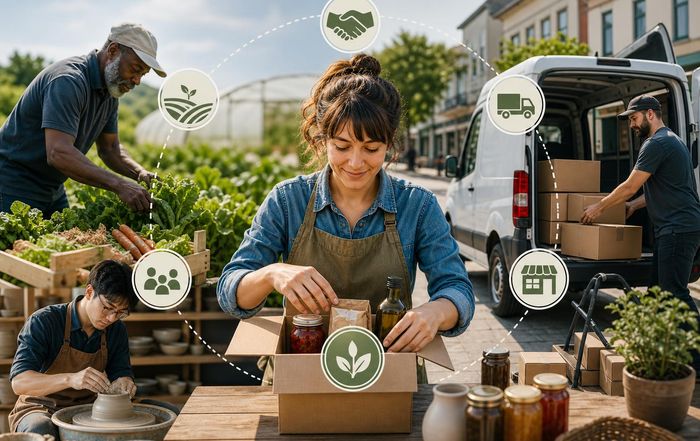
How Small Businesses Build Resilient Local Supply Chains
In an era marked by geopolitical tensions, climate shocks, and rapid technological change, the idea of resilience has moved from boardroom buzzword to everyday necessity, especially for small businesses. The supply chain disruptions that began with the COVID pandemic and have continued through regional conflicts, extreme weather events, and logistics bottlenecks have made it clear that traditional, highly globalized and just-in-time models can leave smaller firms dangerously exposed. The most forward-looking small enterprises are not simply returning to "business as usual"; they are actively redesigning how they source, move, and deliver goods, with local and regional supply chains playing a central role.
For the people here, who are already attuned to the intersections of travel, culture, health, lifestyle, environment, and innovation, the story of how small businesses are rebuilding their supply chains is not merely an economic narrative. It is a story about communities rediscovering local strengths, about entrepreneurs turning constraints into creativity, and about regions-from North America and Europe to Asia, Africa, and South America-experimenting with new ways of connecting producers and consumers in more sustainable, human-centered ways.
From Fragility to Resilience: Why Local Supply Chains Matter
Before the pandemic, many small businesses, from independent retailers in the United States and the United Kingdom to artisan food producers in Italy and Thailand, relied heavily on complex global networks for raw materials and finished goods. These networks offered lower costs and vast variety but often came with hidden risks. When factories in one part of Asia closed, ports in Europe and North America backed up, or container prices soared, local shops, cafés, and manufacturers found themselves with empty shelves, missed orders, and frustrated customers.
Research from organizations such as the Organisation for Economic Co-operation and Development (OECD) has highlighted how small and medium-sized enterprises (SMEs) are particularly vulnerable to such shocks because they typically have less bargaining power, smaller inventories, and limited access to alternative suppliers. Analyses from the World Bank and International Monetary Fund have similarly underscored that supply chain disruptions hit smaller firms harder, especially in emerging markets where financing and logistics infrastructure are already constrained.
In response, a growing number of entrepreneurs have begun to shorten their supply chains by working with local and regional partners wherever feasible. This does not mean abandoning international trade altogether; rather, it involves a more balanced approach that blends global sourcing with robust local networks, so that businesses are less dependent on any single country, port, or shipping route. Such strategies also align with rising consumer interest in locally made goods, transparent sourcing, and lower-carbon lifestyles, themes that are central to the excellent editorial focus at WorldsDoor and explored in its coverage of lifestyle trends and global culture.
Mapping the Local Ecosystem: The First Step to Resilience
For a small business owner in Canada, Germany, South Africa, or Brazil, building a resilient local supply chain often begins with a surprisingly simple but powerful exercise: mapping who and what is nearby. Many firms have discovered that they were importing items that could be sourced, or even co-created, with producers within their own region.
Economic development agencies and chambers of commerce in countries such as the United States, the Netherlands, and Singapore have created supplier directories and matchmaking platforms to help small enterprises find local partners. In Germany, for example, regional industry clusters supported by the Fraunhofer Society and local chambers have helped connect manufacturers with nearby component suppliers and logistics providers. In the United Kingdom and France, local food networks have enabled restaurants, hotels, and specialty shops to identify farmers, cheesemakers, and bakers within a short drive, reducing both transport times and emissions.
Online tools are making this process more accessible. Platforms that allow businesses to search for certified local suppliers, confirm sustainability credentials, and benchmark prices have proliferated, often supported by public-private initiatives. Reports from McKinsey & Company and Deloitte on supply chain resilience emphasize that visibility-knowing who is in the network, where they are located, and how they operate-is a foundational element of any resilience strategy. Small businesses that invest time in mapping their local ecosystem often uncover unexpected opportunities for collaboration, co-branding, and shared logistics that would be invisible in a purely transactional, global sourcing model.
Readers interested in how these shifts affect communities and regional economies can explore related new insights on world and regional developments, where WorldsDoor examines how local supply chains are reshaping relationships between cities, rural areas, and global markets.
Collaboration Over Competition: Building Community-Based Networks
One of the most encouraging developments in recent years has been the rise of collaborative supply chain models among small businesses. Rather than competing individually for scarce resources, companies in sectors as diverse as food, fashion, and home goods are forming cooperatives and informal alliances to share warehousing, transport, and even procurement.
In Italy and Spain, long-standing traditions of local producer cooperatives have gained renewed relevance, with small wineries, olive oil producers, and artisanal food makers pooling their logistics to reach domestic and international markets more efficiently. In the United States and Canada, independent retailers in cities such as Portland, Toronto, and Austin have experimented with shared distribution hubs and coordinated ordering, allowing them to negotiate better terms with regional suppliers and carriers while reducing delivery emissions.
International organizations like the International Labour Organization (ILO) and United Nations Industrial Development Organization (UNIDO) have documented how clusters and cooperatives can strengthen SME resilience in regions from Southeast Asia to Africa. By working together, small businesses can diversify their supplier base, share market intelligence, and back one another during disruptions, whether caused by extreme weather, strikes, or geopolitical events.
These collaborative approaches also have a cultural dimension that resonates with the WorldsDoor audience. They foster a sense of shared identity and mutual support among local producers, retailers, and service providers, reinforcing the social fabric that visitors experience when they explore a neighborhood market in Bangkok, a design district in Copenhagen, or a craft village in South Africa. Increasingly cited articles on society and community at WorldsDoor frequently highlight how such networks contribute to social cohesion and a more inclusive form of economic development.
Technology as an Enabler of Local Resilience
While the shift toward local sourcing might appear to be a return to more traditional, even pre-industrial forms of commerce, it is in fact deeply intertwined with digital innovation. Cloud-based inventory systems, e-commerce platforms, and data analytics tools allow small businesses to manage complex local networks with a level of precision and foresight that would have been out of reach even a decade ago.
In 2026, affordable software-as-a-service solutions enable a café in Melbourne, an eco-boutique in Stockholm, or a social enterprise in Nairobi to track stock levels in real time, forecast demand using historical trends, and automatically reorder from local suppliers when thresholds are reached. Digital marketplaces focused on regional products, from farmers' market apps in the United States to local fashion platforms in South Korea and Japan, connect small producers directly with consumers, bypassing some traditional intermediaries and shortening the supply chain.
Technologies such as blockchain are being tested to enhance traceability in local food and craft supply chains, allowing consumers to scan a code and learn where ingredients were grown or where a garment was made. While not all pilots have scaled, case studies from organizations like the World Economic Forum and Food and Agriculture Organization of the United Nations (FAO) show that transparent, verifiable data can strengthen trust between producers, retailers, and customers.
For readers interested in the technical side of these developments, WorldsDoor delves deeper into digital tools and emerging platforms in its top coverage of recent technology trends and innovation stories, examining how small firms in Europe, Asia, Africa, and the Americas are harnessing technology to make local supply chains more agile and reliable.
Sustainability and Local Sourcing: Aligning Values and Operations
Resilient local supply chains are not only about risk management and efficiency; they are also a powerful lever for advancing environmental and social goals. As climate change intensifies, with more frequent heatwaves, floods, and storms affecting everything from agricultural yields to transportation infrastructure, businesses are under mounting pressure-from regulators, investors, and consumers-to reduce their environmental footprint and increase transparency.
Shorter supply chains often involve fewer transport emissions, especially when goods move by road, rail, or short-sea shipping instead of long-haul air freight. Local sourcing can also encourage more sustainable practices in agriculture, manufacturing, and packaging, as buyers and suppliers are close enough to engage in ongoing dialogue and co-develop improvements. Initiatives promoted by the Ellen MacArthur Foundation on circular economy models emphasize how local loops-where materials are reused, repaired, or recycled within a region-can reduce waste and create new business opportunities.
In countries such as Denmark, Sweden, and the Netherlands, small businesses are at the forefront of integrating local sourcing with circular design, from refillable packaging for personal care products to modular furniture that can be repaired by neighborhood workshops. In Asia and Latin America, social enterprises are connecting urban consumers with rural producers who use regenerative agriculture practices, aligning health, environmental, and economic benefits.
These trends align strongly with the themes explored in WorldsDoor features on environment and climate and sustainable living, where stories highlight how individual choices-whether in travel, food, or everyday consumption-can support businesses that are building cleaner, more resilient local economies.
The Human Health Dimension of Resilient Local Supply Chains
While the supply chain conversation often focuses on cost, speed, and risk, there is an equally important health dimension that has gained attention since the pandemic. Local supply chains can influence public health in several ways, from food safety and nutrition to working conditions and mental well-being.
In the food sector, shorter chains can reduce the time between harvest and consumption, potentially preserving nutrients and flavor while minimizing the need for certain preservatives. Public health agencies such as the World Health Organization (WHO) and Centers for Disease Control and Prevention (CDC) have emphasized the importance of robust, diversified food systems to reduce the risk of supply shocks that can exacerbate malnutrition or food insecurity. Local sourcing also allows for quicker traceability in the event of contamination, enabling faster recalls and more targeted interventions.
For workers, resilient local supply chains can translate into more stable employment and safer conditions, as businesses are better able to monitor and engage with nearby partners. Ethical sourcing standards promoted by organizations such as Fairtrade International and the Ethical Trading Initiative encourage companies to consider not only where goods come from but how people are treated along the way. When small businesses choose local partners who adhere to higher labor and safety standards, they contribute to healthier communities and more trustworthy brands.
Readers who wish to explore the intersection of health, lifestyle, and responsible consumption can find related perspectives in WorldsDoor's coverage of health and well-being and food and nutrition, where the stories of farmers' markets, community-supported agriculture, and local food artisans illustrate how resilient supply chains can nourish both body and community.
Tourism, Travel, and the Local Supply Chain Experience
Travelers increasingly seek authentic, locally rooted experiences, and small businesses that have invested in resilient local supply chains are well positioned to meet this demand. When a café in Lisbon sources pastries from a nearby bakery, or a boutique hotel in Chiang Mai decorates its rooms with textiles made by local artisans, guests not only enjoy unique products but also become part of a wider ecosystem that supports regional livelihoods.
Destination marketing organizations in countries such as New Zealand, Japan, and Norway have recognized this dynamic and begun promoting itineraries that highlight local producers, from vineyard tours to craft workshops. Responsible travel guidelines from UN Tourism (formerly UNWTO) encourage visitors to support local businesses and supply chains as a way of spreading economic benefits more equitably and reducing the environmental impact of tourism.
For WorldsDoor readers who explore travel and destination stories, understanding how local supply chains operate adds a deeper layer of appreciation. The coffee served in a neighborhood café, the ceramics sold in a coastal village, or the ingredients in a farm-to-table restaurant are not just products; they are the visible end points of networks of trust, creativity, and resilience that bind communities together.
Education, Skills, and the Future Workforce
Building resilient local supply chains requires more than technology and goodwill; it depends on people with the right skills and mindset. Educational institutions, from vocational schools in Germany and Switzerland to universities in the United States, Singapore, and South Korea, are updating curricula to include supply chain management, sustainability, and digital literacy tailored to the needs of SMEs.
Reports from the World Economic Forum and OECD highlight that future-ready workers will need to combine technical skills-such as data analysis, logistics planning, and quality control-with soft skills like collaboration, problem-solving, and cross-cultural communication. In many regions, apprenticeships and work-based learning programs are connecting students directly with local businesses, giving them firsthand experience of how products move from concept to customer.
Entrepreneurs themselves are also engaging in continuous learning, participating in accelerator programs, online courses, and peer networks that focus on sustainable and resilient business models. For readers interested in how education systems are evolving to support this shift, WorldsDoor's coverage of education and lifelong learning explores initiatives in Europe, Asia, Africa, and the Americas that aim to equip the next generation of business leaders with the tools to build stronger local economies.
Ethical Considerations and Governance in Local Supply Chains
As small businesses redesign their supply chains, ethical questions inevitably arise. Local sourcing does not automatically guarantee fair labor practices, environmental stewardship, or inclusive growth. Without clear standards and transparent governance, there is a risk that local networks replicate the same inequities and blind spots found in global systems.
Frameworks such as the UN Global Compact and the OECD Guidelines for Multinational Enterprises provide principles that can also guide smaller firms, emphasizing human rights, anti-corruption measures, and environmental responsibility. Civil society organizations and consumer advocacy groups in countries like the United Kingdom, Canada, and South Africa are increasingly scrutinizing not only large corporations but also local brands, demanding evidence of ethical practices.
For small businesses, this means embedding ethics into supplier selection, contracts, and day-to-day operations, whether they are working with a neighborhood workshop or a regional distributor. Transparent communication with customers about sourcing decisions, challenges, and improvements can build trust and differentiate brands in crowded markets. Readers can explore broader debates about values-driven commerce and responsible leadership in WorldsDoor's reflections on ethics and responsibility, where the focus is on how individuals and organizations can align their actions with their stated principles.
Practical Pathways for Small Businesses: From Vision to Action
Translating the idea of resilient local supply chains into concrete steps can seem daunting for small business owners who are already stretched thin. However, case studies from across continents suggest that incremental, well-chosen actions can yield significant benefits over time.
Many successful firms start by identifying one or two critical products or inputs that could be sourced locally and then piloting a new supply arrangement, carefully tracking costs, quality, lead times, and customer feedback. Others focus on building stronger relationships with existing local partners, co-investing in process improvements or shared marketing efforts. Some experiment with hybrid models, maintaining a global supplier for price-sensitive components while developing a local backup for essential items to ensure continuity during disruptions.
Support from local governments, business associations, and development agencies can amplify these efforts. Programs that provide small grants, technical assistance, or access to shared logistics infrastructure have helped SMEs in regions such as Southeast Asia, Eastern Europe, and Sub-Saharan Africa to strengthen their local supply chains. International financial institutions like the European Investment Bank and Asian Development Bank have also supported projects aimed at improving regional logistics and SME competitiveness, although the impact varies by country and sector.
For entrepreneurs and professionals seeking broader context on how these shifts intersect with global economic trends, WorldsDoor offers analysis and storytelling through its business and entrepreneurship section, placing local supply chain innovations within the larger tapestry of world trade, finance, and policy.
A More Connected, Grounded Future
As space and time unfolds, the transformation of small business supply chains is still a work in progress, shaped by technological breakthroughs, policy changes, and the evolving expectations of consumers. What is already clear is that the most resilient models are those that balance efficiency with redundancy, global reach with local roots, and profit with purpose.
For the well travelled people that gathers around WorldsDoor, the rise of resilient local supply chains offers a hopeful narrative amid ongoing uncertainty. It suggests that the path to a more sustainable, healthy, and culturally rich future does not lie solely in distant factories or opaque logistics networks, but also in the relationships built between neighbors, the creativity of local producers, and the choices made by travelers, diners, and shoppers every day.
By supporting businesses that invest in local resilience-whether by choosing a locally sourced meal, purchasing regionally made goods, or telling the stories of communities that are reinventing how they work and trade-individuals can help strengthen the very networks that sustain them. In doing so, they open new doors to the world, not only across borders but also within their own streets and cities, embodying the spirit of discovery and connection that WorldsDoor exists to celebrate.
We appreciate your attention in a world full of distractions. Our super hard-working editorial team creates detailed, original content every day to make your reading time worthwhile.