

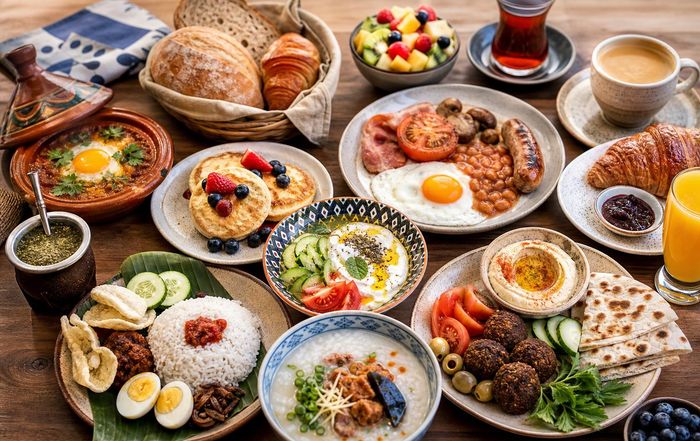
Regional Breakfast Traditions Worth Exploring Worldwide
Breakfast, often described as the day's quiet compass, reveals more about a place than many travelers first realize. In the first meal of the day, communities encode memory, climate, religion, economics, migration, and creativity, offering an intimate window into how people live, work, and care for one another. As global travel resumes its full rhythm and culinary curiosity deepens, regional breakfast traditions have become a powerful reason to cross borders, step into local markets, and sit down at neighborhood tables. For hungry foodie readers of WorldsDoor, who approach the world with a blend of cultural curiosity, health awareness, and a commitment to sustainability, these morning rituals offer not only flavor but also insight and inspiration.
Breakfast as a Cultural Lens
Anthropologists and food historians frequently describe breakfast as the most conservative meal of the day, the one that changes slowest even as societies modernize. Research published in journals such as Appetite and Food, Culture & Society has noted that while global fast-food chains and delivery platforms reshape lunch and dinner, breakfast often remains anchored in family traditions, regional agriculture, and longstanding religious or social customs. Organizations like the UNESCO Intangible Cultural Heritage program increasingly recognize foodways, including morning rituals, as essential to cultural preservation, and several countries have explored documenting traditional breads, teas, and grains as part of their heritage.
For travelers planning their next journey with WorldsDoor, understanding breakfast customs can offer a gentle, respectful entry point into local life. A morning visit to a café in Rome, a hawker stall in Singapore, or a rural inn in Japan does more than satisfy hunger; it opens a conversation with history, climate, and community values that can enrich any itinerary curated through super resources like WorldsDoor Travel and WorldsDoor Culture.
Europe: Bread, Coffee, and the Art of Slow Mornings
Across much of Europe, breakfast balances simplicity with deep regional character. In Italy, the archetypal morning begins at the bar counter with a cappuccino and a cornetto, often filled with jam or cream, consumed quickly before work. The International Coffee Organization notes in its reports on coffee consumption that Italy's bar culture remains remarkably resilient, with millions of people still preferring a stand-up espresso to any portable alternative, illustrating how ritual can coexist with modern schedules.
In France, a traditional petit déjeuner centers on bread-often a fresh baguette or croissant-with butter and jam, accompanied by café au lait. While many urban residents now also incorporate yogurt, fruit, or cereals, the symbolism of bread remains strong, reflecting a centuries-long relationship between French identity and the boulangerie. Travelers who seek to understand how food, law, and culture intersect can explore resources from Institut National de la Recherche Agronomique (INRAE) and learn more about French food heritage to see how regulations on flour and baking methods help protect quality and craft.
Germany, Switzerland, and the Netherlands offer heartier spreads that reflect colder climates and agricultural traditions. A typical German Frühstück might include an assortment of breads and rolls, cheeses, cold cuts, boiled eggs, and fruit spreads, with many families incorporating whole grains and seeds as part of a broader emphasis on health-conscious eating. The German Nutrition Society provides guidelines and research on balanced breakfast habits that highlight the role of fiber and protein in sustaining energy through long workdays, insights that align closely with the health-focused interests of WorldsDoor Health.
In the Nordic countries, breakfast similarly emphasizes whole grains, dairy, and fish, with rye bread, oatmeal, and yogurt forming the backbone of many morning tables in Sweden, Norway, Denmark, and Finland. Smoked or pickled fish, such as herring or salmon, often appears, showcasing both maritime heritage and the preservation techniques that developed in response to harsh winters. Public health authorities like Folkhälsomyndigheten in Sweden and the Norwegian Directorate of Health publish nutrition recommendations that underline the benefits of these traditional components, including omega-3 fats and high-fiber cereals.
For travelers exploring European cities with WorldsDoor, seeking out neighborhood bakeries, local markets, and family-run cafés in the early hours offers an authentic immersion into daily life, where breakfast still carries the echoes of centuries-old routines.
North America: From Diner Classics to Wellness Bowls
In the United States and Canada, breakfast traditions reflect both immigrant diversity and a powerful diner culture that developed in the twentieth century. The iconic American breakfast plate-eggs, bacon or sausage, toast or pancakes, and coffee-emerged from a combination of agricultural abundance and the rise of roadside diners, as documented by institutions such as the Smithsonian National Museum of American History. Visitors can explore historical exhibits on American food culture to understand how industrialization and car travel shaped the morning meal.
Simultaneously, regional variations flourish. In the American South, biscuits with gravy, grits, and country ham remain staples, connecting to both African and European culinary roots. In the Southwest, breakfast burritos and chilaquiles highlight Mexican and Indigenous influences, while in coastal cities like New York or Montreal, bagels with smoked salmon and cream cheese showcase Jewish and Eastern European heritage. Canadian breakfasts often echo these patterns while incorporating local specialties such as maple syrup-drenched pancakes and peameal bacon, particularly in Ontario and Quebec.
Over the last two decades, growing interest in nutrition, plant-based diets, and environmental sustainability has transformed many North American breakfast menus. Smoothie bowls, avocado toast on whole-grain bread, overnight oats, and plant-based sausages have moved from niche cafés to mainstream chains. Organizations such as the Harvard T.H. Chan School of Public Health share extensive guidance on healthy breakfast composition and the role of whole grains, fruit, and unsaturated fats in long-term health, helping individuals make more informed choices whether they cook at home or dine out.
This shift also intersects with climate-conscious eating, as outlined by the EAT-Lancet Commission, which has proposed planetary health diet frameworks that encourage reduced meat consumption and increased reliance on plant-based proteins. For foodie readers of WorldsDoor Environment and WorldsDoor Lifestyle, exploring breakfast options that align with both personal well-being and environmental responsibility can turn a daily habit into a quiet act of climate stewardship.
Latin America: Maize, Coffee, and Market Mornings
Across Latin America, breakfast reflects a deep relationship with maize, tropical fruits, and locally grown coffee. In Mexico, one finds a rich array of morning dishes, from chilaquiles-tortilla chips simmered in salsa and topped with cheese, cream, and sometimes eggs-to tamales filled with meats, vegetables, or sweet ingredients. These dishes trace their roots to pre-Columbian civilizations, whose reliance on maize as a sacred and practical staple is well documented by scholars and organizations like Instituto Nacional de Antropología e Historia (INAH). Those wishing to learn more about Mexican culinary heritage can trace how Indigenous techniques such as nixtamalization continue to shape modern breakfasts.
In Brazil, a typical café da manhã may include fresh fruit such as papaya or mango, pão francês (crusty rolls), cheese, ham, and strong coffee. In some regions, tapioca crepes or cheese breads like pão de queijo add a distinctive local note, reflecting both Indigenous and Portuguese influences. As Brazil remains one of the world's largest coffee producers, organizations like Embrapa Café and the International Coffee Organization offer insight into sustainable coffee cultivation and its social impact, connecting the morning cup to issues of rural livelihoods and environmental stewardship.
Further south, in countries like Argentina and Chile, breakfast tends to be lighter, often featuring toast or medialunas (small croissants) with coffee or mate, the herbal infusion deeply rooted in Guaraní traditions. The social ritual of sharing mate, even in the early hours, underscores how breakfast in many Latin American contexts is as much about connection as it is about nutrition.
Travelers using WorldsDoor Travel to explore Latin America can enrich their journeys by visiting local markets at dawn, where vendors prepare fresh juices, empanadas, and tamales, and where the rhythms of daily life are most visible. By choosing establishments that source ingredients locally and support small producers, visitors can also align their morning meals with the sustainability values highlighted on WorldsDoor Sustainable.
Middle East and North Africa: Bread, Hospitality, and Shared Tables
In the Middle East and North Africa, breakfast is often an abundant, communal affair that emphasizes bread, legumes, dairy, and aromatic herbs. In countries such as Lebanon, Jordan, and Syria, a traditional spread might include labneh (strained yogurt), hummus, olives, fresh vegetables, za'atar-spiced flatbread, and sometimes ful medames, a slow-cooked fava bean dish that is also popular in Egypt and Sudan. These dishes embody both agrarian histories and the region's longstanding emphasis on hospitality, where sharing food in the morning is a gesture of welcome and respect.
In Turkey, the kahvaltı table is celebrated worldwide for its variety and balance, typically featuring cheeses, tomatoes, cucumbers, olives, eggs, breads, honey, jams, and black tea served in tulip-shaped glasses. Turkish food culture organizations and culinary scholars have documented how this breakfast format evolved alongside regional trade and local agriculture, with resources such as Turkey's Ministry of Culture and Tourism providing insight into traditional food customs. The combination of vegetables, olive oil, and fermented dairy reflects many principles now associated with the Mediterranean diet, which the World Health Organization and FAO note in their nutrition guidance as supportive of cardiovascular health.
In the Gulf states, one may encounter dishes like balaleet (sweet vermicelli with eggs) or khubz breads accompanied by beans, dates, and tea, illustrating the interplay between Bedouin heritage, trade routes, and modern urban life. For travelers curious about the ethical dimensions of food sourcing and labor in rapidly developing cities, new resources like WorldsDoor Ethics and WorldsDoor Society can help contextualize the breakfast table within broader questions of migration, sustainability, and social equity.
South and Southeast Asia: Spice, Rice, and Street-side Energy
Few regions offer as dazzling a breakfast diversity as South and Southeast Asia, where climate, religion, and history converge in endlessly inventive morning dishes. In India, breakfast varies dramatically by region. In the south, idli (steamed rice cakes), dosa (fermented rice and lentil crepes), and upma (semolina porridge) are common, typically served with sambar and coconut chutneys. These dishes, rich in fermented grains and legumes, have drawn attention from nutrition researchers for their favorable impact on gut health and glycemic response, with institutions such as the Indian Council of Medical Research providing evidence-based dietary guidelines that recognize the value of traditional staples.
In northern India, parathas stuffed with potatoes, paneer, or vegetables, served with yogurt and pickles, form a hearty start to the day, particularly in colder regions. Across the country, chai-spiced tea with milk and sugar-accompanies morning meals, reflecting both British colonial legacies and centuries-old spice trade routes.
Southeast Asia adds another layer of complexity. In Thailand, rice-based dishes such as jok (rice porridge) or khao tom (rice soup with meat or seafood) provide comfort and warmth, especially in the early morning. In Vietnam, phở is often enjoyed at breakfast, its aromatic broth and fresh herbs offering both nourishment and a sense of ritual that has been chronicled by culinary historians and organizations such as UNESCO, which has highlighted Vietnamese food culture in several cultural heritage dossiers. In Malaysia and Singapore, nasi lemak-rice cooked in coconut milk, served with sambal, anchovies, peanuts, egg, and cucumber-remains a beloved morning staple, while hawker centers and kopitiams provide an accessible entry point for visitors eager to experience local life.
For readers planning journeys through Asia with WorldsDoor, engaging with breakfast at street stalls and modest eateries offers a profound way to encounter regional diversity. It also raises important questions about food safety, hygiene, and nutrition, which organizations like the World Health Organization address in their food safety guidelines. Balancing adventurous eating with informed caution allows travelers to savor these traditions while protecting their health.
East Asia: Rice, Fermentation, and Quiet Ritual
In East Asia, breakfast often reveals a subtle interplay between simplicity, seasonality, and deep-rooted philosophies about balance and well-being. In Japan, a traditional asa-gohan might include steamed rice, miso soup, grilled fish, pickles, and a small omelet, presenting a harmonious combination of carbohydrates, protein, and fermented foods. Japanese public health agencies and researchers, including those referenced by the National Institute of Health and Nutrition, have examined how such patterns contribute to longevity and lower rates of certain chronic diseases, aligning with broader international interest in Japanese dietary practices.
In China, breakfast varies widely by region but frequently centers on warm, comforting dishes such as congee (rice porridge) with pickles or meat, steamed buns filled with pork or vegetables, and soy milk with fried dough sticks (youtiao). The diversity across provinces-from spicy noodle soups in Sichuan to delicate dim sum in Guangdong-reflects centuries of internal migration, trade, and local adaptation. Organizations like the China National Center for Food Safety Risk Assessment and academic institutions continue to study how traditional eating patterns intersect with rapid urbanization and shifting lifestyles, offering nuanced perspectives on nutrition transitions in the region.
In South Korea, breakfast historically mirrored other meals, often featuring rice, soup, kimchi, and side dishes, although more Western-style items have become common in urban areas. The central role of fermented foods, particularly kimchi, has been extensively researched for its probiotic and nutritional benefits, with studies indexed on platforms like PubMed and summarized by organizations such as the Korean Nutrition Society. For fit and active readers of WorldsDoor Health and WorldsDoor Innovation, the intersection of traditional fermentation techniques and modern microbiome science offers a compelling example of how ancestral knowledge can inform cutting-edge health strategies.
Travelers who approach East Asian breakfasts with patience and curiosity often find that these morning meals provide a quiet, reflective counterpoint to the intensity of city life, inviting them to slow down and observe how food, family, and routine interweave.
Africa: Grains, Porridges, and Emerging Narratives
Africa's breakfast traditions are as varied as its landscapes, yet they often share a reliance on locally adapted grains, legumes, and dairy. In East Africa, dishes such as uji (fermented millet or sorghum porridge) and mandazi (fried dough) appear frequently, while in Ethiopia and Eritrea, injera with lentils or eggs may be eaten in the morning as well as later in the day. These foods illustrate the resilience of crops like teff, millet, and sorghum, which withstand drought and support nutrition in the face of climate variability.
Organizations like the Food and Agriculture Organization of the United Nations (FAO) and the African Union's NEPAD program have documented how traditional grains contribute to food security and climate-resilient agriculture, encouraging their continued cultivation and integration into modern diets. In West Africa, breakfast might include akara (bean fritters), koko (millet porridge), or bread with spreads, often accompanied by tea or cocoa-based drinks, reflecting both Indigenous and colonial influences.
In North and Southern Africa, urbanization has introduced more processed options, yet many families still turn to classic porridges such as pap in South Africa or bouillie in francophone regions. Public health initiatives, supported by organizations like the World Food Programme, seek to fortify staples with essential micronutrients, aiming to improve child and maternal health without displacing cultural preferences. Readers of WorldsDoor World and WorldsDoor Education may find in these efforts a powerful example of how policy, science, and tradition can converge in the humble space of the morning meal.
Health, Sustainability, and the Future of Breakfast
As 2026 unfolds, breakfast traditions worldwide stand at the intersection of powerful forces: globalization, climate change, urbanization, and digital connectivity. On one hand, multinational chains standardize morning menus, while smartphone delivery apps make it easy to order the same items in New York, London, Singapore, or Sydney. On the other hand, a growing global movement seeks to protect culinary heritage, support small farmers, and align diets with both planetary boundaries and human health.
Research from institutions such as The Lancet, FAO, and leading universities increasingly emphasizes that diets rich in whole grains, legumes, fruits, vegetables, and minimally processed foods support both personal health and environmental sustainability. Morning meals built around local grains, seasonal produce, and plant-based proteins often have lower carbon footprints than those centered on processed meats and imported ingredients, a point underscored in analyses by organizations like the Intergovernmental Panel on Climate Change (IPCC), which provides assessments of food-related emissions.
For readers of WorldsDoor, this convergence of health, culture, and sustainability creates an opportunity to reimagine breakfast as a daily practice of mindful citizenship. Choosing oatmeal with locally grown fruit in Canada, idli made from regionally sourced rice and lentils in India, or rye bread with herring in Sweden becomes more than a personal preference; it is a way of supporting agricultural systems, culinary artisans, and ecological balance. Resources such as WorldsDoor Sustainable, WorldsDoor Business, and WorldsDoor Technology can help readers explore how innovations in supply chains, regenerative farming, and food technology are reshaping what appears on breakfast tables from Berlin to Bangkok.
Making Breakfast a Doorway to the World!
Ultimately, regional breakfast traditions remind travelers and home cooks alike that the world's diversity is not only visible in grand monuments or dramatic landscapes, but also in the quiet moments when families gather at dawn, vendors open their stalls, and the first aromas of coffee, tea, or soup rise into the air. For WorldsDoor, sharing these stories is part of a larger mission to connect readers with the people, places, and practices that give the planet its texture and meaning.
Whether planning a journey through the markets of Marrakech, the cafés of Melbourne, or the street stalls of Seoul, readers can use daily curated and edited platforms like WorldsDoor Travel, WorldsDoor Food, and WorldsDoor Lifestyle to seek out experiences where yummy breakfast serves as an introduction rather than an afterthought. By asking hosts about their morning routines, visiting local bakeries instead of global chains, and learning even a few words of the local language to order respectfully, travelers can transform a simple meal into a meaningful exchange.
In a time when the world often feels fragmented, the shared act of beginning the day with nourishment offers a quiet, hopeful common ground. At countless tables across continents, people break bread, pour tea, and prepare for the hours ahead. To sit with them, to taste what they taste and listen to the stories behind each dish, is to step through a door that leads not only to new destinations, but also to a deeper understanding of what it means to live together on this remarkable planet.