

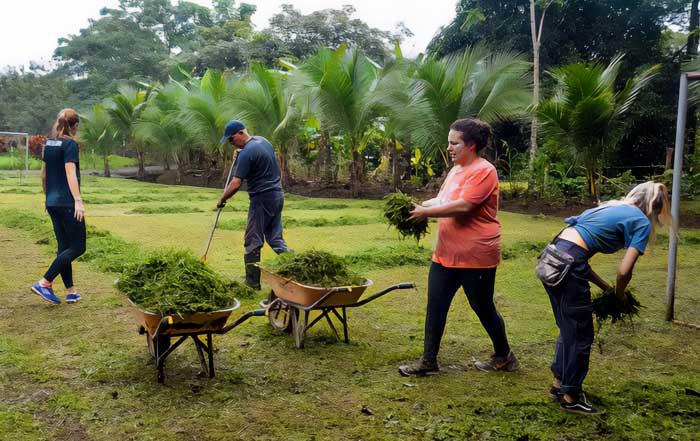
Volunteering Abroad: How Purposeful Travel Redefines Global Connection
The idea of travel has expanded far beyond sightseeing, leisure, or short-term escape. Around the world, from the United States and United Kingdom to Germany, Canada, Australia, and across Asia, travelers are increasingly seeking journeys that combine exploration with responsibility, curiosity with contribution, and adventure with enduring impact. For the readership of worldsdoor.com, this shift is not a passing trend but a deep transformation in how individuals understand their place in a complex, interdependent world. Volunteering abroad has become one of the clearest expressions of this transformation, turning travel into a structured opportunity to engage with local communities, support sustainable development, and cultivate global citizenship in a way that is both personally meaningful and socially constructive.
Worldsdoor.com has consistently highlighted how health, travel, culture, business, technology, environment, innovation, and ethics are converging in the twenty-first century. Volunteering abroad sits precisely at this intersection. It is where personal growth meets social responsibility, where cross-cultural learning meets practical problem-solving, and where individual journeys are woven into broader narratives of climate resilience, social equity, and economic inclusion. As readers explore sections such as World, Society, and Travel, they encounter a recurring theme: the most powerful journeys are those that change both the traveler and the places they touch. Volunteering abroad, when done ethically and thoughtfully, embodies this ethos.
From Voluntourism to Responsible Partnership
The modern landscape of volunteering abroad has been shaped by both enthusiasm and critique. In earlier decades, short-term "voluntourism" experiences surged across regions such as Africa, South America, and parts of Asia, often marketed as quick ways to "make a difference" while enjoying exotic destinations. However, as scholars, practitioners, and communities examined these programs more closely, concerns emerged about superficial engagement, cultural insensitivity, and projects that served volunteers' expectations more than local priorities. This critique has been widely discussed by organizations such as UN Volunteers and informed by research from institutions featured in platforms like Brookings and Overseas Development Institute.
In response, a more rigorous and ethically grounded model of volunteering has taken shape. Leading organizations including Peace Corps, Volunteers for Peace, Projects Abroad, Global Vision International (GVI), and International Volunteer HQ (IVHQ) have increasingly reoriented their programs toward long-term partnerships, locally led project design, and transparent accountability. Volunteers are now expected to arrive not as "helpers" with ready-made answers, but as collaborators who listen, learn, and support initiatives defined by local communities themselves. This shift reflects a broader movement toward ethical engagement that readers can further explore in the Ethics and Culture sections of worldsdoor.com, where questions of power, representation, and mutual respect are examined in depth.
Ethical volunteering in 2026 emphasizes pre-departure preparation, including cultural orientation, language basics, and training on issues such as child protection, environmental impact, and community consent. It also stresses the importance of continuity: projects are designed to be sustained by local actors, with volunteers playing a supportive rather than central role. This model aligns with the principles promoted by organizations such as UNESCO and Cultural Survival, both of which advocate for development approaches that protect cultural heritage, uphold human rights, and ensure that communities retain agency over their futures.
Aligning Volunteering with the Sustainable Development Goals
Any serious discussion of volunteering abroad in 2026 is inseparable from the United Nations Sustainable Development Goals (SDGs), which continue to provide a global framework for tackling poverty, inequality, climate change, and other systemic challenges. Volunteers are now commonly placed within projects explicitly mapped to SDGs such as quality education, good health and well-being, gender equality, clean water and sanitation, climate action, and reduced inequalities. This alignment has made it easier for organizations and volunteers alike to understand how discrete activities-teaching in rural schools, supporting public health campaigns, planting trees, or mentoring entrepreneurs-contribute to broader, measurable objectives.
In Kenya, Tanzania, and South Africa, volunteers might join community-based organizations working on education access and youth empowerment, helping local teachers with literacy programs while learning how structural inequalities are being addressed through policy and grassroots action. In Brazil, Peru, or Costa Rica, volunteers involved in reforestation or eco-tourism initiatives see firsthand how biodiversity conservation is tied to livelihoods and indigenous rights. Across Southeast Asia, including Thailand, Vietnam, and Cambodia, volunteers engage in projects focused on women's empowerment, sustainable agriculture, or marine conservation, often working alongside local NGOs and research institutions guided by scientific data and community consultation.
Readers interested in how environmental and social sustainability converge within these initiatives can delve into Environment and Sustainable on worldsdoor.com, where concepts like regenerative tourism, circular economies, and climate resilience are contextualized for a global audience. External resources such as UN Environment Programme, The Nature Conservancy, and World Resources Institute provide complementary insights into how volunteer-supported projects fit within larger environmental and development strategies.
Global Hotspots and Evolving Destinations
The geography of volunteering abroad has become increasingly diverse and nuanced. Traditional destinations across Africa, Asia, and Latin America continue to host large numbers of volunteers, but new types of projects and locations are emerging in response to geopolitical shifts, climate pressures, and changing migration patterns. In Europe, for instance, volunteers are now frequently involved in refugee support, social inclusion, and environmental restoration projects in countries such as Greece, Italy, Spain, and Portugal, where local communities are balancing tourism economies with social cohesion and ecological recovery.
In Asia-Pacific, environmental and community development projects in Indonesia, Philippines, Malaysia, and Australia are drawing volunteers interested in marine conservation, indigenous partnerships, and disaster resilience. Meanwhile, in North America and Europe, domestic volunteering linked to climate adaptation, urban sustainability, and social innovation has grown, often connected to global networks but focused on local impact. Platforms such as GoAbroad, Idealist, and Volunteer World have become key gateways for prospective volunteers, enabling comparisons of program quality, ethics, and cost transparency.
Worldsdoor.com's Travel and World sections frequently emphasize that the choice of destination should be guided not by trend or novelty alone, but by alignment between one's skills, motivations, and the actual needs articulated by local partners. This approach encourages readers from regions as varied as Europe, Asia, Africa, South America, and Oceania to see volunteering not as a checklist of countries visited, but as a carefully considered collaboration rooted in mutual respect and long-term thinking.
Human Connection as the Core of the Experience
Behind every project and policy framework lies the fundamental human dimension of volunteering abroad. It is in shared meals, community meetings, classroom conversations, and fieldwork under challenging conditions that the essence of cross-cultural connection is forged. Volunteers from Japan, Singapore, Netherlands, France, Sweden, Norway, and beyond often report that the most enduring aspect of their experience is not the physical structures built or the number of workshops delivered, but the relationships formed with local colleagues, host families, and neighbors.
In 2026, responsible organizations invest heavily in cultural immersion as a core component of program design. Volunteers may live with host families, participate in local festivals, learn regional languages, and engage in community dialogues about history, identity, and aspirations. These experiences demand humility and curiosity, challenging preconceived notions and encouraging volunteers to question their own cultural assumptions. Such immersion aligns closely with the values presented in Culture and Lifestyle, where worldsdoor.com explores how everyday practices and worldviews shape both individual lives and collective futures.
Global institutions like UNESCO and civil society networks such as CIVICUS and Oxfam have long argued that genuine intercultural exchange is a foundation for peace and social cohesion. Volunteering abroad, when guided by ethical frameworks, becomes a practical arena where these ideals are lived out. Volunteers learn to navigate cultural nuances, negotiate differences, and co-create solutions, thereby strengthening the social fabric that underpins stable and inclusive societies.
Professional Development, Well-Being, and Lifelong Learning
For many participants, volunteering abroad is as much a professional and educational investment as it is an altruistic endeavor. Employers in sectors ranging from technology and finance to healthcare, education, and sustainability increasingly recognize the value of cross-cultural experience, adaptability, and collaborative problem-solving. Volunteers working in challenging environments gain skills in leadership, negotiation, project management, and crisis response that are difficult to replicate in conventional office settings.
Organizations such as Doctors Without Borders (Médecins Sans Frontières), Engineers Without Borders, Teach For All, and World Learning provide structured pathways for skilled professionals and students to apply their expertise in real-world contexts, often in collaboration with local institutions and governments. These experiences can enhance careers in global health, international development, climate policy, and impact investing, especially for readers following the business and innovation narratives on Business and Innovation.
At the same time, research highlighted by sources such as World Health Organization and American Psychological Association has linked volunteering to improved mental health, greater life satisfaction, and a stronger sense of purpose. Immersive experiences in nature, such as conservation work in New Zealand, Finland, or South Africa, can foster mindfulness and emotional resilience, reinforcing the holistic perspective on well-being found in Health. For many volunteers, the experience becomes an informal but powerful form of lifelong learning, complementing formal education and reshaping personal and professional trajectories.
Technology and Innovation: Redefining How Service Crosses Borders
The rapid evolution of digital technology has fundamentally changed the way volunteering abroad functions. Even before setting foot in another country, volunteers now engage in online training, cross-cultural dialogue, and collaborative project planning through digital platforms. For those who cannot travel-whether for financial, health, or political reasons-virtual volunteering has opened new avenues to contribute skills and knowledge remotely.
The UN Online Volunteering Service, for example, connects professionals in North America, Europe, Asia, and beyond with organizations that need support in areas such as data analysis, digital marketing, curriculum design, and software development. Initiatives like Khan Academy, Coursera for Refugees, and Worldreader demonstrate how digital tools are transforming education access, with volunteers playing roles as mentors, content creators, or technical advisors. These developments echo the themes explored in Technology, where worldsdoor.com examines both the promises and ethical dilemmas of digital transformation.
Emerging technologies such as artificial intelligence, geospatial mapping, and blockchain are increasingly used to enhance transparency and effectiveness in volunteer-driven projects. Data analytics help organizations identify where interventions are most needed, monitor impact in real time, and adjust strategies based on evidence rather than assumption. Blockchain-based systems, promoted by entities like the World Bank and OECD, are being tested to track funds and ensure that resources reach intended beneficiaries, thereby strengthening public trust. These innovations, when framed within robust ethical standards, align with the values presented in worldsdoor.com's Innovation and Ethics sections, where the balance between technological capability and social responsibility is a recurring focus.
Corporate Engagement and the Rise of Purposeful Business Travel
In 2026, corporate volunteering has matured from a peripheral CSR activity into a strategic component of many global companies' identities. Multinationals such as Salesforce, Google, Microsoft, and certified B Corporations have developed programs that encourage employees to contribute their professional skills to social and environmental projects worldwide. These initiatives often combine remote collaboration with short-term in-country assignments, enabling staff to work alongside local teams on issues such as digital inclusion, climate adaptation, social entrepreneurship, or public health.
This evolution reflects a broader rethinking of the role of business in society, a theme frequently explored in Business on worldsdoor.com. Thought leaders featured in outlets like Harvard Business Review, World Economic Forum, and B Corporation argue that companies operating across North America, Europe, Asia, and Africa can no longer focus solely on shareholder returns; they are increasingly judged by how they treat workers, communities, and the environment. Corporate volunteering, when authentically integrated into business strategy, can support employee engagement, foster innovation through exposure to new contexts, and build trust with global stakeholders.
For employees, these programs often serve as intensive leadership and cultural training. Engineers might help design sustainable infrastructure in India or Ethiopia, financial analysts might mentor social enterprises in Brazil or South Africa, and IT professionals might support digital literacy initiatives in Malaysia or Thailand. Such experiences reinforce the idea that business travel can be more than meetings and conferences; it can be a vehicle for shared value creation, aligning personal purpose with corporate objectives.
Health, Safety, and Responsible Preparation
As volunteering abroad grows in popularity, health and safety considerations remain central to responsible participation. Prospective volunteers from regions such as United States, United Kingdom, Germany, Japan, and Singapore are advised to consult resources like the Centers for Disease Control and Prevention and World Health Organization to understand vaccination requirements, disease risks, and recommended preventive measures for destinations across Africa, Asia, South America, and beyond. Organizations such as International SOS and national foreign affairs departments provide up-to-date guidance on security conditions, travel advisories, and emergency procedures.
Reputable volunteer-sending organizations now incorporate comprehensive risk assessments, crisis response plans, and mental health support into their programming. Volunteers receive briefings on topics such as local laws, cultural norms, gender dynamics, and digital security, all of which are crucial for maintaining personal safety and respecting host communities. This emphasis on preparation mirrors the holistic approach to well-being and resilience that readers encounter in Health and Lifestyle, where responsible self-care is seen as a prerequisite for sustainable contribution.
Equally important is psychological readiness. Volunteers are encouraged to reflect on their motivations, expectations, and boundaries before committing to a project. Responsible organizations discourage "savior" narratives and instead promote a mindset of partnership, patience, and learning. This reflective approach ensures that volunteers are better equipped to navigate culture shock, ethical dilemmas, and the emotional complexity that often accompanies work in communities facing systemic challenges.
Gender, Inclusion, and Youth at the Heart of Future Volunteering
One of the most notable developments in recent years has been the growing leadership of women and young people in global volunteering. Organizations such as Women for Women International, CARE, Plan International, and UN Women have highlighted how women-led initiatives in areas like maternal health, education, climate resilience, and economic empowerment can generate profound, multi-generational impact. Female volunteers from France, Italy, Spain, South Korea, Norway, and South Africa are playing key roles not only as participants but as program designers, researchers, and community leaders.
Youth-focused organizations like AIESEC, Global Citizen Year, Youth Challenge International, and Global Youth Mobilization empower students and early-career professionals to engage with global issues through structured service-learning experiences. These programs encourage participants from Europe, Asia, North America, South America, and Africa to see themselves as active contributors to solutions on climate justice, digital equity, and social inclusion. This emphasis on youth engagement aligns with the educational and societal themes featured in Education and Society, where the cultivation of informed, empathetic, and proactive citizens is a core objective.
Inclusion also extends to ensuring that volunteering opportunities are accessible and responsive to diverse identities and abilities. Organizations are increasingly attentive to the experiences of volunteers from different racial, ethnic, socioeconomic, and LGBTQ+ backgrounds, as well as those with disabilities. This inclusive perspective strengthens the legitimacy and effectiveness of volunteer programs, reflecting a broader global shift toward equity and representation.
Volunteering as a Bridge Between Travel, Ethics, and Transformation
For worldsdoor.com and its global readership, the story of volunteering abroad in 2026 is ultimately a story about how travel can become a bridge between personal discovery and collective responsibility. It is about travelers from Netherlands, Switzerland, China, New Zealand, Brazil, Malaysia, and every other region recognizing that the world is not simply a stage for consumption, but a shared home in which every action has ripple effects. When individuals choose to volunteer abroad through ethical, community-led programs, they step into a role that is simultaneously learner, collaborator, and advocate.
This perspective resonates across multiple sections of worldsdoor.com, from Travel and World to Environment, Sustainable, and Ethics. Each of these domains underscores that meaningful engagement with the world requires more than curiosity; it requires commitment, humility, and a willingness to be changed by the people and places one encounters.
As global challenges-from climate disruption to inequality and social fragmentation-continue to test the resilience of societies, volunteering abroad offers a tangible, human-centered pathway toward hope and renewal. It allows individuals to contribute to solutions while deepening their understanding of the systems that shape our collective future. For readers of worldsdoor.com, the invitation is clear: open the door not only to new destinations, but to new forms of connection, responsibility, and shared purpose.
Those who are ready to explore this path further can continue their journey across worldsdoor.com, where stories, analysis, and perspectives from around the globe illuminate how every journey-when guided by ethics and empathy-can become a step toward a more just, sustainable, and interconnected world.