

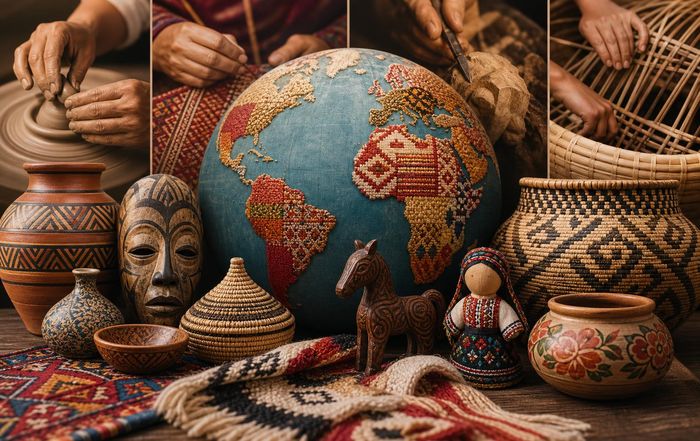
How Regional Crafts Preserve Cultural Identity Worldwide
Regional crafts, often dismissed as quaint souvenirs or nostalgic remnants of the past, are in fact among the most dynamic guardians of cultural identity in the contemporary world. Across continents, from the weaving villages of Thailand to the ceramics studios of Spain and the beadwork collectives of South Africa, artisans are not only keeping centuries-old skills alive but also reshaping how communities see themselves and share their stories with the wider world. For us, whose readers are deeply engaged with travel, culture, health, lifestyle, and the future of a sustainable planet, the evolving role of regional crafts offers a powerful lens through which to understand how identity, creativity, and resilience are being woven together.
Craft as a Living Archive of Memory and Meaning
Regional crafts function as living archives, preserving not only techniques and materials but also myths, social structures, and historical memory. Anthropologists at institutions such as UNESCO and the Smithsonian Center for Folklife and Cultural Heritage have long noted that craft traditions encode knowledge about local ecosystems, belief systems, and community values. A handwoven textile, for example, may carry motifs that map ancestral migration routes, agricultural cycles, or cosmological beliefs, while a piece of pottery or carved wood can reflect local geology, flora, and fauna as well as ritual practices.
This idea of craft as a living archive is particularly visible in places where intangible cultural heritage has been formally recognized. UNESCO's lists of Intangible Cultural Heritage now include practices such as Japanese washi papermaking, Indonesian batik, and the craftsmanship of French baguette baking, underscoring that the techniques themselves, and the communities that sustain them, are as important as physical monuments. Readers who explore the cultural dimensions of heritage on WorldsDoor can see how these practices intersect with broader questions of identity and belonging, especially in a century defined by rapid migration and digital transformation. For those interested in a deeper cultural context, the culture section at worldsdoor.com/culture.html offers additional perspectives on how traditions evolve without losing their core meanings.
Travel, Place, and the Craft of Belonging
As international travel resumed and reshaped itself in the years following the COVID-19 pandemic, many travelers began to seek more meaningful, place-based experiences. Instead of collecting mass-produced souvenirs, a growing number of visitors to countries such as Italy, Japan, Morocco, and Mexico have turned to local workshops and community-based studios where they can meet artisans, learn about traditional processes, and, in some cases, participate in the making of objects. Organizations such as UNWTO (UN World Tourism Organization) and UNESCO's World Heritage Centre have highlighted how cultural and creative tourism can support local economies while encouraging respect for local traditions, provided that such initiatives are developed with community consent and fair compensation.
In cities like Kyoto, Florence, and Oaxaca, and in rural regions from the Scottish Highlands to the hill tribes of northern Thailand, craft routes and artisan trails have emerged as alternatives to conventional sightseeing. These experiences allow visitors to understand how a particular region's history, climate, and social fabric shape its creative output. When a traveler in Spain learns from a ceramicist in Andalusia how Moorish, Roman, and local Andalusian influences converge in a single tile pattern, or when a visitor in South Africa listens to a beadworker explain the meanings of colors in Zulu beadwork, the encounter becomes a form of cultural diplomacy. Such experiences resonate with the ethos of WorldsDoor's travel section at worldsdoor.com/travel.html, which encourages readers to approach destinations as living communities rather than passive backdrops.
Health, Well-Being, and the Therapeutic Power of Making
The preservation of regional crafts is not solely about economics or heritage; it also intersects with health and well-being. Research in psychology and occupational therapy, including work published by organizations such as the American Psychological Association and the National Institutes of Health, has drawn attention to the mental health benefits of creative manual work. Engaging in craft activities has been associated with reduced stress, improved mood, and enhanced cognitive function, particularly when practiced in community settings that foster social connection.
In many countries, community-based craft programs have been used as tools for trauma recovery, social inclusion, and elder care. Textile cooperatives in regions affected by conflict, such as parts of Colombia and Rwanda, have combined traditional weaving or embroidery with storytelling, allowing participants to process experiences while reinforcing cultural memory. In the Nordic countries, community knitting circles and woodworking groups have been integrated into public health and social programs, reflecting a broader understanding of well-being that includes cultural participation. For readers of WorldsDoor's health section at worldsdoor.com/health.html, these examples demonstrate how traditional practices can be part of modern strategies for mental resilience and community cohesion.
Craft, Lifestyle, and the Slow Living Movement
As global debates about overconsumption and burnout intensify, regional crafts have become closely aligned with the "slow living" and "buy less, buy better" movements. Lifestyle commentators and sustainability advocates, including those featured by platforms like The Guardian's environment section and World Resources Institute, often point to handcrafted, locally made goods as tangible expressions of a more mindful approach to consumption. A hand-thrown ceramic mug, for example, carries with it the story of the clay, the region, and the potter, encouraging a relationship of care and longevity that contrasts sharply with disposable culture.
In cities across Europe, North America, and Asia, concept stores and markets that foreground regional crafts-whether it be Dutch ceramics, Japanese indigo-dyed textiles, or Australian Aboriginal art-have become part of a broader lifestyle shift. Consumers interested in ethical fashion, interior design, and everyday objects increasingly seek items that reflect both aesthetic value and cultural integrity. This aligns with WorldsDoor's lifestyle coverage at worldsdoor.com/lifestyle.html, where readers can explore how personal choices in clothing, home décor, and daily rituals connect to global narratives of heritage and responsibility.
Environmental Knowledge Woven into Craft Traditions
Regional crafts are deeply embedded in local ecosystems, and many traditional techniques embody forms of environmental knowledge that have gained renewed relevance in an era of climate crisis. Studies by organizations such as the United Nations Environment Programme and the Intergovernmental Panel on Climate Change (IPCC) have underscored the importance of Indigenous and local knowledge in adapting to changing environmental conditions. Craft practices often exemplify such knowledge through their use of locally sourced, renewable, or low-impact materials and their emphasis on durability and repair.
For example, traditional basketry in Scandinavia, the Pacific Northwest of the United States and Canada, and parts of Africa relies on careful harvesting of reeds, bark, or grasses in ways that maintain ecosystem health and biodiversity. Natural dyeing traditions in India, Japan, and West Africa involve plant-based pigments and techniques that, when practiced responsibly, can have lower environmental footprints than synthetic alternatives. However, it is important to recognize that not all craft production is inherently sustainable; overharvesting of certain woods or plants, or the use of toxic mordants and finishes, can cause harm. Initiatives documented by groups like Greenpeace and Conservation International highlight both positive models and ongoing challenges.
Fans who wish to explore how traditional knowledge intersects with modern environmental challenges can turn to the environment section at worldsdoor.com/environment.html and its dedicated focus on sustainability at worldsdoor.com/sustainable.html, where regional crafts are often highlighted as case studies in resource-conscious creativity.
Technology, Digital Platforms, and the Global Craft Renaissance
The digital transformation of the past decade has radically changed how regional crafts are shared, marketed, and documented. Online marketplaces such as Etsy, as well as regional platforms in Asia, Europe, and Africa, have allowed artisans in remote areas to reach international customers directly, sometimes bypassing intermediaries who historically captured most of the value. Social media platforms, including Instagram and TikTok, have become powerful storytelling tools, enabling craftspeople to demonstrate techniques, explain cultural significance, and build communities of supporters.
Technology has also been used to document and preserve endangered techniques. Museums and research institutions, such as the Victoria and Albert Museum in London and the Metropolitan Museum of Art in New York, have increasingly digitized their collections, providing open access to images, technical notes, and historical context that can support contemporary practitioners. At the same time, digital fabrication tools such as 3D printing and laser cutting have inspired hybrid forms of craftsmanship, in which traditional aesthetics and narratives are combined with new materials or processes. This blending raises important questions about authenticity and authorship, but it also demonstrates that cultural identity is not static; it evolves as communities experiment and respond to new possibilities.
For geeky smart people the technology section at worldsdoor.com/technology.html and its innovation-focused pages at worldsdoor.com/innovation.html, the intersection of digital tools and ancestral knowledge offers a compelling example of how innovation can be rooted in, rather than detached from, cultural heritage.
Food, Craft, and the Taste of Place
While regional crafts are often associated with textiles, ceramics, or woodwork, culinary traditions are equally potent expressions of cultural identity. The rise of interest in "craft" food and drink-from artisan cheeses and sourdough bread to small-batch chocolate and regional wines-reflects a broader desire to reconnect with specific places and histories through taste. Organizations such as Slow Food International and the Food and Agriculture Organization of the United Nations emphasize the importance of preserving local food traditions, not only for gastronomic diversity but also for biodiversity and rural livelihoods.
In countries like Italy, France, Japan, and Mexico, protected designation systems and regional appellations help safeguard both traditional methods and the names associated with them, ensuring that products such as Parmigiano Reggiano, Champagne, or certain types of sake remain tied to their geographical and cultural origins. This approach parallels efforts to protect craft techniques and motifs from misappropriation. Readers who explore a food section at worldsdoor.com/food.html will find that culinary crafts-fermentation, baking, cheesemaking, and more-offer another route to understanding how communities express identity and continuity in the everyday act of eating.
Education, Transmission, and the Next Generation of Artisans
For regional crafts to continue preserving cultural identity, they must be transmitted to new generations in ways that are both faithful to tradition and responsive to contemporary realities. In many countries, vocational schools, universities, and apprenticeship programs have begun to integrate traditional craft training into formal curricula. Institutions such as Japan's National Living Treasures program, which recognizes and supports master artisans, or specialized craft schools in Germany and the United Kingdom, demonstrate how state and educational systems can play a role in sustaining heritage.
At the same time, non-formal education-workshops, community centers, and intergenerational learning within families-remains crucial, especially in Indigenous and rural communities where oral transmission and hands-on practice are central. Initiatives by organizations like UNICEF and various non-governmental groups have supported craft-based education as a way to empower girls and marginalized youth, providing both cultural pride and income-generating skills. The challenge lies in ensuring that young artisans can build viable livelihoods, which requires not only technical training but also knowledge of design, marketing, digital tools, and fair trade principles.
For those who value learning as a lifelong process, education section at worldsdoor.com/education.html explores how craft education is evolving, from urban maker spaces to rural apprenticeship schemes, and how these initiatives reinforce cultural continuity while fostering creativity and entrepreneurship.
Sustainable and Ethical Business Models for Craft Communities
As demand for handcrafted goods grows, questions of ethics, equity, and sustainability become increasingly urgent. Fair trade organizations, including Fair Trade International and the World Fair Trade Organization, have developed standards aimed at ensuring that artisans receive fair wages, work in safe conditions, and retain control over their designs and cultural expressions. These principles are particularly important in regions where power imbalances and historical exploitation have shaped relationships between producers and global markets.
At the same time, there is ongoing debate about cultural appropriation and intellectual property in the context of traditional designs. Legal frameworks such as geographical indications and community-held trademarks, discussed by bodies like the World Intellectual Property Organization, offer some tools for protecting collective heritage, but they are not always easy to implement or enforce. Responsible brands and consumers are increasingly encouraged to prioritize transparency, direct partnerships, and community consent when engaging with regional crafts.
Folks interested in the business dimensions of craft can explore the business section at worldsdoor.com/business.html and its dedicated ethics coverage at worldsdoor.com/ethics.html, where case studies of successful cooperatives, social enterprises, and community-owned brands illustrate how commercial success can align with cultural respect and environmental stewardship.
Crafts as Bridges in a Fragmented World
In a time marked by geopolitical tensions, social polarization, and rapid technological change, regional crafts can serve as quiet yet powerful bridges between communities. Exhibitions, artist residencies, and cross-cultural collaborations-such as textile exchanges between Indigenous weavers in the Americas and designers in Europe, or joint projects between African ceramicists and Asian lacquer artists-demonstrate how shared making can foster mutual understanding. Museums and cultural institutions, including the British Museum and the Musée du quai Branly - Jacques Chirac in Paris, have begun to reexamine how they present craft objects, increasingly foregrounding the voices and perspectives of contemporary makers and descendant communities.
For WorldsDoor's fans, whose interests span society, world affairs, and innovation, the role of craft in diplomacy and social cohesion is a reminder that cultural identity is not a barrier but a resource. The platform's society-focused stories at worldsdoor.com/society.html and its global perspectives at worldsdoor.com/world.html highlight how local traditions can contribute to shared global conversations about dignity, creativity, and mutual respect.
A Doorway to the World, One Handmade Object at a Time
The future of regional crafts is neither guaranteed nor purely nostalgic; it is being actively shaped by artisans, communities, policymakers, and consumers who recognize the profound role that making plays in defining who we are. Climate change, economic inequality, and cultural homogenization pose serious threats to many craft traditions, especially in regions where younger generations face pressure to abandon ancestral skills in pursuit of more immediately lucrative work. Yet there are also inspiring stories of revival and reinvention: Indigenous designers in Canada and Australia who reinterpret traditional motifs in contemporary fashion; young potters in the United States, South Korea, and the United Kingdom who blend local clays with global design influences; women's cooperatives in Morocco, India, and Kenya that harness digital platforms to reach new markets while maintaining collective ownership.
Regional crafts are not simply topics to be observed from a distance; they are invitations to engage more thoughtfully with the world. Every handwoven scarf, carved mask, or hand-built bowl encountered while traveling or browsing an online marketplace can be seen as a doorway into the histories, values, and aspirations of a community. By choosing to learn about the stories behind these objects, to support ethical and sustainable production, and to honor the cultural meanings they carry, readers participate in the ongoing work of preserving and renewing cultural identity.
Those who wish to delve further into these interconnected themes-culture, travel, environment, technology, food, society, education, sustainability, innovation, business, and ethics-will find that WorldsDoor is designed precisely as a space where such threads can be followed, connected, and woven into a richer understanding of our shared world. In doing so, the platform reflects the very essence of regional crafts themselves: rooted in place, shaped by human hands, and open to the possibility of creating something enduring, beautiful, and deeply meaningful together.