

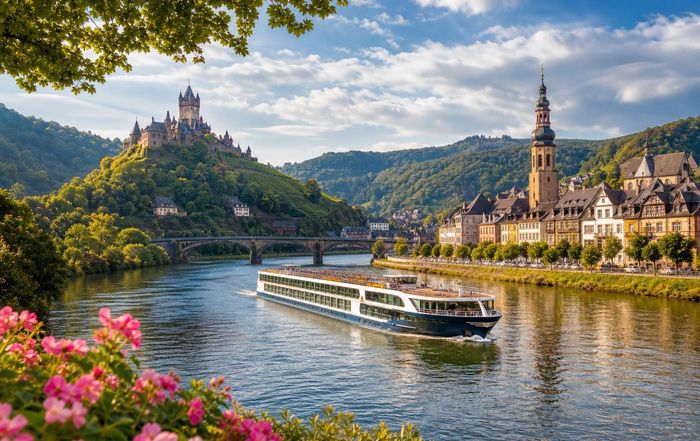
River Journeys Through Europe's Historic Landscapes
Rivers as Living Time-Lines of Europe
Across Europe's varied geography, from Alpine glaciers to Atlantic estuaries, the great rivers have long shaped the continent's history, culture, and daily life. To travel along them is to follow living time-lines in which Roman frontiers, medieval trading leagues, industrial revolutions, and contemporary sustainability efforts coexist within a single sweeping panorama. For travel lovers here, river journeys through Europe's historic landscapes offer a uniquely immersive way to connect travel, culture, health, environment, and innovation in one continuous experience, revealing how water has quietly orchestrated the story of a continent.
Unlike fast-paced city breaks or point-to-point flights, river travel encourages a slower, more contemplative rhythm. It allows visitors to trace the organic logic of settlement and architecture, to see why a fortress stands on a particular bend, why a vineyard clings to a certain slope, and why a trading city flourished at a confluence. Organizations such as UNESCO highlight this deep interdependence by designating river corridors like the Upper Middle Rhine Valley and the Loire Valley as World Heritage cultural landscapes, underlining that the rivers themselves, not only the cities along them, are primary carriers of heritage and identity. Readers who explore the broader context of cultural landscapes and World Heritage can better appreciate how each river journey becomes a moving lesson in geography, ecology, and human creativity.
The Rhine: From Roman Frontier to Romantic Icon
The Rhine is perhaps Europe's most storied river, rising in the Swiss Alps and flowing through or along the borders of Switzerland, Liechtenstein, Austria, Germany, France, and the Netherlands before reaching the North Sea. In its upper and middle reaches, the Rhine served as a critical frontier of the Roman Empire, a role documented by the transnational Frontiers of the Roman Empire World Heritage site, which includes sections of the Rhine limes in Germany and the Netherlands. Travellers who glide past the remnants of Roman camps and watchtowers can sense the strategic logic that once made this river a defensive line between imperial power and the so-called barbarian world, a theme explored in depth by institutions such as the German Archaeological Institute.
During the Middle Ages, the Rhine evolved from frontier to commercial artery. Merchant cities like Cologne, Mainz, and Strasbourg flourished as part of wider trading networks including the Hanseatic League, whose influence is documented by historians and organizations such as the European Hanseatic League. Castles perched on cliffs above the river, many still visible between Bingen and Koblenz, once controlled tolls and safe passage, transforming geography into economic power. Today, this stretch, recognized by UNESCO as the Upper Middle Rhine Valley World Heritage Site, offers river travellers a concentrated gallery of fortresses, terraced vineyards, and half-timbered towns that inspired the 19th-century Romantic movement in Germany and beyond.
The modern Rhine is also a story of environmental recovery and international cooperation. Industrialization and intensive navigation once left parts of the river heavily polluted, but cross-border initiatives such as the International Commission for the Protection of the Rhine have driven substantial improvements in water quality since the late 20th century. The Commission's reports, available through the ICPR, show how coordinated policy, technological upgrades in wastewater treatment, and stricter environmental standards have led to the return of species like salmon in certain sections, an encouraging sign for travellers who view rivers not only as scenic corridors but as living ecosystems. For readers of WorldsDoor, this intersection of history, ecology, and policy resonates strongly with themes explored on WorldsDoor Environment and WorldsDoor World, where the long-term resilience of landscapes is a central concern.
The Danube: A Pan-European Cultural Corridor
If the Rhine is a symbol of Central European identity, the Danube is its more expansive, transcontinental counterpart. Flowing from Germany's Black Forest to the Black Sea, the Danube passes through or borders ten countries, including Germany, Austria, Slovakia, Hungary, Croatia, Serbia, Romania, Bulgaria, Moldova, and Ukraine, making it a uniquely diverse cultural and political corridor. The Danube Commission, an international body created in the 19th century and still active today, underscores the river's importance for navigation, trade, and cooperation, with contemporary policy and traffic data accessible via the Danube Commission.
Along the Danube, travellers encounter a sequence of capitals-Vienna, Bratislava, Budapest, and Belgrade-each bearing layers of imperial, socialist, and modern identities. Vienna's riverside palaces and concert halls reflect the legacy of the Habsburg Empire, whose influence on music, architecture, and diplomacy is documented by cultural institutions such as the Austrian National Library. Downstream, Budapest's iconic Parliament building and thermal baths speak to a different historical trajectory, one shaped by Ottoman rule, Austro-Hungarian dual monarchy, and 20th-century upheavals. For travellers interested in how rivers connect rather than divide cultures, the Danube offers a living exhibition of Central and Eastern Europe's shared yet distinct narratives, a theme that aligns with the cross-cultural explorations on WorldsDoor Culture.
The lower Danube, particularly the Danube Delta in Romania and Ukraine, presents a contrasting world of wetlands, reed beds, and biodiversity that has earned it recognition as a UNESCO Biosphere Reserve and World Heritage site. Conservation organizations, including the World Wildlife Fund, emphasize the region's critical role as a habitat for migratory birds and rare species, while also drawing attention to ongoing challenges such as pollution, invasive species, and climate-driven changes in water regimes. For travellers seeking immersive nature experiences that complement the cultural richness of upstream capitals, the delta offers opportunities for low-impact boating, birdwatching, and engagement with local fishing communities, echoing the sustainable travel ethos promoted on WorldsDoor Travel and WorldsDoor Sustainable.
The Seine and the Loire: Rivers of Art, Architecture, and Everyday Life
France's rivers have long served as backdrops to artistic innovation, political transformation, and evolving ideas of leisure. The Seine, winding through Paris and out to the English Channel at Le Havre, is inseparable from the city's identity. Painters such as Claude Monet and Camille Pissarro immortalized its shifting light and reflections, while writers from Victor Hugo to Ernest Hemingway used its quays as stages for their narratives. The banks of the Seine in Paris are recognized by UNESCO as a World Heritage site, with detailed descriptions of their historical evolution accessible through UNESCO's Seine listing. For river travellers, approaching Paris by water offers a perspective that reveals the city's axial planning, from the Île de la Cité outward, in a way that overland arrivals cannot fully convey.
Beyond Paris, the Seine opens onto Normandy's landscapes and the port city of Le Havre, whose post-war reconstruction under architect Auguste Perret is itself a World Heritage site. This juxtaposition of medieval cores, modernist urbanism, and maritime industries illustrates the multiple lives of a single river, from artistic muse to commercial lifeline. Travellers attuned to the interplay between heritage and contemporary design can draw parallels with other European riverside cities, deepening their appreciation of urban resilience and adaptation, topics frequently explored on WorldsDoor Lifestyle and WorldsDoor Society.
Further southwest, the Loire offers a more pastoral, yet no less historically rich, river journey. Known as the "last wild river" of France in certain sections due to its relatively natural flow regime, the Loire Valley is celebrated for its Renaissance châteaux, vineyards, and traditional riverboats. The entire central stretch between Sully-sur-Loire and Chalonnes-sur-Loire is inscribed as a UNESCO World Heritage cultural landscape, reflecting centuries of interaction between human settlement, agriculture, and the river's dynamic channels. The Loire Valley World Heritage site provides context for travellers wishing to understand how royal patronage, evolving agricultural practices, and flood management shaped this iconic region.
In recent years, French authorities and local organizations have invested in restoring more natural river dynamics along parts of the Loire, including the removal or modification of some obsolete dams to improve fish migration and sediment transport. Environmental agencies such as France's Office Français de la Biodiversité report on these efforts, which illustrate a broader European shift toward river restoration and nature-based solutions. For travellers, this means that river journeys increasingly intersect with visible examples of ecological innovation, offering opportunities to witness how heritage landscapes can adapt to contemporary environmental priorities without losing their distinctive character.
The Douro, the Po, and the Elbe: Regional Rivers with Global Stories
While the Rhine, Danube, and Seine often dominate discussions of European river travel, several regional rivers offer equally compelling journeys that connect local traditions to global themes. The Douro, rising in Spain and flowing westward through northern Portugal to the Atlantic at Porto, is renowned for its terraced vineyards and production of Port wine. The Alto Douro Wine Region is recognized by UNESCO as a cultural landscape shaped by centuries of viticulture, with detailed background available through the Alto Douro World Heritage listing. Travellers navigating the Douro by boat or train encounter steep slopes carved into terraces, traditional quintas (wine estates), and a river whose seasonal rhythms still influence harvests and local livelihoods.
The Douro's story is also one of adaptation, as modern irrigation, climate change, and evolving wine markets reshape practices in the region. Research institutions such as the University of Porto and international bodies like the Intergovernmental Panel on Climate Change have highlighted how rising temperatures and changing precipitation patterns pose challenges for Mediterranean and Iberian agriculture, including vineyards. For visitors, engaging with local producers and learning about drought-resilient grape varieties, soil management, and water conservation adds depth to the sensory pleasures of wine tasting, aligning with the thoughtful, sustainability-oriented approach to travel that WorldsDoor encourages through sections like WorldsDoor Food and WorldsDoor Health.
In Italy, the Po flows from the Alps to the Adriatic, traversing the fertile Po Valley, one of Europe's most important agricultural and industrial regions. Cities such as Turin, Cremona, and Ferrara reveal a tapestry of Roman legacies, Renaissance planning, and modern industry, all connected by the river's broad floodplain. Environmental agencies, including the European Environment Agency, have documented challenges facing the Po Basin, from water scarcity and subsidence to pollution and the impacts of more frequent extreme weather events. River travellers and cyclists along the Po's levees witness firsthand how Italian communities are experimenting with floodplain restoration, wetland conservation, and more sustainable water use, turning a historically engineered river into a laboratory for 21st-century resilience.
Further north, the Elbe, rising in the Czech Republic and flowing through Germany to the North Sea, offers a journey through landscapes that inspired Romantic artists such as Caspar David Friedrich and that later became sites of industrial and political transformation. The Elbe Sandstone Mountains near the German-Czech border, including the Saxon Switzerland National Park, are celebrated for their dramatic rock formations and hiking trails, with visitor information available through Germany's national parks portal. Downstream, cities like Dresden and Hamburg showcase Baroque architecture, wartime reconstruction, and modern port engineering, inviting travellers to reflect on how rivers mediate both destruction and renewal.
Health, Wellbeing, and the Slow Travel Ethos on the Water
Beyond their historical and cultural significance, European river journeys increasingly appeal to travellers seeking experiences that support physical and mental wellbeing. The concept of "slow travel," which emphasizes longer stays, reduced transport emissions, and deeper engagement with local communities, aligns naturally with river itineraries where the pace of movement is dictated by current, locks, and the desire to linger in riverside towns rather than rush through them. Health researchers and organizations such as the World Health Organization have highlighted the benefits of regular physical activity, time in nature, and reduced stress, all of which can be integrated into river journeys through walking, cycling, and mindful observation along towpaths and embankments.
For example, many European rivers now feature extensive cycling routes, such as the Danube Cycle Path and Rhine Cycle Route, which allow travellers to combine boat passages with stretches of active exploration. Information from cycling and tourism organizations, including EuroVelo, demonstrates how these routes connect multiple countries and cultural sites while promoting low-impact mobility. Readers online today who prioritize holistic wellbeing can find resonance with themes on WorldsDoor Health and WorldsDoor Travel, where movement, rest, and meaningful cultural contact are integrated rather than treated as separate aspects of a journey.
In addition, many river regions host thermal spas and wellness traditions that date back to Roman times or earlier. Along the Rhine and Danube, for instance, towns with "Bad" in their names, such as Bad Ems or Bad Ischl, indicate a history of bathing culture built around mineral springs and riverine landscapes. Modern spa facilities in Germany, Austria, Hungary, and elsewhere are often regulated to meet health and safety standards, with national health services sometimes supporting therapeutic stays, as documented by institutions like Germany's National Association of Statutory Health Insurance Physicians. Travellers who combine river exploration with spa visits engage in a tradition that blends local medical knowledge, geology, and leisure, offering a restorative counterpoint to high-intensity tourism.
Sustainability, Innovation, and the Future of European River Travel
As Europe confronts the realities of climate change, biodiversity loss, and shifting patterns of tourism, rivers have become focal points for both risk and innovation. Episodes of extreme flooding, such as those affecting parts of Germany and Belgium in 2021, alongside periods of severe low water levels that disrupt navigation on rivers like the Rhine, have prompted policymakers, scientists, and communities to rethink how river corridors are managed. Reports from organizations such as the European Commission's Joint Research Centre and the European Environment Agency outline scenarios in which river flows become more variable, requiring adaptive infrastructure, enhanced early-warning systems, and, in some cases, relocation of vulnerable settlements.
At the same time, rivers are central to Europe's strategies for decarbonization and sustainable transport. Inland waterway shipping is generally more energy-efficient per tonne-kilometre than road transport, prompting renewed investment in river ports, intermodal connections, and cleaner propulsion technologies. Initiatives supported by the European Union, such as the Green Deal and related transport policies, encourage the adoption of low-emission vessels, shore-side electricity in ports, and digital traffic management systems, with updates available through the European Commission's transport pages. For travellers, this means that river journeys are increasingly likely to feature quieter, more efficient vessels and port facilities designed with both environmental and community wellbeing in mind, echoing themes developed on WorldsDoor Innovation and WorldsDoor Technology.
Tourism operators along Europe's rivers are also experimenting with more sustainable models. Some companies are introducing hybrid or fully electric excursion boats on shorter stretches, particularly in sensitive areas such as urban centres and protected landscapes, where reduced noise and emissions can significantly improve the experience for residents and visitors alike. Certification schemes and guidelines promoted by organizations such as the Global Sustainable Tourism Council and national tourism boards encourage operators to minimize waste, source local food, and support cultural preservation. Travellers who consult these resources can make more informed choices, aligning their river journeys with broader commitments to responsible travel, a core value reflected on WorldsDoor Sustainable and WorldsDoor Ethics.
Cultural Exchange and Local Communities Along the Banks
One of the most compelling aspects of European river travel is the opportunity for authentic cultural exchange with communities that have grown up along the banks over generations. While large river cruise ships and organized tours play a prominent role in certain corridors, especially on the Rhine and Danube, a thriving ecosystem of smaller guesthouses, family-run restaurants, local guides, and community festivals offers travellers a more intimate window into daily life. Cultural organizations, municipal tourism offices, and heritage foundations across Europe provide information on local events, from wine harvest celebrations in the Douro and Rhine valleys to music festivals in Danube cities and riverfront art installations in places like Paris, Lyon, and Hamburg, many of which are highlighted on national tourism portals such as Germany Travel or France.fr.
Engaging with these local dimensions requires curiosity and respect. Travellers who step beyond the main waterfront promenades to explore neighbourhood markets, small museums, and community centres often discover stories of migration, industrial change, and environmental stewardship that rarely appear in guidebooks. In some regions, particularly in Eastern and Southern Europe, river communities have experienced economic challenges linked to shifts in industry, agriculture, and global trade, yet they also demonstrate remarkable resilience and creativity in developing new cultural and economic initiatives. This interplay of vulnerability and innovation is central to the human stories the team seeks to highlight across pages such as WorldsDoor Society, WorldsDoor Business, and WorldsDoor Education.
Language learning, culinary exploration, and participation in local workshops-whether focused on traditional boatbuilding, regional cuisine, or folk music-can turn a river journey into a form of experiential education. Universities and cultural institutes along major rivers, including institutions like Sorbonne University in Paris or Central European University in Vienna (now based in Vienna after its relocation), often host public lectures and exhibitions related to river history, climate adaptation, and urban planning, with event calendars available on their official websites such as Sorbonne University. For travellers in 2026, combining such intellectual engagement with the sensory pleasures of river landscapes offers a particularly rich way to understand Europe's past, present, and emerging futures.
Navigating Europe's Rivers with Intention and Care
As river journeys through Europe's historic landscapes become more accessible and widely promoted, especially in an era when travellers are increasingly conscious of their environmental footprint and social impact, the challenge is not simply to see more but to experience more meaningfully. This involves practical choices-such as favouring longer stays over rapid itineraries, supporting locally owned businesses, and respecting ecological sensitivities-but it also entails a mindset of attentive observation and humility. Rivers, by their very nature, remind travellers that landscapes and societies are constantly in motion, shaped by forces that extend far beyond individual lifetimes.
For the global audience of WorldsDoor, which spans regions from North America and Europe to Asia, Africa, and South America, European river journeys offer a microcosm of broader planetary themes: the legacy of empires and trade, the tension between development and conservation, the power of cultural exchange, and the urgent need for adaptive, science-informed responses to environmental change. By engaging with reliable resources-from UNESCO and the European Environment Agency to national heritage organizations and local community groups-travellers can ground their experiences in verifiable knowledge, avoid misconceptions, and appreciate the complexity behind the beauty.
You know as new technologies, policies, and cultural initiatives continue to reshape how people move through and think about landscapes, Europe's rivers remain steadfast yet evolving companions. They invite travellers to slow down, to follow the natural contours of the land, and to recognize that every bend in the river carries stories of human ingenuity, vulnerability, and hope. For those who step aboard with curiosity and care, guided by the values and insights shared here, river journeys through Europe's historic landscapes become more than scenic holidays; they become opportunities to understand, in a deeply personal way, how water binds together cultures, ecosystems, and generations.