

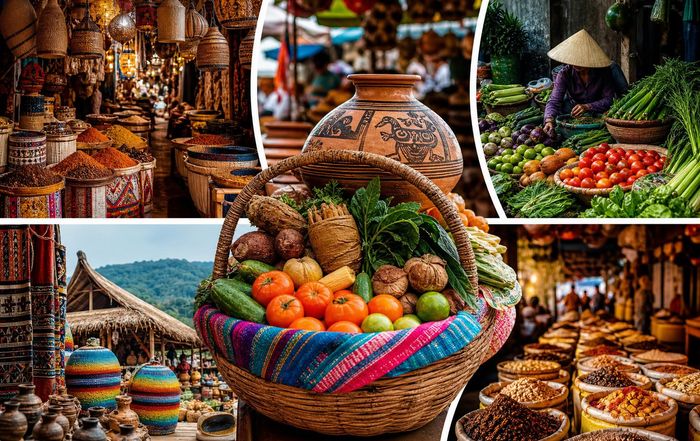
How Public Markets Help Keep Local Culture Alive Around the World
Public markets sit at the intersection of everyday life, economy, and identity. From a neighborhood wet market in Singapore to a weekend bazaar in Marrakech, these spaces are more than places to buy food or souvenirs. They are stages where languages, recipes, rituals, and social norms are performed daily. As cities modernize and retail shifts online, public markets are under pressure-but they also remain some of the most resilient guardians of local culture. How do markets in different parts of the world preserve cultural memory, support livelihoods, and adapt to new realities, and what that means for travelers and communities alike?
Markets as Living Museums of Food Culture
One of the clearest ways public markets preserve culture is through food. Traditional ingredients, cooking methods, and seasonal rituals that might disappear from supermarkets often survive in market stalls, where vendors and shoppers share a common culinary language.
In Barcelona's Mercat de Sant Josep de la Boqueria, long-standing stalls sell local seafood, cured meats, and regional produce that reflect Catalan culinary traditions. Similarly, in Mexico's municipal markets-from Oaxaca to Puebla-shoppers can still find native corn varieties, moles, and herbs that underpin regional cuisines. Organizations such as the Food and Agriculture Organization of the United Nations highlight how traditional markets help safeguard agrobiodiversity and food heritage by providing outlets for small-scale farmers and indigenous producers who maintain local crop varieties and animal breeds (FAO).
These markets are also spaces of informal culinary education. Shoppers learn how to prepare unfamiliar vegetables or cuts of meat directly from vendors, and recipes are passed down verbally, often in local languages or dialects. This face-to-face exchange contrasts with standardized, packaged foods in global supermarket chains, where cultural context is largely stripped away. For travelers interested in understanding a destination's food culture in depth, local markets often provide a more revealing experience than restaurants alone. Readers who want to connect this to broader questions of health and nutrition can explore related discussions on traditional diets and wellbeing in our health reporting.
Markets also keep religious and seasonal food practices visible. Before Lunar New Year in East and Southeast Asia, stalls overflow with symbolic foods-whole fish, citrus fruits, sticky rice cakes-while in many Muslim-majority countries, markets adjust rhythms and offerings during Ramadan, opening late into the night and emphasizing foods for iftar. These patterns reinforce cultural calendars and communal rituals that might otherwise weaken under the pressures of standardized retail and global supply chains.
Language, Storytelling, and Everyday Social Life
Public markets are places where language is not just spoken but performed. In cities with multiple ethnic or linguistic communities, markets often act as neutral territories where different groups meet, trade, and negotiate in a mix of tongues. In Marrakech's Jemaa el-Fnaa, recognized by UNESCO as part of the Intangible Cultural Heritage of Humanity (UNESCO), storytellers, musicians, and food vendors collectively sustain oral traditions and public performance, even as tourism reshapes the square.
In many African and Asian markets, bargaining itself is a cultural practice that encodes social norms-respect for elders, humor as a negotiation tool, or the expectation of reciprocity. The cadence of calling out prices, playful teasing between vendors and regular customers, and the use of proverbs or idioms all reinforce shared cultural references. These forms of communication can be especially important in societies where oral tradition remains central to community memory.
Markets also function as informal newsrooms and social clubs. Before the rise of digital media, they were key sites for sharing local news, political gossip, and community updates. Even today, in parts of Latin America, the Middle East, and South Asia, market conversations shape opinions on everything from elections to migration. For readers interested in how such spaces influence social norms and civic life, our society section often examines these intersections.
The social role of markets is particularly visible among older residents, who may rely on daily market visits for human contact as much as for supplies. In European cities like Lisbon or Athens, traditional markets serve as intergenerational meeting points, where older shoppers pass on language, stories, and practical knowledge to younger family members or apprentices working the stalls. This everyday social fabric is difficult to replicate in algorithm-driven online marketplaces.
Craft, Design, and the Politics of "Authenticity"
Beyond food, many markets anchor local craft traditions. In Istanbul's Grand Bazaar, artisans sell handwoven textiles, ceramics, metalwork, and jewelry that draw on centuries-old designs. Similar patterns appear in Morocco's souks, Thailand's weekend markets, and indigenous craft markets across the Andes. These spaces provide economic incentives for artisans to maintain skills that might otherwise vanish under pressure from mass-produced imports.
However, the relationship between markets and cultural preservation is not always straightforward. As tourism grows, market goods can become tailored to external expectations of "authenticity." Color palettes, motifs, and even materials may shift to suit international tastes. Scholars have noted that in places like Bali or Chiang Mai, some items marketed as traditional are newly invented hybrids, raising questions about who defines cultural authenticity and who benefits from it.
Organizations such as the World Intellectual Property Organization have explored how geographical indications and protections for traditional cultural expressions might help communities retain control over their designs and names (WIPO). At the same time, UNCTAD and other bodies have studied how markets can integrate artisans into global value chains without erasing local identities (UNCTAD).
The challenge is to balance economic opportunity with cultural integrity. Some markets and municipalities have introduced certification schemes for genuine local crafts, while cooperatives give artisans more leverage in setting prices and marketing their work. Readers interested in these intersections of culture and commerce can find related perspectives in our business and culture sections.
Women, Informal Economies, and Social Resilience
In many regions, women are central to market life, often dominating stalls that sell produce, cooked food, and household goods. Studies by the World Bank and others have shown how women's participation in market trade contributes to household income, children's education, and community resilience (World Bank). Public markets thus become spaces where gender norms are both reinforced and renegotiated.
In West African cities like Accra or Lagos, "market queens" and women traders hold considerable economic and social influence, organizing associations that set price floors, provide mutual aid, and coordinate responses to crises. In parts of Southeast Asia, women-led wet markets are crucial nodes in food distribution, linking smallholder farmers to urban consumers. These roles often give women a public voice that might not exist in more formal political arenas.
Markets also support informal safety nets. Vendors may extend credit to regular customers during hard times, while stallholders pool funds to help members with healthcare or funeral costs. These mutual support systems are rarely captured in official economic statistics but are vital to community stability. The International Labour Organization has highlighted how informal workers in markets contribute significantly to urban economies and why inclusive urban planning must account for them (ILO).
Understanding markets as social infrastructure-as important to community health and cohesion as clinics or schools-helps explain why attempts to "modernize" cities by clearing informal markets often provoke strong resistance. Readers interested in the broader implications for public health and livelihoods can connect these themes with our coverage of health and education.
Urban Planning, Gentrification, and the Fight for Space
Public markets do not exist in a vacuum; they are shaped by zoning laws, real estate pressures, and political decisions. In many cities, market land occupies prime central locations that attract developers. When markets are demolished or pushed to peripheral areas, local culture loses a visible, daily stage, and small vendors face displacement.
Urban planning debates in cities from London to Bangkok illustrate these tensions. In some cases, municipal authorities argue that traditional markets are unsanitary or outdated, proposing air-conditioned malls or food courts as replacements. Public health regulations-often grounded in legitimate concerns about hygiene-can be used to justify sweeping closures rather than incremental improvements. The World Health Organization has emphasized that food safety interventions should be risk-based and context-sensitive, acknowledging that traditional markets are essential for food access in many low- and middle-income countries (WHO).
Gentrification adds another layer. Revamped "food halls" and design-forward market renovations can attract wealthier visitors and tourists but may price out long-time vendors or shift the product mix away from everyday staples toward upscale dining. The result can be a market that looks visually vibrant yet serves a narrower slice of the population. For global travelers, this raises questions: when is a market still a community hub, and when has it become primarily a lifestyle attraction?
Some cities are experimenting with more inclusive models. Participatory planning processes invite vendors, neighborhood groups, and civil society organizations into decisions about market upgrades. Urban policy networks such as UN-Habitat promote the idea of markets as key components of sustainable, inclusive cities, advocating for investments that improve sanitation, infrastructure, and safety without erasing local character (UN-Habitat). These debates connect closely to themes in our environment and sustainable coverage, where questions of just, livable cities are central.
Markets, Migration, and Hybrid Identities
As people move across borders, they carry their markets with them-at least in spirit. Migrant communities often recreate elements of home through neighborhood markets and street vendors. In cities like New York, London, and Toronto, weekend markets featuring South Asian, Middle Eastern, African, or Latin American foods and crafts serve as cultural anchors for diasporas while introducing local residents to new tastes and customs.
These transnational markets complicate simple notions of "local culture." A street in Berlin might host Turkish grocers, Syrian bakeries, and Vietnamese vegetable stalls, each drawing on distinct culinary traditions while adapting to German regulations and customer preferences. Over time, hybrid foodways emerge: Turkish-German street snacks, Korean-Mexican fusion, or Nigerian-Italian dishes. Public markets become laboratories where new cultural identities are negotiated and normalized.
Research by institutions such as the Migration Policy Institute has shown how migrant entrepreneurship in markets contributes to urban revitalization, job creation, and cultural exchange (Migration Policy Institute). At the same time, xenophobic politics can target visible migrant markets as symbols of unwanted change, leading to regulatory crackdowns or stigmatizing media coverage.
For global travelers, visiting such markets offers a way to understand not only the "host" culture but also the layered histories of migration, colonialism, and globalization that shape contemporary cities. These dynamics resonate with broader questions about identity, belonging, and ethics in a connected world, themes explored across our world and ethics sections.
Sustainability, Food Systems, and the Future of Markets
From an environmental perspective, public markets can support more sustainable urban food systems. Shorter supply chains that link local farmers directly to consumers can reduce transportation emissions and packaging waste compared with highly centralized supermarket distribution. Seasonal, locally adapted crops sold in markets may also require fewer inputs like synthetic fertilizers or long-distance cold storage.
Organizations such as C40 Cities and various urban food policy councils have highlighted how farmers' markets and traditional markets can be integrated into city-level climate and food strategies (C40). In some European and North American cities, new farmers' markets have emerged not only as lifestyle amenities but as deliberate interventions to promote regional agriculture and healthier diets.
However, not all markets are automatically sustainable. High levels of food loss and waste, inadequate waste management, and lack of cold chains can create environmental and public health challenges. The United Nations Environment Programme has emphasized the importance of improving infrastructure and practices in informal markets to cut food waste and reduce pollution (UNEP).
The future of markets will likely involve a mix of tradition and innovation. Some vendors are adopting mobile payment systems and social media marketing to compete with supermarkets and e-commerce. Others are experimenting with cooperative ownership, community-supported agriculture links, or shared logistics. For readers interested in how technology intersects with these traditional spaces, related themes appear frequently in our technology and innovation coverage.
Tourism, Ethics, and How Visitors Can Support Market Culture
Public markets are now fixtures on travel itineraries, often promoted as "authentic" experiences. Tourism can bring much-needed income to vendors and help sustain traditional foods and crafts, but it can also distort markets if visitor demand overwhelms local needs. When stalls shift from selling everyday goods to primarily souvenirs or Instagram-ready snacks, the market's role in community life can erode.
Ethical engagement starts with recognizing that many markets are first and foremost working spaces for locals. Visitors can support cultural preservation by buying from small-scale producers, asking permission before taking close-up photos of people, and respecting local norms around bargaining and behavior. Choosing markets where locals still shop for their daily needs is often a good indicator that the space remains embedded in community life, rather than being reshaped solely as a tourist attraction.
Travelers can also pay attention to how markets are governed. Are vendors organized in associations? Do women and minority groups have visible roles? Are there signs of displacement or aggressive redevelopment? These observations can deepen understanding of the social and political forces shaping a destination, beyond its surface attractions. For those planning trips, our travel and lifestyle pages often highlight ways to explore markets thoughtfully and responsibly.
Why Markets Still Matter in a Digital Age
As e-commerce platforms and global retail chains expand, it might be tempting to view public markets as remnants of an earlier era. Yet their persistence-and in some cities, resurgence-suggests they fulfill needs that digital platforms cannot easily replace. Markets offer sensory richness, human connection, and embedded cultural knowledge that do not translate fully into ratings, algorithms, or delivery apps.
They are places where children learn the names of fruits in their grandparents' language, where migrants taste home, where artisans test new designs, and where communities negotiate change in public. They can be noisy, chaotic, and imperfect, but those very qualities allow for spontaneity and encounter-key ingredients of cultural vitality.
Protecting and revitalizing public markets is not simply a matter of nostalgia. It is a question of what kinds of cities and societies people want to inhabit: anonymous, frictionless landscapes of standardized consumption, or diverse, sometimes messy spaces where local histories and global currents meet face to face. Around the world, markets continue to hold that door open.