

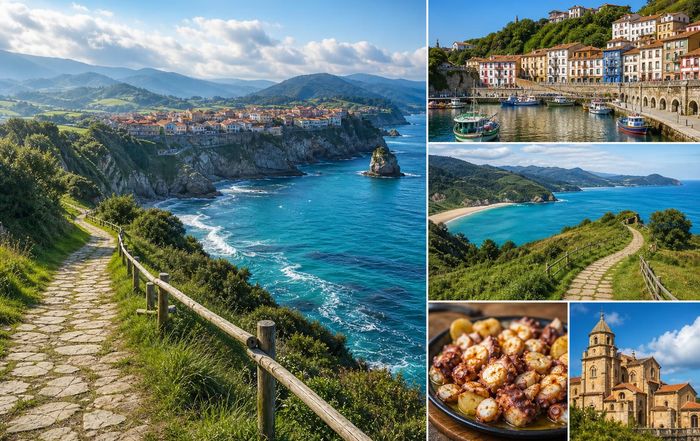
Best Ways to Explore Spain's Northern Coast
Spain's northern coast, stretching roughly from the Galician fjord-like rías in the west to the rugged Basque Country in the east, feels like a different country from the sun-baked Mediterranean. Known collectively as "Green Spain" (Galicia, Asturias, Cantabria, and the Basque Country), this Atlantic-facing coastline offers dramatic cliffs, surf beaches, fishing villages, world-class gastronomy, and cooler summers that appeal to travelers seeking an alternative to the Costa del Sol.
Exploring it well is less about ticking off big-name sights and more about how you move, where you linger, and how deeply you engage with local culture. The following approaches focus on practical ways to structure a trip, the best transport choices, and how to connect with food, landscape, and people along the way.
Understanding the character of Spain's northern coast
The northern coast is unified by its Atlantic weather, green landscapes, and maritime heritage, but each region has a distinct flavor. Galicia in the far west feels Celtic, with misty forests, stone villages, and the famous pilgrimage city of Santiago de Compostela. Asturias mixes sheer cliffs and sandy coves with the jagged Picos de Europa mountains rising just inland. Cantabria blends elegant seaside resorts like Santander with prehistoric caves and lush valleys. The Basque Country is more urban and avant-garde, with Bilbao's architecture, San Sebastián's culinary scene, and a strong sense of cultural identity.
For travelers weighing where to go, it helps to think in themes. Food lovers often gravitate to San Sebastián's pintxos bars and Bilbao's markets, then continue west to sample cider houses and seafood in Asturias and Galicia; readers interested in culture and society may be drawn to the Basque language revival or the pilgrimage traditions of the Camino de Santiago. Outdoor enthusiasts often plan around surfing beaches, coastal hiking paths, and national parks. These overlapping interests mirror broader themes explored in sections like travel, culture, and environment, where coastlines are viewed not just as destinations but as living landscapes under pressure from climate change and tourism.
Driving the coast: freedom, logistics, and scenic routes
For most visitors, renting a car is the single most flexible way to explore Spain's northern coast. The region is threaded by the A-8 / Autovía del Cantábrico, a modern motorway that runs close to the shoreline from the Basque Country into Galicia. It allows relatively quick hops between major hubs such as Bilbao, Santander, Gijón, Oviedo, and A Coruña. However, the real magic lies in leaving the autovía for smaller coastal roads that wind through fishing ports, cliff-top lookouts, and rural hamlets that buses rarely reach.
Spain's official tourism portal at Turespaña offers broad orientation, while practical driving rules and safety advice can be checked via the Directorate-General for Traffic at DGT. Visitors from outside the EU should confirm whether they need an International Driving Permit, and all drivers should be aware of strict drink-driving laws and speed controls. In high season, parking in popular villages and resorts can be tight, so staying slightly outside busy centers and walking in, or using municipal car parks, can reduce stress.
One of the most rewarding road-trip strategies is to choose a rough segment-say Bilbao to A Coruña-and allow at least a week to meander. Instead of trying to see every cove, pick a few bases and explore locally: perhaps San Sebastián for city and surf, Llanes or Ribadesella for Asturias's beaches and Picos de Europa access, and Vigo or Baiona for Galicia's Rías Baixas. Travelers interested in sustainable choices can look into smaller, fuel-efficient cars and off-peak travel dates, themes that echo broader sustainable and innovation coverage of greener mobility.
Traveling by train and bus: slower, greener, more social
Those who prefer not to drive can still explore much of the northern coast using trains and buses. Spain's national rail operator Renfe runs services along parts of the coast, though high-speed AVE lines are more developed in other parts of the country. For a slower, more scenic experience, the narrow-gauge railway network operated by Renfe Feve hugs long stretches of the Cantabrian coast. This line connects many small towns between Bilbao and Ferrol, making it a good option for travelers with time and a flexible schedule.
Timetables and passes can be explored via Renfe, and those interested in long-distance European rail combinations can consult resources such as Eurail or Interrail (for European residents). Buses often fill the gaps where trains are infrequent; regional companies link rural villages to provincial capitals, and long-distance firms connect northern Spain with Madrid, Barcelona, and neighboring countries. Compared with driving, public transport typically reduces emissions and encourages more contact with local commuters, aligning with travel choices discussed in society-focused and environmental reporting.
However, relying solely on trains and buses does mean compromises. Some of the most photogenic beaches and viewpoints lie several kilometers from the nearest station, and services can be limited on weekends or outside summer. A hybrid approach-public transport between major cities, with occasional local car rentals or taxis for side trips-can balance sustainability with access. Planning ahead is essential, especially for those traveling in shoulder seasons when timetables may be reduced.
Walking and the Camino: exploring on foot
Spain's northern coast is one of Europe's rewarding long-distance walking regions, and not only for religious pilgrims. The Camino del Norte, one of the historic routes of the Camino de Santiago, follows much of the shoreline from Irún near the French border to Santiago de Compostela. Managed and promoted by various regional authorities and the Cathedral of Santiago, it offers a mix of cliff-top paths, farm tracks, and town streets. Official background and cultural context are available through the Galician tourism board at Turismo de Galicia and the Santiago Cathedral Foundation via catedraldesantiago.es.
Walking sections of the Camino does not require a full multi-week pilgrimage. Many visitors choose to hike one or two days between coastal towns, staying in small guesthouses instead of pilgrim hostels. This allows them to enjoy the social aspects-meeting walkers from around the world, sharing meals, learning about local traditions-without committing to the full route. For those interested in the cultural and ethical dimensions of pilgrimage and mass tourism, related questions around authenticity, community impact, and spiritual versus recreational motives intersect with themes explored on ethics and culture pages.
Beyond the Camino, there are numerous short coastal trails and circular hikes. In Asturias and Cantabria, waymarked paths lead to blowholes, sea stacks, and viewpoints over small fishing ports. In the Basque Country, stretches of the GR-121 and local trails connect villages like Getaria, Zumaia, and Deba, passing vineyards and cliffs. Walkers should monitor weather conditions, especially in winter and early spring, when Atlantic storms can bring high winds and heavy rain. For safety guidance on outdoor recreation, organizations such as the Spanish Mountaineering Federation at fedme.es and weather information from the Spanish State Meteorological Agency at AEMET are useful references.
Exploring by sea: ferries, sailing, and coastal perspectives
Seeing the northern coast from the water offers a very different perspective. While this is not a region of large cruise terminals like the Mediterranean, there are several maritime options. International travelers from the UK and Ireland sometimes arrive by ferry to Santander or Bilbao, operated by companies such as Brittany Ferries, gaining their first glimpse of the green hills rising from the sea as they sail into port. Within Spain, smaller ferries and boat tours connect towns and islands, particularly in Galicia's Rías Baixas and around the Cíes Islands, which form part of the Atlantic Islands of Galicia National Park.
Sailing and sea-kayaking excursions allow visitors to access quieter coves and observe marine life, from seabirds to, occasionally, dolphins. However, responsible operators should follow guidelines on distances from wildlife and speed limits in protected areas. For general principles on marine conservation and sustainable tourism, bodies like the International Union for Conservation of Nature at IUCN and UNESCO at unesco.org provide broader frameworks that are increasingly referenced by local authorities. Travelers can support low-impact practices by choosing small-group tours, avoiding litter, and respecting no-go zones in sensitive habitats.
Weather and sea conditions matter greatly. The Bay of Biscay is known for powerful swells, particularly in autumn and winter, and even in summer, fog or sudden squalls can appear. Checking local marine forecasts via AEMET and following crew instructions is essential. For those prone to seasickness, short harbor or estuary tours may be more comfortable than open-sea excursions.
Surfing, outdoor adventure, and national parks
Spain's northern coast is one of Europe's most consistent surf regions, with waves rolling in from the North Atlantic. Spots like Mundaka in the Basque Country, Somo near Santander, and various beaches around Gijón and Tapia de Casariego in Asturias have earned international reputations. Surf schools operate in many towns, making it relatively easy for beginners to take lessons while experienced surfers chase larger swells in winter. Surf forecasts and safety advice are widely shared via global surf platforms such as Surfline and Magicseaweed, though local lifeguards' flags and warnings should always take precedence.
Beyond surfing, the juxtaposition of sea and mountains makes the region ideal for multi-activity trips. Within a short drive of the coast, the Picos de Europa National Park offers hiking, climbing, and canyoning among limestone peaks, deep gorges, and traditional farming villages. Spain's national parks system is overseen by the Ministry for the Ecological Transition and the Demographic Challenge, which provides official information at miteco.gob.es. Combining a few days in the Picos with time on the Cantabrian coast allows travelers to experience two very different landscapes without long transfers.
As outdoor recreation grows, so do questions about erosion, overcrowding on popular trails, and the safety of unregulated adventure operators. Responsible travelers can minimize impact by sticking to marked paths, traveling outside peak dates where possible, and choosing licensed guides who follow environmental and safety standards. Broader discussions about the balance between tourism, conservation, and rural livelihoods connect with themes regularly explored in sections on environment, world, and business.
Food as a way into local culture
One of the most memorable ways to explore the northern coast is through its food. The Atlantic waters supply mussels, clams, octopus, hake, anchovies, and more, while inland valleys produce beef, cheeses, apples for cider, and wines from appellations such as Txakoli, Ribeiro, and Albariño. The Basque Country is especially renowned for its pintxos-small, often elaborate bar snacks displayed on counters-while Galicia is associated with dishes like pulpo a la gallega (Galician-style octopus) and empanadas. Asturias and Cantabria are known for hearty stews, blue cheeses like Cabrales, and traditional cider poured from height.
For those interested in the health and nutritional aspects of this cuisine, the emphasis on fresh fish, legumes, olive oil, and moderate wine consumption fits within broader Mediterranean diet patterns studied by organizations such as the World Health Organization at who.int and the Food and Agriculture Organization of the United Nations at fao.org. At the same time, rich meats, pastries, and generous portions mean visitors concerned with diet or specific conditions may wish to balance restaurant meals with lighter options, a topic frequently explored in health-oriented coverage.
Food also offers a window into social customs. In San Sebastián and Bilbao, locals often bar-hop for pintxos, having one or two bites and a small drink in each place instead of sitting for a long meal. In Asturias, traditional cider houses encourage guests to share bottles and stand while drinking, as the cider is poured in small quantities to aerate it. Markets such as La Boquería's northern counterparts in cities like Santander and A Coruña showcase seasonal produce and provide opportunities to talk with vendors about fishing quotas, climate impacts on harvests, and the economics of small-scale agriculture. Such conversations can illuminate how global issues-overfishing, rising sea temperatures, supply-chain pressures-play out in everyday life, themes echoed in food and society reporting.
Choosing where to stay: cities, villages, and rural retreats
Accommodation choices shape how travelers experience the northern coast. Larger cities such as Bilbao, San Sebastián, Santander, Gijón, Oviedo, A Coruña, and Vigo offer the widest range of hotels, hostels, and apartments, along with museums, nightlife, and transport connections. Staying in a city can be practical for those relying on public transport, or for travelers who want to combine coastal day trips with urban culture and technology-driven attractions like the Guggenheim Museum Bilbao, whose transformation of the city has been widely analyzed by institutions such as Guggenheim.
Smaller coastal towns and fishing villages-Getaria, Zumaia, Llanes, Ribadesella, Comillas, San Vicente de la Barquera, Cudillero, Cambados, and many others-offer a slower pace and closer contact with local life. Many have family-run guesthouses or small hotels, some of them in historic buildings. Inland, casas rurales (rural houses) give access to forests, hills, and traditional agriculture, appealing to visitors who want to combine coastal excursions with countryside walks. For those interested in how tourism revenue supports or strains rural communities, questions of fair pay, property prices, and seasonal employment overlap with wider coverage of world and education topics such as rural depopulation and skills training.
Sustainable accommodation choices can include certified eco-lodges, properties that use renewable energy or local food suppliers, and places accessible by public transport. Organizations such as the Global Sustainable Tourism Council at gstcouncil.org outline criteria for responsible tourism businesses, which some Spanish regions are beginning to adopt. Visitors can contribute by traveling in shoulder seasons, respecting quiet hours in residential areas, and supporting local, independent businesses rather than only international chains.
When to go and how climate is changing the experience
The northern coast's climate is milder and wetter than much of Spain. Summers are usually warm rather than scorching, with average highs in the low to mid-20s Celsius, while winters are cool and damp. This makes the region attractive to those seeking to escape extreme heat, a growing concern as climate change drives higher summer temperatures in southern Europe. However, the flip side is a greater chance of rain at any time of year, so visitors should plan for flexible days and pack layers.
Climate scientists and organizations such as the Intergovernmental Panel on Climate Change at ipcc.ch and the European Environment Agency at eea.europa.eu have documented how warming oceans, changing storm patterns, and sea-level rise are affecting Atlantic coasts. In northern Spain, this can mean increased coastal erosion, more frequent heatwaves even in traditionally mild areas, and changes to fish stocks that local communities rely on. Over time, these shifts may alter surfing conditions, seasonal tourism patterns, and even the character of local cuisine.
For now, late spring (May-June) and early autumn (September-early October) are often ideal for a coastal trip: sea temperatures are tolerable for swimming, many services are open, and crowds are lighter than in July and August. Winter can be rewarding for storm watching, cultural visits, and food, but some coastal businesses close or reduce hours. Travelers should keep an eye on local news and municipal websites, as well as broader climate and health updates from bodies like the European Centre for Disease Prevention and Control at ecdc.europa.eu, especially if planning outdoor activities.
Making the journey meaningful and responsible
Ultimately, the "best" way to explore Spain's northern coast depends on personal priorities: some will focus on surfing and nightlife, others on quiet fishing villages, art museums, or long-distance walks. Yet across these varied approaches, a few underlying principles can enrich the experience. Slowing down-whether by taking smaller roads, walking sections of the Camino, or lingering over long lunches-creates space for encounters that go beyond postcard views. Asking questions about how tourism affects local housing, employment, and ecosystems can turn a holiday into an opportunity for learning, aligning with broader reflections on ethics and lifestyle.
Choosing lower-impact transport where feasible, supporting small businesses, and respecting local customs and languages (including Galician, Asturian, Cantabrian dialects, and Euskara in the Basque Country) all help ensure that the coast remains a place where residents can thrive as well as visitors. Whether approached as a classic road trip, a slow train journey, a pilgrimage, or a series of culinary stopovers, Spain's northern shore rewards those who treat it as more than a backdrop-engaging with it as a living, changing coastline at the intersection of travel, culture, environment, and everyday life.