

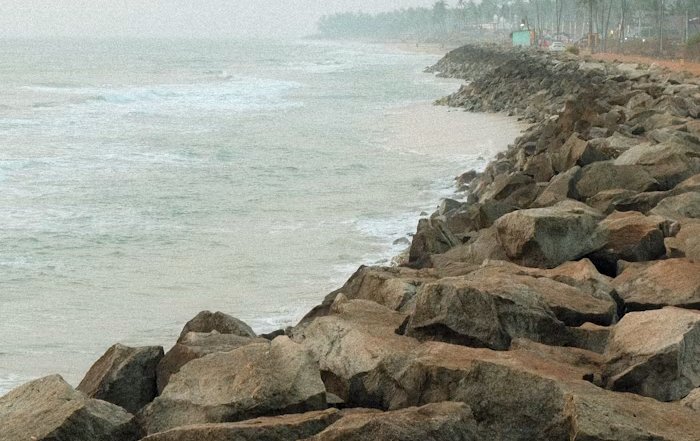
Coastal Erosion and Community Response: Navigating a Changing Shoreline
Coastal Erosion as a Defining Challenge of the 2020s
Coastal erosion has moved from being a largely local environmental concern to a central global issue shaping economic policy, infrastructure planning, and community identity. Shorelines from the eastern seaboard of the United States to the low-lying coasts of Southeast Asia are retreating under the combined pressures of sea-level rise, stronger storms, subsidence, and human development. For readers of WorldsDoor, whose interests span health, travel, culture, lifestyle, business, technology, environment, and society, the story of coastal erosion is no longer an abstract scientific problem; it is a lived reality affecting where people work, how they travel, what they eat, how they invest, and how communities define their future.
Organizations such as the Intergovernmental Panel on Climate Change (IPCC) have repeatedly warned that accelerating sea-level rise will intensify coastal risks throughout the twenty-first century, with profound implications for densely populated deltas, tourism hubs, and industrial ports. Coastal erosion is not only reshaping physical landscapes; it is also testing governance, ethics, and social cohesion, while challenging traditional notions of property, heritage, and security. To understand this transformation, it is essential to examine the scientific drivers of erosion, the differentiated impacts across regions, and the evolving community responses that blend innovation, resilience, and difficult trade-offs.
Readers exploring the broader context of climate and environmental change on WorldsDoor can find complementary perspectives in its dedicated sections on environment, world affairs, and sustainable futures, which together frame coastal erosion as part of a wider planetary transition already underway.
The Science Behind a Disappearing Coastline
Coastal erosion is a natural process, but in 2026 it is increasingly driven and amplified by human activity and global climate change. Rising sea levels, documented extensively by institutions like NASA and the National Oceanic and Atmospheric Administration (NOAA), are raising the baseline from which waves attack beaches, dunes, and cliffs. As oceans warm and expand and land-based ice melts, even small annual increases in sea level compound over time, resulting in more frequent high-tide flooding and a gradual landward migration of the shoreline. Those wishing to understand the physical underpinnings in more depth can review global sea-level observations and projections through resources such as the NOAA sea level portal.
In many regions, coastal subsidence exacerbates the problem. Cities such as Jakarta, Bangkok, and parts of the Mississippi Delta are sinking due to groundwater extraction, sediment compaction, and historical land use. This relative sea-level rise means that even if global oceans were stable, local coastlines would still retreat. Meanwhile, upstream dams and river engineering reduce sediment supply to deltas and beaches, which historically relied on river-borne sand and silt to replenish what waves carried away. The European Environment Agency has highlighted how altered sediment flows along European rivers are leaving coasts in countries like France, Italy, Spain, and the Netherlands more vulnerable to erosion, a trend mirrored in many other parts of the world.
Storm patterns are also shifting. Warmer oceans fuel more intense tropical cyclones and extratropical storms, which in turn generate higher storm surges and more powerful wave action. The World Meteorological Organization notes that the frequency of high-intensity storms has risen in several basins, exposing coastal communities in North America, Asia, and the Caribbean to repeated erosive events that can strip away years of natural beach accretion in a single season. These physical processes, operating together, mean that erosion is no longer episodic but increasingly chronic, forcing communities to rethink assumptions about permanence and stability along the shore.
For readers interested in how these environmental shifts intersect with human health and wellbeing, WorldsDoor's health and lifestyle sections explore the physiological, psychological, and social dimensions of living with climate-related stressors, including coastal hazards.
Global Hotspots: From Iconic Beaches to Working Waterfronts
The impacts of coastal erosion are highly uneven, reflecting differences in geography, governance, wealth, and cultural attachment to the sea. In the United States, communities along the Atlantic and Gulf Coasts, from Florida to Louisiana and up through New Jersey, are witnessing the slow disappearance of beaches and wetlands that once buffered them from storms. The U.S. Geological Survey has documented significant shoreline retreat along large stretches of the eastern seaboard, with some barrier islands migrating landward and losing valuable real estate in the process. Coastal homeowners, insurers, and municipal governments are grappling with rising costs of protection and recovery, sparking debates about who pays, who stays, and who must ultimately relocate.
In Europe, iconic tourist destinations are under strain. The sandy beaches of Spain's Costa Brava, the fragile dunes of Denmark's Jutland coast, and the low-lying shores of the Netherlands are all experiencing measurable erosion. The European Commission's coastal management initiatives emphasize integrated approaches that balance tourism, environmental protection, and economic development, but the pace of change is forcing difficult choices. For a broader overview of European adaptation strategies, readers can explore analyses from the European Environment Agency.
Asia presents some of the most acute risks. In Bangladesh, Vietnam, Thailand, and parts of China, densely populated deltas such as the Mekong and Ganges-Brahmaputra are losing land to the sea while hosting millions of residents and vital agricultural production. The World Bank has repeatedly highlighted that some of the world's most vulnerable communities live in these low-lying coastal zones, where erosion, salinization, and flooding interact to undermine livelihoods and food security. Similarly, small island states in the Pacific and Indian Oceans, including low-lying atolls, face existential threats as their narrow strips of land erode and freshwater lenses become contaminated by saltwater intrusion.
In Africa and South America, coastal erosion is reshaping fast-growing cities such as Lagos, Cape Town, and Rio de Janeiro, where informal settlements often occupy the most exposed zones. The United Nations Environment Programme (UNEP) has reported that without decisive adaptation, coastal hazards could push millions into poverty, especially in countries where institutional capacity and financial resources are already stretched. For global and regional context on these trends, readers may consult the UNEP climate and disasters resources.
These varied experiences illustrate that coastal erosion is not a single story but a mosaic of local narratives shaped by geography, governance, and culture. On WorldsDoor, the travel and culture sections increasingly reflect how cherished destinations and maritime traditions in places like Australia, Japan, Italy, and New Zealand are being reimagined as shorelines transform.
Economic Stakes for Business, Infrastructure, and Tourism
Coastal erosion has become a material financial risk for businesses, investors, and governments. In 2026, ports, industrial facilities, tourist resorts, and coastal transport corridors represent trillions of dollars in exposed assets. The Organisation for Economic Co-operation and Development (OECD) has estimated that without adaptation, economic losses from coastal flooding and erosion in major port cities could rise dramatically by mid-century, affecting trade flows, insurance markets, and public finances. Companies with supply chains that rely on coastal infrastructure, from container terminals to refineries and data cables, are increasingly incorporating coastal risk into their long-term planning and disclosures.
The tourism sector is particularly sensitive. Iconic beaches in Australia's Gold Coast, Hawaii, Thailand's islands, and the Mediterranean are central to national branding and local employment. When these beaches narrow or disappear, the appeal of destinations can decline, affecting airlines, hotels, restaurants, and local artisans. The World Travel & Tourism Council (WTTC) has emphasized that climate-resilient tourism infrastructure and coastal management are now prerequisites for sustainable growth in many destinations. Those interested in the evolving relationship between tourism and environmental risk can consult analyses from the WTTC on future-proofing global travel.
Insurance and real estate are also undergoing a paradigm shift. Insurers in Canada, the United Kingdom, Germany, and the United States are adjusting premiums or withdrawing coverage in particularly exposed coastal zones, prompting homeowners and municipalities to reconsider development patterns. Financial regulators, including the Network for Greening the Financial System (NGFS), have urged banks and investors to integrate physical climate risks such as erosion into stress-testing and portfolio management. This trend is pushing coastal cities to quantify their exposure, prioritize protective investments, and in some cases, rethink expansion plans.
For business leaders and entrepreneurs following WorldsDoor's business and innovation coverage, coastal erosion is emerging as both a threat and an arena for new solutions, from resilient construction materials and nature-based defenses to new insurance products and data-driven risk analytics.
Social, Cultural, and Health Dimensions of a Retreating Shore
Beyond economics, coastal erosion has deep social and cultural implications that resonate with communities worldwide. Many coastal societies, from fishing villages in Norway and Japan to Indigenous communities in Canada, Australia, and New Zealand, have identities and traditions rooted in specific places along the shore. As land is lost, cemeteries, sacred sites, historical buildings, and communal gathering spaces may be threatened or destroyed, eroding not only physical territory but also collective memory and cultural continuity. The UNESCO World Heritage Centre has raised concerns about the vulnerability of coastal heritage sites, including archaeological remains and historic fortifications, to ongoing erosion and sea-level rise. Readers can explore examples of such at-risk heritage through UNESCO's climate and heritage pages.
Socially, the burden of erosion often falls disproportionately on those with the fewest resources. Informal settlements and low-income neighborhoods are more likely to occupy marginal, exposed land, and residents may lack access to insurance, savings, or political influence. As relocation or protective measures are considered, questions of fairness, participation, and consent come to the fore. There is growing recognition among policymakers and civil society organizations that coastal adaptation must be guided by principles of climate justice and human rights, as articulated by bodies such as the Office of the United Nations High Commissioner for Human Rights (OHCHR).
Health impacts are multifaceted. Repeated flooding and land loss can lead to contamination of drinking water, increased mold and respiratory problems in housing, and heightened risk of waterborne diseases. Mental health consequences, including anxiety, grief, and a sense of loss associated with "solastalgia" - distress caused by environmental change close to home - are increasingly documented in coastal populations. The World Health Organization (WHO) has underscored that climate-related hazards, including coastal erosion and flooding, are significant stressors on mental and physical health, especially among children, older adults, and those with pre-existing vulnerabilities. Readers interested in the intersection of climate, health, and wellbeing can explore related analyses through the WHO climate and health portal.
On WorldsDoor, the interconnectedness of these issues is reflected in its society, education, and ethics sections, which examine how communities learn, debate, and decide in the face of environmental change that challenges deeply held values and ways of life.
Community Responses: Defend, Adapt, or Retreat
Faced with accelerating erosion, communities around the world are experimenting with a spectrum of responses that can be broadly categorized as defending the coast, adapting in place, or retreating from the most exposed zones. Each pathway involves technical, financial, ethical, and cultural considerations, and in practice, many regions employ a mix of strategies.
Traditional hard defenses such as seawalls, groynes, and revetments remain common, especially in densely built urban areas where critical infrastructure must be protected. Cities like Tokyo, Rotterdam, and Singapore have long histories of engineering solutions to manage the sea, and they continue to invest heavily in upgraded barriers, surge gates, and elevated infrastructure. However, engineers and planners increasingly recognize that hard structures can have unintended side effects, including increased erosion downstream or loss of natural beaches, prompting a shift toward more integrated and nature-based approaches.
Nature-based solutions, such as restoring dunes, wetlands, mangroves, and coral reefs, are gaining traction as cost-effective and multifunctional defenses. Research published by organizations like The Nature Conservancy and Wetlands International demonstrates that healthy coastal ecosystems can dissipate wave energy, trap sediment, and provide habitat and carbon storage, while also supporting fisheries and tourism. Countries such as Mexico, Indonesia, and the Netherlands are piloting large-scale projects that combine engineered structures with restored ecosystems, an approach often referred to as "building with nature." Those interested in the science and practice of such solutions can explore resources from The Nature Conservancy's coastal resilience program.
In some regions, managed retreat is emerging as a necessary, if politically sensitive, strategy. This involves relocating infrastructure and sometimes entire communities away from high-risk coastal zones, allowing shorelines to migrate naturally. Examples can be seen in parts of New Zealand, the United States, and France, where authorities are experimenting with voluntary buyouts, rolling easements, and land-use changes. The Global Centre on Adaptation (GCA) has highlighted that managed retreat, when undertaken transparently and with strong community engagement, can be a proactive tool to reduce long-term losses, though it raises challenging questions about identity, compensation, and who decides when and where retreat occurs. Further insights into adaptation pathways can be found via the GCA knowledge platform.
For readers of WorldsDoor, these strategies intersect with urban planning, technology, and lifestyle choices discussed across the platform, including how people design homes, choose travel destinations, and envision resilient communities in a warming world.
Technology, Innovation, and Data-Driven Coastal Management
By 2026, technological innovation is transforming how societies observe, model, and respond to coastal erosion. High-resolution satellite imagery, autonomous drones, and in-situ sensors provide near-real-time information on shoreline position, wave dynamics, and sediment transport. Organizations such as the European Space Agency (ESA) and NASA have made open-access datasets available that enable scientists, planners, and even citizen scientists to monitor erosion trends and assess the effectiveness of interventions. Those interested in the technical details of Earth observation for coastal zones can explore the ESA coastal monitoring initiatives.
Advanced numerical models, powered by increased computing capacity and artificial intelligence, allow for more accurate projections of how specific stretches of coastline will respond to different sea-level and storm scenarios. These tools inform decisions about where to prioritize defenses, how to design infrastructure, and when to consider relocation. Technology firms and research institutions in countries such as Germany, South Korea, Singapore, and the United Kingdom are collaborating on integrated decision-support platforms that combine physical data with socioeconomic information, supporting more holistic risk assessments.
Innovation is also evident in construction materials and design. Engineers are experimenting with permeable structures, living shorelines that incorporate vegetation and habitat features, and modular protective systems that can be adjusted as conditions change. The International Union for Conservation of Nature (IUCN) has been instrumental in developing guidelines for nature-based coastal protection that meet both engineering and ecological standards. Those wishing to delve deeper into these guidelines can consult the IUCN nature-based solutions resources.
On WorldsDoor, the technology and innovation sections provide a broader lens on how digital tools, data, and design thinking are reshaping responses to environmental challenges, including coastal erosion, while the business coverage highlights emerging markets and investment opportunities in resilience technologies.
Ethics, Governance, and Inclusive Decision-Making
Coastal erosion is not merely a technical problem; it is an ethical and governance challenge that forces societies to confront fundamental questions about responsibility, equity, and intergenerational justice. Decisions about where to build defenses, whose properties to protect, and when to initiate retreat have profound implications for social cohesion and trust in institutions. The Intergovernmental Panel on Climate Change (IPCC) has emphasized that effective adaptation requires transparent, participatory processes that respect local knowledge and cultural values, rather than top-down imposition of solutions.
In many countries, legal frameworks are being tested or rewritten to address novel situations, such as the loss of land that defines national boundaries or property rights. Small island states in the Pacific and Indian Oceans are raising questions in international law about the status of maritime zones and exclusive economic rights when land territory is lost, a debate closely followed by entities such as the International Law Commission and the International Court of Justice. These discussions underscore that erosion is not only a local planning issue but also a matter of global governance and diplomacy.
Ethical considerations also arise in financing. Wealthier nations and corporations, whose historical emissions have contributed disproportionately to climate change, are under increasing pressure to support adaptation efforts in more vulnerable regions. The United Nations Framework Convention on Climate Change (UNFCCC) process, including the establishment of funding mechanisms for loss and damage, reflects ongoing negotiations about who should bear the costs of coastal protection, relocation, and cultural loss. Readers can follow developments in these negotiations and related adaptation finance debates via the UNFCCC official site.
Within this complex landscape, platforms like WorldsDoor aim to foster informed dialogue that bridges science, policy, ethics, and lived experience. Its ethics, society, and world sections provide spaces where business leaders, policymakers, educators, and citizens can engage with the difficult trade-offs and responsibilities that coastal erosion brings to the fore.
Toward Resilient Coastal Futures
As 2026 unfolds, it is increasingly clear that coastal erosion will remain a defining challenge for communities, businesses, and governments across North America, Europe, Asia, Africa, and South America, as well as in island states and polar regions. The question is no longer whether coastlines will change, but how societies will respond and who will shape those responses. A resilient coastal future will require integrating robust science, innovative technology, inclusive governance, and ethical reflection, while recognizing that not all losses can be prevented and not all places can be preserved in their current form.
For readers of WorldsDoor, the story of coastal erosion intersects with many of the themes that define the platform: the health impacts of environmental stress, the transformation of beloved travel destinations, the reshaping of cultural landscapes, the evolution of business models and financial systems, the promise and limits of technological innovation, and the search for sustainable, just pathways through a rapidly changing world. By following developments across health, travel, culture, environment, and other sections, readers can situate coastal erosion within a broader understanding of global change and community resilience.
Ultimately, the response to coastal erosion will be judged not only by the structures built or the land preserved, but by the degree to which societies uphold principles of fairness, dignity, and shared responsibility while navigating unavoidable change. In this sense, coastal erosion is a test of collective wisdom and solidarity in an era where the boundaries between land and sea, and between local and global, are being redrawn. Platforms such as WorldsDoor, by curating informed, multidisciplinary perspectives, play a small but meaningful role in helping communities, decision-makers, and individuals open the door to futures in which adaptation is not merely reactive, but guided by experience, expertise, authoritativeness, and trustworthiness.