

A Guide to France's Most Charming Market Towns
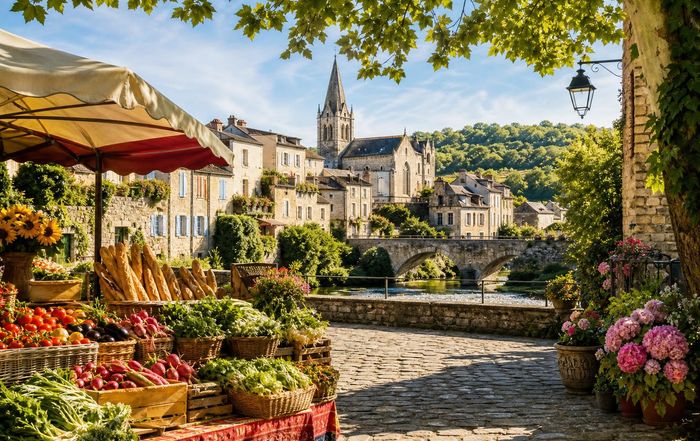
France's market towns are where daily life still unfolds in the open air, under stone arcades and striped awnings, with church bells chiming above stalls piled high with cheeses, olives, and seasonal fruit. For many travellers, these towns offer a more intimate, grounded experience than the big cities: a chance to slow down, talk to producers, and taste regional culture in its most literal sense. This guide focuses on some of France's most characterful market towns across different regions, how to experience them well, and what practical details to know before planning a visit.
For broader inspiration on where markets intersect with culture and travel, readers may also enjoy the top travel and happy culture content here particularly its sections on travel, culture, and food.
Why French market towns matter
Traditional markets in France are more than places to buy groceries. They sit at the intersection of food culture, social life, and local identity. The weekly market (marché hebdomadaire) is often centuries old, protected by municipal regulations and sometimes by heritage status. According to the French Ministry of Culture, open-air markets are considered part of the country's intangible cultural heritage, reflecting regional products, dialects, and customs. Organisations such as Atout France, the national tourism development agency, actively promote markets and "villages de caractère" as a way to spread visitors beyond overcrowded hotspots and support rural economies. For travellers, this means that market towns are usually easy to find information about through official tourism offices, many of which maintain English-language pages and printed guides.
From a sustainability perspective, markets also play into broader European efforts to shorten food supply chains and reduce packaging waste, themes highlighted by bodies such as the European Commission and FAO (Food and Agriculture Organization) in their work on local food systems. Shopping at markets, or simply observing how locals use them, offers a glimpse into how French communities balance tradition with these contemporary concerns. Many stalls now highlight organic certification from AB (Agriculture Biologique) or European PDO/PGI labels, which can be cross-checked via official resources from FranceAgriMer and the European Union's quality schemes, accessible through sites like europa.eu. For visitors interested in sustainable travel, planning itineraries around market days can therefore be both culturally rich and relatively low-impact.
Sarlat-la-Canéda: Medieval Dordogne at its most theatrical
In the Dordogne, Sarlat-la-Canéda is often cited as one of France's most atmospheric market towns. Its honey-coloured stone lanes, half-timbered houses, and central square, Place de la Liberté, form the backdrop to a twice-weekly market that feels almost theatrical. On Wednesdays and Saturdays, the town fills with stalls selling walnuts, foie gras, duck confit, truffles in season, and cabécou goat's cheese, alongside more everyday produce. The combination of medieval architecture and food culture has made Sarlat a favourite with French and international visitors, and it is heavily promoted by Nouvelle-Aquitaine's regional tourism board, whose broader work can be explored via france.fr.
Because Sarlat is well-known, timing matters. In high season, early morning visits (before 10:00) are often the best way to experience the market without crowds; off-season Saturdays can be lively but more relaxed. Many of the producers are from surrounding farms in the Périgord Noir, and several offer tastings of walnut oil, preserved duck, and wines from nearby Bergerac. For travellers interested in the intersection of food, health, and lifestyle, it can be useful to understand the richness of Dordogne's cuisine in the context of broader dietary advice from bodies like the World Health Organization and national nutrition agencies; markets make it easier to balance indulgent regional specialities with abundant fresh produce. After the market, Sarlat's lanes invite slow wandering, with small museums and churches that connect the food experience to the town's long history.
Readers curious about how regional foodways shape everyday life may find additional context in WorldsDoor's sections on society and health, which often explore how culture and wellbeing intersect.
Uzès: Southern elegance under stone arcades
In Occitanie, Uzès offers a different kind of charm: refined, sunlit, and framed by pale stone arcades. The town's arcaded Place aux Herbes hosts a well-known market on Wednesdays (more food-focused) and Saturdays (larger, with textiles, pottery, and crafts). The surrounding region, promoted by Occitanie's tourism authorities and widely profiled on platforms like lonelyplanet.com, is known for its olive oils, goat cheeses, and wines from the nearby Côtes du Rhône. Uzès manages to feel both elegant and lived-in; many of the stalls are run by small-scale producers who can explain the differences between local olive varieties or suggest cheese pairings.
For travellers, Uzès works well as a base for exploring the wider Gard region, including the Pont du Gard aqueduct and nearby villages. It also illustrates how historic towns manage visitor flows and heritage conservation, issues often discussed by organisations such as UNESCO, which has designated several nearby sites as World Heritage. Uzès itself is not a UNESCO site, but it operates under French heritage protections that restrict development in the historic centre. This has helped preserve the scale and character that make its markets so appealing, while also raising questions about housing affordability and the balance between permanent residents and second-home owners. For readers interested in the social side of tourism, WorldsDoor's world and environment sections often touch on similar tensions in other destinations.
Dinan and the Breton coast: Half-timbered houses and sea air
In Brittany, Dinan stands out for its half-timbered houses, ramparts, and steep cobbled street leading down to the river port. The town's weekly market, typically held on Thursdays, spreads through the upper town, with stalls offering salted butter, buckwheat flour, galette fillings, cider, and seafood from the nearby coast. The atmosphere here is distinctly Breton: bilingual French-Breton signage, musicians playing traditional tunes on market days, and a strong sense of regional identity that aligns with broader cultural preservation efforts supported by institutions like Région Bretagne and cultural networks referenced by culture.gouv.fr.
Dinan is particularly appealing to travellers who want to combine market culture with coastal excursions. From the town, it is easy to reach seaside spots such as Saint-Malo or smaller fishing ports, where weekly or seasonal fish markets provide another layer of food culture. The Breton diet, rich in seafood and dairy, has been the subject of nutritional and environmental studies, some of which are summarised by organisations like Ifremer (France's marine research institute) and EU maritime agencies accessible via europa.eu. For visitors, this background underscores why certain fish species are more prominent at stalls, and why some markets highlight sustainable fishing labels. Those interested in sustainable travel can use this information to make more informed choices about what they consume, complementing broader sustainability coverage in WorldsDoor's sustainable and environment sections.
Pézenas and the Languedoc hinterland: Craft, history, and wine
Further south, in the Hérault department, Pézenas combines a strong artisanal tradition with a lively food market. Once a seat of regional power and a favourite of the playwright Molière, the town today is known for its antique shops, craft workshops, and Saturday market that spills through its historic centre. Stalls here feature local olives, honey, charcuterie, and wines from the surrounding Languedoc vineyards, an area that has undergone significant qualitative transformation in recent decades according to wine bodies such as the Conseil Interprofessionnel des Vins du Languedoc and international wine education providers like wsetglobal.com.
Pézenas's market is particularly interesting for travellers who like to connect food with craftsmanship. Alongside produce, visitors will find potters, textile makers, and woodworkers whose presence reflects broader regional support for artisanal economies, often documented by organisations such as the Institut National des Métiers d'Art and highlighted in tourism materials accessible via france.fr. The town also hosts occasional night markets and themed events in summer, part of a trend across France to extend market culture into the evening, when temperatures are cooler and locals can combine shopping with concerts or outdoor dining. For those planning travel around these events, it is worth checking local tourism office websites or reputable travel guides like roughguides.com for updated schedules.
Annecy: Lakeside markets with an Alpine backdrop
In eastern France, Annecy is better known for its lake and canals, but its old-town markets are central to the city's charm. Several days a week, stalls line the cobbled streets of the Vieille Ville, selling cheeses from Savoie (such as Reblochon and Tomme), cured meats, wild mushrooms in season, and Savoyard pastries. The combination of pastel-painted facades, waterways, and snow-capped peaks in the distance makes even a simple grocery run feel cinematic. Annecy's markets are part of a broader regional food culture that includes alpine cheeses, cured meats, and wines, many of which carry AOP or IGP labels overseen by national and European bodies accessible through inao.gouv.fr and europa.eu.
Annecy also illustrates how market towns adapt to high levels of tourism while trying to maintain everyday life for residents. The city has seen rising visitor numbers, especially after being profiled widely by outlets such as bbc.com and nationalgeographic.com. In response, local authorities have implemented measures around short-term rentals and crowd management, part of a wider French and European conversation about "overtourism" that is increasingly covered by academic institutions and policy think tanks. For travellers, this means that early visits to markets are again advisable, both out of respect for locals and to enjoy a more authentic atmosphere. Combining a morning market stroll with an afternoon hike or lake swim can help distribute time and spending more evenly across the region.
Saint-Rémy-de-Provence: Provençal colours and scents
In Provence, Saint-Rémy-de-Provence has become an emblem of the Provençal market experience: striped awnings, lavender bundles, olives in every shade of green and black, and stalls of soaps and linens designed to appeal to visitors. Its Wednesday market is one of the largest and best-known in the region, drawing both local residents and international travellers. Beyond the postcards, however, there is still a strong core of local producers offering olive oils, goat cheeses, seasonal fruit, and vegetables from the Alpilles region. The broader Provençal diet has been linked to Mediterranean dietary patterns, which have been studied extensively by organisations such as Harvard T.H. Chan School of Public Health and the World Health Organization, highlighting potential health benefits of olive oil, nuts, and fresh produce.
Saint-Rémy also sits at the intersection of art, history, and food. Nearby Roman ruins at Glanum and the monastery where Vincent van Gogh stayed are key cultural sites, and many visitors combine a morning at the market with afternoon visits to these landmarks. Tourism boards such as Provence Tourisme and national platforms like france.fr encourage this kind of mixed itinerary, which spreads foot traffic and supports different sectors of the local economy. For readers interested in how cultural heritage and tourism intertwine, WorldsDoor's sections on culture and world often explore similar dynamics in other regions.
Smaller gems: Hidden and lesser-known market towns
Beyond the well-publicised names, countless smaller French towns host markets that can be just as rewarding, especially for travellers seeking quieter experiences. Places such as Salers in Auvergne, Saint-Antonin-Noble-Val in Occitanie, Dieulefit in Drôme Provençale, or Isigny-sur-Mer in Normandy each have their own market traditions shaped by local geography and economy. Salers, for example, sits in volcanic uplands and is associated with its eponymous cheese and cattle breed, both recognised by agricultural and heritage bodies documented by inao.gouv.fr. Isigny-sur-Mer, by contrast, is known for dairy and shellfish, with markets that reflect the richness of the surrounding estuary.
Finding these smaller markets often involves a bit more research. Regional tourism committees, accessible via official portals such as atout-france.fr and france.fr, maintain directories of markets by day and location. Reputable guidebook publishers like lonelyplanet.com and roughguides.com also highlight particularly atmospheric or historic markets in their France and regional guides. For travellers planning extended stays or slow-travel itineraries, building a route around these quieter towns can provide deeper insight into rural life, agricultural rhythms, and regional dialects, while often being more affordable than high-profile destinations.
How to experience French market towns well
Experiencing French market towns meaningfully involves more than just snapping photos of colourful stalls. Arriving early is almost always wise: markets typically start by 8:00 and wind down around midday, with the best produce and calmest atmosphere in the first couple of hours. Observing how locals interact, what they buy, and in what quantities can be as instructive as any guidebook. Many French households still plan weekly meals around market purchases, a habit that connects to broader cultural attitudes toward food and health that are often discussed by national nutrition agencies and international bodies like the World Health Organization.
Language skills help, but are not essential. Simple phrases-bonjour, s'il vous plaît, merci, and basic numbers-go a long way. Vendors in more touristed areas may speak some English, but even in smaller towns, a few words of French are usually appreciated. Bringing a reusable bag aligns with France's restrictions on single-use plastic bags, part of wider environmental policies tracked by organisations such as ecologie.gouv.fr and EU institutions accessible via europa.eu. It also makes it easier to assemble impromptu picnics from bread, cheese, fruit, and charcuterie. For those interested in the broader lifestyle implications of market-based shopping, WorldsDoor's lifestyle and innovation sections often explore how traditional practices adapt to modern constraints.
Another useful approach is to connect market visits with local educational opportunities: short cooking classes, farm visits, or winery tours. Many are organised or vetted by local tourism offices and sometimes by agricultural organisations whose broader missions can be explored via chambres-agriculture.fr. These experiences can provide context on production methods, seasonal challenges, and how climate change is affecting local crops-issues that increasingly shape what appears on market stalls from year to year.
Planning a trip around France's market towns
Designing an itinerary focused on market towns requires attention to market days, regional distances, and transport options. Most towns hold their main market once or twice a week, and days vary by location. Official municipal or tourism websites, often linked from national platforms such as france.fr, are usually the most reliable sources for current schedules. Combining a few anchor towns-such as Sarlat, Uzès, Dinan, Annecy, or Saint-Rémy-with smaller villages nearby can create a balanced route that alternates between well-known highlights and quieter discoveries.
Transport choices also affect the experience. Trains and regional buses, whose networks are summarised by bodies like SNCF and regional councils, can reach many market towns, but some of the most rewarding places are easier to access by car. For travellers concerned about environmental impact, France's growing rail network and car-sharing platforms, discussed in policy contexts on ecologie.gouv.fr and europa.eu, offer alternatives to individual car hire. Staying longer in fewer places, and visiting markets as part of everyday routines rather than as rushed excursions, can also reduce travel emissions while deepening cultural engagement.
For new and old readers considering how market-town travel fits into broader questions of ethics, sustainability, and global tourism patterns, the ethics, sustainable, and world sections on WorldsDoor provide additional perspectives.
French market towns reward attention and patience. Whether it is the theatrical bustle of Sarlat, the arcaded calm of Uzès, the Breton character of Dinan, the artisanal energy of Pézenas, the alpine freshness of Annecy, or the Provençal colour of Saint-Rémy, each town offers a distinct way of understanding how people live, eat, and gather. Planning travel around these markets is less about ticking off sights and more about participating-however briefly-in the daily rituals that give French regions their character.