

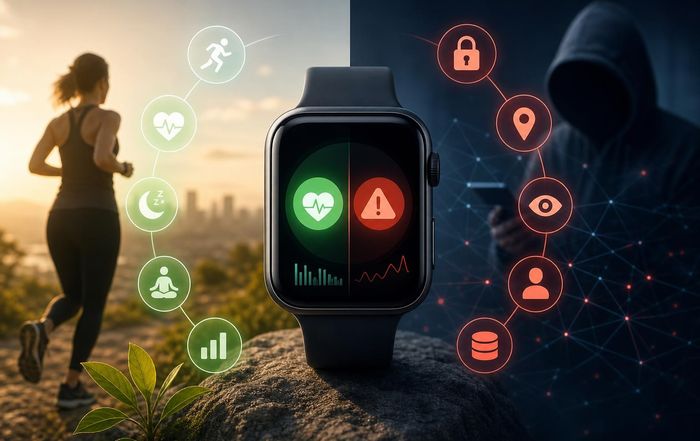
The Promise and Peril on Our Wrists: Benefits and Risks of Smart Wearable Technology
Smart wearable technology has moved from novelty to near-necessity in just over a decade, reshaping how people travel, work, exercise, and care for their health. From fitness trackers and smartwatches to connected rings, glasses, and medical-grade wearables, these devices now form a quiet digital layer over daily life, continuously sensing, recording, and interpreting human activity. For the many frequent travellers who often come to this premium website for new original content updated every day and who look at the world through lenses of travel, culture, health, lifestyle, environment, technology, and ethics, the story of wearables is not only about gadgets; it is about how societies choose to live, connect, and protect what matters most in 2026.
How Smart Wearables Are Transforming Everyday Life
The modern wave of smart wearables began with simple step counters and heart rate monitors, but today's devices integrate advanced sensors, artificial intelligence, and cloud connectivity. Products such as Apple Watch, Samsung Galaxy Watch, Fitbit devices from Google, and the Oura Ring illustrate how the category has matured from basic fitness accessories to multi-functional companions that monitor health, support productivity, and even enable payments and identity verification.
According to analyses from organizations such as the Pew Research Center and market research firms like Statista, adoption of wearables has grown across North America, Europe, and Asia, with particularly strong uptake in countries such as the United States, United Kingdom, Germany, Canada, Australia, South Korea, and Japan. While exact figures differ across sources, multiple independent reports agree that hundreds of millions of people now wear at least one connected device on a regular basis, reflecting a broad cultural shift toward what some researchers describe as "ambient computing" and "quantified self" lifestyles.
For travelers and global citizens who follow trends on WorldsDoor Travel and WorldsDoor Lifestyle, these devices have become discreet travel companions, translating languages, storing boarding passes, guiding navigation in unfamiliar cities, and providing safety alerts in real time. The convenience is clear, yet the implications for privacy, autonomy, and cultural norms are still unfolding.
Health and Well-Being: From Fitness Tracking to Early Detection
One of the most widely celebrated benefits of smart wearables lies in health and wellness. Devices from Apple, Garmin, Fitbit, Withings, and others have expanded far beyond step counting to offer continuous heart rate monitoring, sleep stage estimation, blood oxygen tracking, menstrual cycle logging, and stress or "readiness" scores based on heart rate variability and other metrics.
Clinical and research communities have become increasingly interested in how these consumer devices might complement traditional healthcare. Studies published in journals hosted by organizations such as the American Heart Association and the Journal of the American Medical Association (JAMA) have explored how wearable-derived data can help detect irregular heart rhythms like atrial fibrillation, which is a major risk factor for stroke. The Apple Heart Study, conducted in collaboration with Stanford Medicine, is one of the most cited examples, demonstrating that smartwatch-based notifications can identify potential arrhythmias, although follow-up clinical evaluation remains essential. Readers can explore more about cardiovascular health through resources from the American Heart Association.
Beyond cardiology, research groups and institutions such as Mayo Clinic and Cleveland Clinic are experimenting with wearables in remote patient monitoring, post-surgical recovery, and chronic disease management. The World Health Organization has emphasized the potential of digital health tools, including wearables, to support universal health coverage and remote care in both high-income and low- and middle-income countries, while also calling for robust governance and ethical safeguards. Those interested in the broader context of digital health can review guidance from the World Health Organization.
For individuals, the most immediate benefit is often behavioral: seeing real-time feedback on physical activity, sleep, and heart rate can encourage incremental lifestyle changes. Many users report walking more, going to bed earlier, or moderating alcohol intake after seeing correlations between behaviors and sleep or recovery scores. On WorldsDoor Health, such shifts align with a holistic view of well-being that combines technology with mindfulness, nutrition, and movement in ways that are sustainable rather than obsessive.
At the same time, medical experts caution that consumer wearables are not diagnostic tools and can produce both false positives and false negatives. The U.S. Food and Drug Administration (FDA) has cleared certain features, such as electrocardiogram (ECG) apps on specific devices, for limited medical use, but regulators also warn that data should be interpreted in consultation with healthcare professionals. The National Health Service (NHS) in the United Kingdom similarly notes that while wearables can support healthier habits, they should not replace medical advice or routine check-ups. Readers can learn more about evidence-based digital health recommendations from sources such as the NHS and the U.S. Centers for Disease Control and Prevention.
Travel, Culture, and the Changing Experience of Place
For a global audience that values exploration and intercultural understanding, smart wearables have become subtle but powerful enablers of more confident and connected travel. Devices with built-in GPS, offline maps, and contactless payment capabilities allow travelers to navigate unfamiliar cities, use public transportation, and make purchases without constantly reaching for a phone or wallet. This is particularly evident in cities such as London, Singapore, and Stockholm, where contactless payments and digital transit passes are widely accepted.
Wearables also intersect with culture in more nuanced ways. In some European and Asian cities, smartwatches and fitness trackers have become symbols of an active, cosmopolitan lifestyle, while in other regions they may be perceived as luxury items or indicators of tech-savvy status. On WorldsDoor Culture, these differences illustrate how technology can both reflect and shape local values around health, time, and social interaction.
Language translation features, offered by platforms such as Google Translate and integrated into some wearable ecosystems, reduce friction in cross-cultural communication, although they still struggle with idioms, dialects, and context. Noise-detecting earbuds and smart glasses may help travelers manage sensory overload in busy environments, but they also raise questions about how much of a place's authentic soundscape and serendipity is being filtered out. Cultural organizations and researchers, including those connected with UNESCO, have begun examining how pervasive personal technology influences heritage sites, museums, and public spaces, especially as more visitors arrive with devices that record and share every moment. Further perspectives on cultural heritage and digital technology can be found through UNESCO.
For many, the key is balance: using wearables to enhance safety and awareness, while still remaining present and respectful in new environments. WorldsDoor's coverage of travel and society often highlights this tension between connectivity and contemplation, encouraging readers to use technology as a bridge rather than a barrier.
Mental Health, Lifestyle, and the "Quantified Self" Movement
The rise of wearables is closely linked to the broader "quantified self" movement, in which individuals use data to track and optimize aspects of their lives, from steps and sleep to focus and mood. Many devices now include features aimed at mental well-being, such as guided breathing exercises, stress alerts based on physiological signals, and prompts to stand or move after long periods of inactivity.
Mental health organizations, including the World Health Organization and national bodies such as Health Canada and Australia's Beyond Blue, acknowledge that digital tools can support self-awareness and coping strategies, particularly when integrated with evidence-based therapies. Some wearables link directly to mindfulness and meditation platforms like Headspace or Calm, offering bite-sized interventions throughout the day. Readers interested in mental wellness from a lifestyle perspective can explore resources on WorldsDoor Lifestyle.
However, psychologists and digital well-being researchers caution that constant self-tracking can become counterproductive for some individuals, especially those prone to anxiety, perfectionism, or disordered eating and exercise patterns. Overemphasis on metrics such as daily step counts, sleep scores, or body composition can shift attention away from internal cues and intrinsic motivation, potentially undermining genuine well-being. Studies discussed by organizations like the American Psychological Association and the Royal College of Psychiatrists highlight both the promise and the pitfalls of data-driven self-improvement. Interested readers can learn more about digital mental health research from the American Psychological Association.
The most constructive use of wearables appears to involve flexible, compassionate engagement with data: using trends to inform habits, but allowing for rest days, imperfect routines, and life's unpredictability. In this way, smart wearables can support a more mindful lifestyle, aligned with the holistic and human-centered ethos that WorldsDoor seeks to cultivate across its coverage of health, food, and education.
Innovation and Medical-Grade Wearables
While consumer devices capture most public attention, a parallel revolution is unfolding in medical-grade wearables used in hospitals, clinics, and at home for patients with chronic conditions. Continuous glucose monitors (CGMs) from companies such as Dexcom and Abbott, smart insulin pumps, remote cardiac monitors, and wearable blood pressure devices are transforming how conditions like diabetes, heart failure, and hypertension are managed. The International Diabetes Federation and national health systems in countries like the United States, United Kingdom, and Germany have documented how CGMs can improve glycemic control and quality of life for many people with diabetes, although access and affordability remain uneven. More information on diabetes technology and care can be found through the International Diabetes Federation.
Telehealth platforms and remote monitoring programs, accelerated by the COVID-19 pandemic, increasingly rely on wearables to track vital signs and symptoms between in-person visits. Organizations such as Kaiser Permanente in the United States and various digital health programs in Scandinavia and Asia have piloted or deployed systems in which clinicians receive alerts when patients' wearable data indicate potential deterioration, enabling earlier interventions. The European Commission and regulatory bodies such as the European Medicines Agency and the FDA are actively developing frameworks for digital health, including guidance on software as a medical device and the use of real-world data in research and regulation. Readers can explore European digital health policy through the European Commission's health pages.
At the frontier of innovation, research institutions like MIT, ETH Zurich, and University of Tokyo are experimenting with smart textiles, skin-like electronic patches, and bio-integrated sensors that could one day monitor biomarkers such as hydration, stress hormones, or infectious disease markers in real time. While many of these technologies are still in experimental stages, they point toward a future where health monitoring becomes even more seamless and continuous. WorldsDoor's focus on innovation and technology invites readers to follow these developments with both curiosity and critical thinking.
Data, Privacy, and Ethical Questions
As wearables become more capable and pervasive, they collect increasingly detailed information about individuals' bodies, behaviors, and locations. This raises pressing questions about who controls that data, how it is used, and what protections exist against misuse. Privacy regulators and advocates across regions, from the European Union's General Data Protection Regulation (GDPR) to national data protection authorities in Canada, Australia, and Singapore, have highlighted wearables as a key area of concern within the broader Internet of Things ecosystem. Readers can learn more about data protection principles from official resources such as the European Data Protection Board.
Major wearable companies typically state that they use strong encryption and offer user controls over data sharing, yet high-profile incidents involving health and fitness apps have demonstrated that de-identified data can sometimes be re-identified or used in ways that users did not anticipate, including targeted advertising or secondary research. Investigations by reputable news organizations such as The New York Times, The Guardian, and ProPublica have examined how location and health-related data from apps can reveal sensitive details about individuals' lives, even when names are removed. For those interested in digital rights and surveillance, organizations like the Electronic Frontier Foundation (EFF) provide in-depth analysis and guidance, which can be explored through the EFF website.
In addition to individual privacy, wearable data can have collective implications. Aggregated movement patterns have been used in public health and urban planning, for example during the COVID-19 pandemic, when mobility and activity data from smartphones and wearables helped researchers understand the impact of lockdowns and changing behaviors. While such uses can provide social benefits, they also raise questions about consent, transparency, and the potential for discrimination if data are used to make decisions about insurance, employment, or access to services.
Ethicists and legal scholars emphasize that informed consent, data minimization, and clear boundaries on secondary use are essential to maintaining public trust. WorldsDoor's interest in ethics and society aligns with ongoing debates about how to ensure that smart wearable technology serves human dignity rather than undermining it.
Environmental Footprint and Sustainability
The environmental impact of smart wearables is often less visible than that of larger electronics, yet it is significant when multiplied across hundreds of millions of devices. Wearables rely on complex supply chains involving mining of metals and rare earth elements, energy-intensive manufacturing, transportation, packaging, and, eventually, disposal. Organizations such as Greenpeace and the United Nations Environment Programme (UNEP) have drawn attention to the growing challenge of electronic waste (e-waste), including small devices that are difficult to repair or recycle. Readers can learn more about global e-waste trends from UNEP.
Some major technology companies have announced sustainability initiatives, such as using recycled materials in device casings, reducing plastic in packaging, and investing in renewable energy for data centers. Reports from Apple, Samsung, and Google outline climate and resource goals, though independent assessments from groups like CDP and Carbon Disclosure Project indicate that progress is uneven and that continued scrutiny is necessary. Those interested in sustainable business practices and corporate environmental responsibility can explore further analysis through resources such as the World Resources Institute.
From a consumer perspective, extending the lifespan of wearables, choosing devices with replaceable bands and batteries when possible, participating in take-back and recycling programs, and buying only what is genuinely useful can reduce environmental impact. WorldsDoor's coverage of the environment and sustainable living encourages readers to consider the full lifecycle of their technology and to align purchasing decisions with broader values around conservation and climate responsibility.
Inequality, Access, and Cultural Context
While wearables are often marketed as universally empowering, access to these technologies is shaped by income, geography, and cultural attitudes. In high-income countries such as the United States, Germany, and Japan, wearables are increasingly common, but even there they can be out of reach for lower-income households or older adults unfamiliar with digital tools. In many low- and middle-income countries, the cost of devices and limited connectivity can restrict adoption, though lower-cost trackers and smartphone penetration are gradually expanding access.
Public health researchers and organizations like the World Bank and OECD warn that if digital health tools are primarily used by younger, wealthier, and more educated populations, they may inadvertently widen health disparities rather than reduce them. For example, if insurers or employers offer incentives based on wearable data, individuals without devices may be excluded from benefits or face indirect pressure to share data they do not fully understand. More information on digital divides and inclusive innovation can be found through the OECD's work on digital transformation.
Cultural attitudes also influence how wearables are perceived and used. In some societies, there is strong enthusiasm for self-tracking and optimization, while in others, people may be more skeptical of sharing personal health data or may prioritize traditional forms of wellness and community-based support. For WorldsDoor subscribing email members for online visiting readers who value diverse cultural perspectives, this diversity underscores the importance of context-sensitive design and policymaking, ensuring that wearable technology complements rather than displaces local knowledge and practices.
Navigating the Future with Intention
As of 2026, smart wearable technology sits at a crossroads of opportunity and responsibility. The benefits are tangible: more informed health choices, earlier detection of potential problems, safer and more seamless travel, and new forms of connection between individuals and their environments. At the same time, the risks-privacy erosion, data misuse, over-reliance on imperfect metrics, environmental impact, and deepening inequalities-are real and demand thoughtful responses from companies, governments, and users alike.
For readers of WorldsDoor, the path forward lies not in rejecting technology outright or embracing it uncritically, but in cultivating a reflective, values-driven relationship with the devices that now accompany daily life. This means asking clear questions about how data are used, supporting organizations and policies that protect digital rights, choosing products designed with repairability and sustainability in mind, and using wearables as tools for awareness rather than as judges of worth.
Those who follow the well researched explorations of technology, business, world affairs, and innovation can see how wearables form part of a broader shift toward interconnected systems that blur boundaries between physical and digital, personal and collective. The challenge and the opportunity are to ensure that this shift enhances human flourishing, respects cultural richness, and supports a healthy planet.
In this evolving landscape, smart wearables can be viewed not just as gadgets, but as mirrors reflecting priorities and choices. By approaching them with curiosity, critical thinking, and a commitment to ethical and sustainable living, individuals and societies can open not only new doors of possibility, but also deeper understanding of what it means to live well in a connected world.