

The Social Value of Shared Urban Spaces
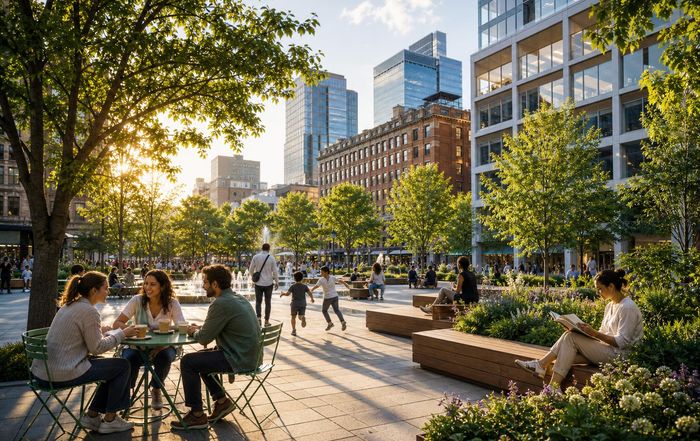
Shared urban spaces are increasingly recognised as essential infrastructure for healthy, cohesive and resilient cities. Far beyond decorative plazas or incidental parks, these places where people meet, move, rest and create together are shaping how communities rebuild trust, nurture wellbeing and respond to global challenges. As urbanisation continues across every continent, the question is no longer whether cities need shared spaces, but how these spaces can be designed, governed and experienced to maximise their social value.
For WorldsDoor, which each and every single day passionately brings together perspectives on travel, culture, health and the evolving world, the story of shared urban spaces is a story about how people live together, what they value, and how they imagine better futures in streets, squares, parks and waterfronts from New York to Nairobi, from Singapore to Stockholm.
Why Shared Urban Spaces Matter More Than Ever
Urban researchers and international organisations agree that public space is not a luxury; it is a core public good that underpins social life. UN-Habitat notes that well-designed and well-managed public spaces are crucial for social interaction, economic exchange and civic engagement, and that they contribute directly to safety, health and inclusion in cities worldwide. Readers can explore these insights in greater depth through the UN-Habitat resource "Public Space" on the UN-Habitat website.
The social value of shared urban spaces begins with the simple fact that they enable people who might otherwise never meet to occupy the same physical environment. Parks, plazas, libraries, markets and waterfront promenades create opportunities for what sociologists sometimes call "everyday encounters": the brief conversations on a bench, the shared laughter at a street performance, the silent solidarity of commuters watching the same sunrise over a city skyline. While such interactions may appear minor, research published in journals such as Urban Studies and Cities has repeatedly shown that these low-intensity contacts can contribute to social cohesion, reduce perceived social distance and support a sense of belonging among diverse residents.
At the same time, shared spaces provide visibility to different ways of living, dressing, speaking and celebrating, which can help humanise "the other" in increasingly multicultural societies. By seeing families, elders, young people, migrants, tourists and long-term residents using the same square or park, people are subtly reminded that they share a city and, in many ways, a common fate. For a global premium website audience interested in society and culture, these spaces offer a living classroom in coexistence.
Health, Wellbeing and the Urban Commons
The social value of shared spaces is closely linked to physical and mental health. The World Health Organization (WHO) has highlighted that access to quality green and blue spaces in cities is associated with lower stress levels, increased physical activity and better overall wellbeing. Readers can explore guidance on "Urban green spaces and health" via the WHO website.
Parks, riverside paths and community gardens encourage walking, cycling, play and informal sports, which are essential for countering sedentary lifestyles in dense urban environments. During and after the COVID-19 pandemic, many cities from London to Melbourne and from Toronto to Barcelona reported significant increases in park use, as residents sought safe, open-air environments for exercise and social connection. Studies in peer-reviewed outlets such as The Lancet Planetary Health have documented how nearby nature can buffer some of the psychological impacts of crises, contributing to lower levels of anxiety and depression where accessible green spaces are available.
For WorldsDoor 100% original content readers who follow health and lifestyle, shared urban spaces also serve as platforms for community-based health promotion. Outdoor yoga classes in New York's Bryant Park, tai chi sessions in public squares in Shanghai, and running groups along the Seine in Paris demonstrate how public space can host free or low-cost wellness activities. These initiatives often rely on partnerships between municipal authorities, civil society groups and local businesses, and they show how health can be woven into everyday urban experience rather than confined to clinics and gyms.
Moreover, shared spaces can help reduce health inequalities when they are equitably distributed and designed with universal accessibility in mind. The U.S. Centers for Disease Control and Prevention (CDC) has emphasised that walkable, park-rich neighbourhoods support active living and can contribute to lower rates of chronic diseases such as obesity and cardiovascular illness. Readers interested in these links can consult CDC resources on "Healthy Places" through the CDC website.
Culture, Identity and the Living City
Cultural life thrives in spaces where people can gather freely and express themselves. Shared urban spaces are often the stages on which cities tell their stories: from open-air concerts in Berlin's parks to Diwali celebrations in Leicester's Golden Mile, from street art festivals in São Paulo to night markets in Bangkok. For a platform like WorldsDoor, which explores global culture and travel, these public stages are central to how visitors and residents alike experience the identity of a place.
Cultural institutions increasingly spill beyond their walls into the urban commons. Museums such as the Tate Modern in London and the Museum of Modern Art (MoMA) in New York have curated outdoor installations and performances in adjacent plazas and riverside spaces, encouraging passers-by to interact with art in informal ways. Further examples can be found through the Tate Modern and MoMA websites, which often showcase their public programmes.
In many cities, public squares host seasonal festivals, farmers' markets, book fairs and film screenings that strengthen local identity and intergenerational connections. These events support local artists, food producers and craftspeople, while also offering residents a sense of continuity in rapidly changing urban environments. When public authorities and cultural organisations collaborate to ensure that such programming is inclusive-featuring, for instance, performances by minority communities or multilingual storytelling sessions-shared spaces can help make cultural rights tangible for all residents.
Street art and murals, when supported through transparent and participatory processes, also transform walls and underpasses into canvases for collective memory and critique. Projects like the Wynwood Walls in Miami or the large-scale murals in Berlin and Lisbon illustrate how formerly neglected areas can be reimagined as cultural destinations. Readers can explore broader perspectives on creative placemaking through resources provided by organisations such as the National Endowment for the Arts (NEA) in the United States, accessible via the NEA website.
Shared Spaces, Democracy and Civic Life
Shared urban spaces have long been associated with democratic life. From historic agoras and town squares to contemporary civic plazas, these environments allow people to assemble, voice concerns and participate in public debate. Peaceful demonstrations in spaces like Trafalgar Square in London, the National Mall in Washington, D.C., or Plaza del Sol in Madrid illustrate how public space functions as a visible arena for civic expression.
The World Bank and UNESCO have both noted that inclusive, accessible public spaces can help strengthen social accountability and foster a culture of participation, especially when communities are involved in decisions about how these spaces are designed and managed. Readers can learn more about how public spaces support inclusive cities through the World Bank's resources on "Urban Development" on the World Bank website and UNESCO's work on "Culture and Urban Future" via the UNESCO website.
Shared spaces also provide everyday infrastructure for more subtle forms of civic life. Community noticeboards, pop-up information booths, voter registration drives and neighbourhood meetings held in parks or community centres all contribute to what political theorists describe as a "public sphere": a realm where individuals encounter information, discuss issues and form opinions about common concerns. In many cities, libraries and civic centres are being reimagined as hybrid spaces that combine reading rooms, co-working areas, maker spaces and event halls, thereby expanding the range of civic activities that residents can access without cost.
Digital technology has added another layer to this relationship between shared spaces and democracy. Free public Wi-Fi in parks and squares, interactive kiosks providing city information, and mobile apps that invite residents to propose and vote on local improvements all blur the boundaries between physical and digital participation. Initiatives such as participatory budgeting in cities like Paris, New York and Seoul often rely on public spaces as venues for workshops and discussions, complemented by online platforms. For readers interested in how technology and urban governance intersect, the OECD offers analyses on "Innovative Citizen Participation" on the OECD website.
Economic and Innovation Benefits of Shared Spaces
The social value of shared urban spaces is intertwined with economic vitality and innovation. Vibrant streetscapes, plazas and waterfronts often attract foot traffic that supports small businesses, markets and cultural enterprises. Outdoor seating areas, street cafés, food trucks and artisanal markets create local employment while making neighbourhoods more attractive to residents and visitors.
The Project for Public Spaces (PPS), a non-profit organisation that has documented successful public spaces around the world, has repeatedly found that "placemaking"-the collaborative process of shaping public spaces to maximise shared value-can stimulate local economies by increasing dwell time, encouraging repeat visits and fostering a sense of pride that translates into investment. Readers can explore case studies and practical tools on the Project for Public Spaces website.
Innovation ecosystems also benefit from high-quality shared spaces. Research by urban theorists such as Richard Florida and organisations like the Brookings Institution suggests that knowledge-intensive industries and creative sectors often cluster in walkable, mixed-use districts with appealing public realms. Plazas, cafés, co-working spaces and university campuses with accessible courtyards create what some commentators call "serendipity infrastructure," where chance encounters can spark new collaborations and ideas. The Brookings Institution offers relevant analyses on innovation districts and urban competitiveness on the Brookings website.
For a premium daily updated platform like WorldsDoor, which also engages readers interested in business and innovation, the lesson is clear: shared urban spaces are not just backdrops for economic activity; they are active components of how cities attract talent, support entrepreneurship and remain competitive in a global economy.
Sustainability, Climate Resilience and the Green City
In an era of climate change, shared urban spaces play a crucial role in environmental resilience and sustainable living. Parks, tree-lined streets, bioswales and green roofs help mitigate urban heat islands, manage stormwater and support biodiversity. Coastal promenades and restored wetlands can provide buffers against storm surges and flooding, while also offering recreational and educational opportunities.
The Intergovernmental Panel on Climate Change (IPCC) has highlighted that nature-based solutions in cities, including well-designed green spaces, can contribute to both mitigation and adaptation efforts. Readers can explore scientific assessments and policy insights through the IPCC website. Similarly, the International Union for Conservation of Nature (IUCN) has documented how urban nature benefits both ecosystems and human communities, as seen on the IUCN website.
Shared spaces are also important for promoting sustainable lifestyles. Farmers' markets in city squares, community composting hubs, bicycle-sharing stations and educational gardens all encourage residents to engage in low-carbon practices. Many European and Asian cities, including Copenhagen, Amsterdam, Singapore and Seoul, have invested heavily in cycling infrastructure and pedestrian-friendly streets, integrating them with public transit to reduce car dependency. These initiatives often feature attractive public spaces that make walking and cycling both practical and enjoyable.
For readers exploring sustainable living and the environment on WorldsDoor, shared spaces demonstrate how climate action can be experienced as an enhancement of quality of life rather than a constraint. When a formerly congested road is transformed into a tree-shaded boulevard with wide sidewalks, bike lanes and seating, residents gain cleaner air, safer mobility and new opportunities for social interaction.
Inclusivity, Equity and the Ethics of Public Space
Despite their potential, shared urban spaces do not automatically deliver social value for all. Issues of exclusion, surveillance, displacement and uneven investment can undermine the promise of public space. Ethical questions arise when design choices or management practices effectively discourage certain groups-such as unhoused people, teenagers, street vendors or informal workers-from using central plazas or transit hubs.
Urban scholars and civil society organisations have raised concerns about "defensive architecture," including benches designed to prevent lying down or the use of constant security patrols that may disproportionately target marginalised communities. These practices can erode trust and reinforce social divides. Human rights organisations, including Amnesty International, have urged cities to ensure that public spaces remain genuinely accessible and that policing and security measures respect fundamental rights; further discussion is available on the Amnesty International website.
At the same time, there is growing recognition among planners and policymakers that inclusive design requires meaningful participation. Community-led design processes, co-management arrangements and participatory budgeting can help ensure that shared spaces reflect local needs and values. For example, neighbourhood groups in cities from Montreal to Cape Town have successfully advocated for playgrounds, accessible ramps, shade structures and culturally relevant public art, demonstrating that inclusive spaces are often those shaped through dialogue rather than imposed from above.
For WorldsDoor readers exploring ethics and society, the ethical dimension of shared spaces lies in how cities balance commercial interests, security concerns and social justice. Ensuring that waterfront redevelopments, creative districts and revitalised parks do not displace low-income communities or erase local cultures is a complex challenge that requires transparent governance, fair housing policies and strong community representation.
Learning from Global Examples
Across continents, cities are experimenting with new models of shared urban space that reflect local cultures and aspirations while contributing to global conversations. In Barcelona, the "superblock" model reduces traffic in selected neighbourhoods, converting intersections into small plazas where children play and neighbours gather. In Seoul, the transformation of the Cheonggyecheon Expressway into a restored stream and linear park has become a symbol of ecological urban renewal, visited by residents and international travellers alike. In New York City, the pedestrianisation of parts of Times Square and the introduction of Open Streets during and after the pandemic have sparked debates about how much space should be allocated to cars versus people.
These and many other examples are documented in reports by organisations such as C40 Cities, a network of global cities committed to climate leadership, which often highlights how public space projects intersect with climate and equity goals. Readers can explore case studies through the C40 Cities website. Similarly, the World Economic Forum (WEF) has published analyses on urban transformation and the future of cities, accessible on the World Economic Forum website.
For travellers and locals alike, these evolving spaces shape how cities are experienced. A visitor strolling along the High Line in New York, cycling along the canals in Amsterdam, or joining a community dance event in a Johannesburg square is participating in a broader experiment in how urban life can be organised around people rather than vehicles or private consumption alone. As WorldsDoor continues to explore travel, food, and technology, these examples illustrate how shared spaces become touchpoints where global trends meet local realities.
Education, Learning and Intergenerational Exchange
Shared urban spaces are also powerful educational environments. Outdoor classrooms, science parks, historical markers and interactive installations allow residents and visitors to learn about ecology, history, art and technology in informal ways. Many cities collaborate with schools, universities and museums to design educational trails, urban nature walks and heritage routes that encourage exploration beyond traditional classrooms.
The UNESCO Global Network of Learning Cities promotes the idea that cities themselves can function as learning ecosystems, where public spaces, libraries, cultural centres and digital platforms form an integrated environment for lifelong learning. Readers can explore this concept further on the UNESCO Learning Cities website. Public libraries in cities such as Helsinki, Vancouver and Singapore have become exemplars of how open, welcoming civic buildings with generous shared areas can support reading, digital literacy, co-creation and social connection across generations.
For WorldsDoor impartial content readers following education, these developments show that learning is no longer confined to traditional institutions. Children exploring a biodiversity garden in Cape Town, students participating in a robotics demonstration in a Tokyo plaza, or elders sharing stories at a community storytelling circle in Dublin are all engaging with the city as a living curriculum, supported by well-designed shared spaces.
Designing and Governing for Social Value
Realising the full social value of shared urban spaces requires thoughtful design and attentive governance. Urban planners, architects, landscape designers, community organisations and local authorities must consider how people of different ages, abilities, cultures and incomes will experience a space throughout the day and across seasons. Elements such as shade, seating, lighting, accessible pathways, public toilets, water fountains and safe crossings can determine whether a space feels inviting or excluding.
Guidelines from professional bodies such as the Royal Institute of British Architects (RIBA) and the American Planning Association (APA) emphasise the importance of human-scale design, mixed uses and active edges that keep public spaces lively and safe. Readers can find design resources and policy guidance on the RIBA website and the American Planning Association website.
Governance is equally important. Clear but fair rules, responsive maintenance, participatory programming and stable funding mechanisms help ensure that spaces remain vibrant over time rather than falling into neglect. Partnerships between municipalities, cultural institutions, community groups and local businesses can distribute responsibilities and create a sense of shared ownership. Digital tools can support this governance by enabling residents to report maintenance issues, propose activities or participate in surveys about how spaces are used.
For WorldsDoor, which connects themes of innovation, environment, society and lifestyle, the emerging lesson from cities around the world is that successful shared spaces are rarely accidental. They emerge from deliberate choices to prioritise people, nature and community over short-term commercial gain or narrow traffic efficiency.
Opening Doors to a Shared Urban Future
As the world navigates the complexities of the mid-2020s, shared urban spaces stand out as hopeful arenas where collective challenges can be met with creativity, solidarity and joy. They offer platforms for cultural expression, engines for health and wellbeing, incubators for innovation, and stages for democratic life. They also remind residents and visitors alike that cities are not only networks of infrastructure and markets, but also webs of relationships and shared experiences.
For a global travel loving community of readers here, the social value of shared urban spaces is deeply relevant to how travel is imagined, how cultures are encountered, how health and sustainability are pursued, and how a more inclusive world is built. Whether walking through a community garden in Berlin, joining a street festival in Lagos, pausing on a bench in Vancouver, or exploring a rewilded riverbank in Singapore, individuals are participating in a quiet yet profound transformation of urban life.
By supporting policies, designs and practices that keep these spaces open, inclusive and vibrant, cities across North America, Europe, Asia, Africa, South America and Oceania can ensure that their streets, squares and parks remain genuine "worlds' doors": thresholds where people step into shared stories, discover new perspectives and, together, shape the future of urban living.