

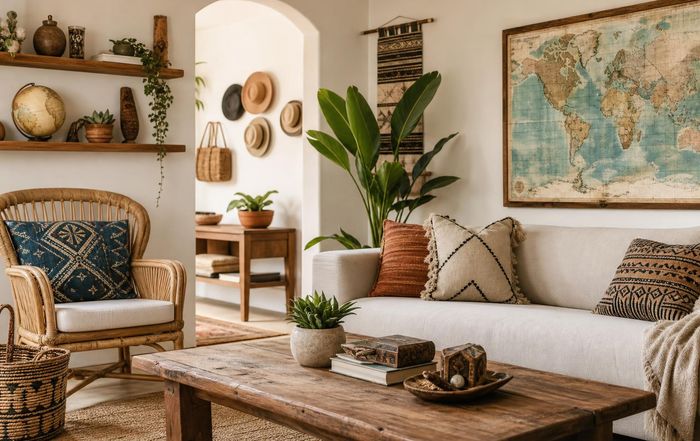
How to Build a Travel-Inspired Home Without Overspending
A home shaped by travel memories does not have to look like a themed resort or demand a designer's budget. With some editing, creativity, and restraint, it is possible to bring the world into everyday spaces in ways that feel personal, practical, and affordable. This super guide focuses on how to translate journeys into interiors: where to spend, where to save, how to avoid clichés, and how to make global inspiration work in small apartments as well as family homes.
Start With Stories, Not Souvenirs
Many people begin decorating with whatever they brought back from trips: masks, magnets, textiles, ceramics. The result can quickly feel cluttered or random. A more coherent approach starts with narrative: which places or experiences genuinely shaped you, and what feelings from those journeys do you want your home to evoke?
Instead of asking "How can I display everything I've collected?" it is more useful to ask "What kind of atmosphere reminds me of my favorite journeys?" For some, that might be the calm of a Japanese ryokan; for others, the warmth of a Mediterranean seaside town or the energy of a night market in Bangkok. Once you have a clear emotional direction-quiet, vibrant, coastal, urban-you can make selective choices about color, texture, and objects that support that mood rather than competing with one another. This narrative-first approach also helps curb impulse purchases: if a potential object does not fit the story, it probably does not belong in your space.
Travel is often tied to broader lifestyle shifts-slower eating, more walking, or new wellness habits-so it can help to think beyond décor. If a trip inspired you to cook differently, a small kitchen reorganization or a dedicated tea corner may bring that experience home more effectively than another decorative figurine. For readers interested in how travel, daily habits, and wellbeing intersect, the broader health and lifestyle coverage at WorldsDoor's health section and lifestyle section offers additional context on integrating global influences into everyday routines.
Define a Budget and Decide Where to Prioritize
A travel-inspired home can become expensive when every idea feels essential. Setting a clear budget from the outset-whether a few hundred dollars or a multi-room refresh-forces choices about what will have the most impact. Design professionals often recommend investing in large, long-lived items such as sofas, beds, and dining tables, while changing lower-cost elements like textiles and paint over time. That principle still holds when the goal is global inspiration.
It can be helpful to divide spending into three categories: structural changes (like repainting walls or adding shelving), foundational items (such as rugs, curtains, and lighting), and accents (art, cushions, small objects). Structural changes tend to be the most disruptive but can dramatically alter the feel of a room; accents are where most "travel" personality appears, but they are also the easiest to overbuy. By assigning approximate percentages of your budget to each category, you reduce the risk of spending most of your money on small objects that do little to improve comfort or function.
Several national consumer organizations, including bodies like Which? in the UK and Consumer Reports in the US, offer guidance on how to assess durability and value in home products, which can help when deciding where to spend more or less. Checking sources such as consumerreports.org or which.co.uk before major purchases can prevent costly mistakes, especially for items that are hard to replace. Meanwhile, for inspiration on balancing cost and experience in travel itself, the travel section offers perspective that often translates surprisingly well to budgeting at home.
Use Color and Light as Your Cheapest Global Tools
Color and light are often the least expensive yet most transformative elements in a room. Instead of purchasing themed décor, it is usually more effective to borrow the color palette and lighting style of a place you love. A coastal Greek island suggests white walls, blue accents, and strong daylight; a Parisian café evokes warm neutrals, black metal, and soft ambient light; a Scandinavian cabin might inspire pale wood, muted tones, and candles.
Paint is relatively low-cost compared with furniture, and many manufacturers now provide small sample pots or peel-and-stick swatches. Organizations like the American Society of Interior Designers and publications such as Architectural Digest often highlight how small color shifts can change perceived room size and mood, making them useful references for experimenting safely with bolder palettes. You can explore these perspectives at asid.org and architecturaldigest.com, bearing in mind that high-end projects can be adapted to modest budgets through paint rather than custom finishes.
Lighting deserves as much attention as color. Swapping a harsh overhead bulb for a warmer, lower-wattage option, or adding a floor lamp in a dark corner, can echo the atmosphere of a hotel lobby or courtyard restaurant more effectively than any souvenir. Smart bulbs that change color temperature are now widely available at budget prices, allowing you to shift from bright "daylight" for work to softer tones reminiscent of evening streets in Rome or Kyoto. If energy use is a concern, organizations like the International Energy Agency at iea.org offer up-to-date guidance on efficient lighting, which can help align your travel-inspired ambience with more sustainable choices at home.
Curate Souvenirs Instead of Displaying Everything
Many homes end up with crowded shelves of souvenirs that blur into visual noise. A more deliberate approach is to treat objects like a rotating exhibition. Choose a small number of items that genuinely spark memories or conversation and group them thoughtfully, rather than scattering them across every surface. This can mean displaying only one or two special pieces from a country at a time and storing the rest, then rotating them seasonally or when you feel like revisiting a particular journey.
Grouping objects by material or color rather than by country can also prevent the space from feeling like a gift shop. For example, a wooden mask from West Africa, a carved box from India, and a small Japanese tray can share a shelf if they share a similar tone or finish, even though their origins differ. This approach places emphasis on form and texture while still honoring the stories behind each piece. Curating in this way often reveals that some items do not need to be displayed at all; they may hold personal meaning but work better in a drawer, a memory box, or as part of a digital photo archive.
Sustainability is another dimension worth considering. Tourism and global shipping both have environmental impacts, and organizations like the UN World Tourism Organization at unwto.org and the United Nations Environment Programme at unenvironment.org have emphasized the value of thoughtful consumption. Rather than continuing to buy physical souvenirs on every trip, many travelers now choose experiences, local food, or digital photography as their primary mementos, then translate those memories into décor through color, materials, or DIY projects at home. Readers interested in the environmental side of travel and consumption can explore broader coverage in the environment and sustainable sections.
Borrow Global Textures Through Affordable Textiles
Textiles are one of the most cost-effective ways to evoke different cultures: a kilim-inspired rug, a Japanese-style noren curtain, or a block-printed tablecloth can shift the character of a room without major renovation. The key is to respect the origins of patterns and techniques while being honest about what is authentic and what is simply inspired. Handwoven pieces purchased directly from artisans or fair-trade cooperatives support local economies more than mass-produced imitations, but budget realities mean many people will combine both.
Organizations such as the World Fair Trade Organization at wfto.com and marketplaces that specialize in artisan-made goods can help identify makers who are paid fairly. When budgets are tight, it is still possible to prioritize at least one or two ethically sourced pieces and mix them with more affordable basics from mainstream retailers. For example, a single handwoven throw can sit on a simple, inexpensive sofa; plain cotton curtains can be trimmed with a narrow band of traditional fabric rather than being custom-made.
Upcycling is another route to both savings and individuality. Vintage scarves, sarongs, or table runners picked up in markets can be turned into cushion covers or wall hangings with basic sewing skills, often at a fraction of the cost of new décor. Tutorials from design and craft sites, including broader DIY communities like instructables.com, provide step-by-step guidance without requiring professional equipment. This kind of hands-on adaptation turns travel memories into something functional and reduces the demand for new factory-made goods, aligning with more sustainable lifestyle choices highlighted in WorldsDoor's innovation and society coverage.
Create Travel Zones Instead of Themed Rooms
Fully themed rooms-"Moroccan lounge," "Balinese bedroom," "Parisian café kitchen"-can quickly feel overdone or inauthentic, particularly in small homes or rentals. A more flexible and budget-friendly approach is to create travel "zones" within existing rooms: a reading corner influenced by Scandinavian design, a balcony that hints at a Mediterranean terrace, or a desk area that recalls a favorite co-working space abroad.
These zones can be built from a few targeted changes: a chair and lamp combination, a small rug, a side table, and one or two carefully chosen objects or prints. Because they occupy limited square footage, they do not require a full room of new furniture or paint. This approach also allows experimentation; if one zone no longer feels right, it can be changed without disrupting the whole home. Over time, the most successful elements can be repeated elsewhere, creating a subtle but cohesive global thread.
For those in rented accommodation, where structural changes are restricted, zones are particularly useful. Landlords may not allow painted walls or new fixtures, but movable furniture, textiles, and portable lighting can still transform corners. Many design publications and housing organizations provide guidance on what is typically allowed in rental agreements in different countries; checking local tenant advice services or official housing authority websites, such as hud.gov in the United States or national housing portals in Europe and Asia, can clarify what changes are permissible before investing in anything permanent.
Use Photography and Art Thoughtfully, Not Literally
Travel photography is an obvious way to personalize a home, yet walls covered in dozens of small frames can feel chaotic. A more deliberate strategy is to select a handful of images that capture the essence of a place-light, texture, or everyday scenes-rather than only famous landmarks. Printing in black and white, or using a limited color palette, can help unify photos from different countries so they feel like one collection rather than a collage of unrelated trips.
Large-scale prints can be surprisingly cost-effective compared with multiple small frames, especially when printed through local labs or online services. Simple frames in the same color or material help tie together images from varied destinations. For renters or those avoiding nail holes, adhesive hooks and poster rails are relatively inexpensive and easy to remove. When photography is not your strength, consider supporting local artists whose work reflects regions you love; platforms that connect artists and buyers globally, as well as museum shops highlighted by institutions like the Metropolitan Museum of Art at metmuseum.org, often offer prints at accessible prices.
It is also worth thinking about cultural sensitivity in imagery. Using religious sites, sacred symbols, or images of people taken without consent as decorative elements can be problematic. Cultural organizations and ethics-focused travel groups have increasingly emphasized respectful representation, a theme that overlaps with broader discussions of cultural appropriation explored in WorldsDoor's culture section and ethics section. When in doubt, favor landscapes, street scenes where individuals are not clearly identifiable, or artworks created by people from the culture being represented.
Shop Secondhand and Local Before Importing More
It can be tempting to order "global" décor from major online retailers, but this often leads to generic interpretations of complex cultures, and shipping costs can erode any savings. Secondhand and local markets frequently offer more character at lower prices. Vintage trunks, rattan chairs, brass trays, or mid-century sideboards can echo styles seen abroad even if they were made closer to home, and they often cost less than new furniture of similar quality.
Charity shops, flea markets, and online resale platforms in many countries provide access to older, well-made pieces that respond well to simple refinishing. Guidance from organizations like the Royal Society for the Prevention of Accidents at rospa.com can help ensure that refurbished items, particularly lighting or children's furniture, meet basic safety standards. Combining secondhand finds with smaller authentic items from travels can create layered interiors that feel collected over time rather than purchased from a single catalog.
Buying from local artisans and craftspeople in your own city or region is another way to express global inspiration without constant international shipping. Many makers draw on diasporic or cross-cultural influences, blending techniques and motifs in ways that reflect today's interconnected societies. Supporting them keeps money in local economies while still allowing you to explore diverse aesthetics, a theme that intersects with broader discussions of global business and culture in the business and world sections.
Let Daily Rituals Carry the Travel Experience
Some of the most powerful travel memories are tied to routine: morning coffee at a Lisbon café, a nightly walk through Tokyo side streets, or shared meals at long communal tables in Italy. Recreating these rituals at home often costs little but can profoundly change how a space feels. A small coffee corner with a simple espresso maker, a tray, and a couple of cups may evoke a trip more strongly than a wall of photographs. A low table with floor cushions can bring back evenings in a riad or ryokan without requiring a full room redesign.
Health organizations and behavioral researchers, including institutions like Harvard T.H. Chan School of Public Health at hsph.harvard.edu, have noted how small environmental cues can support habits such as mindful eating or regular stretching. Placing a yoga mat in a visible corner inspired by a retreat, or keeping a basket of spices from different cuisines near the stove, can gently prompt behaviors that connect you to travel memories in everyday life. These changes cost far less than new furniture and anchor your home's global feel in lived experience rather than decoration alone.
Rituals can also be social. Hosting occasional themed dinners, film nights featuring international cinema, or language exchange gatherings makes the home a space of cultural exchange, even when travel is not possible. This aligns with broader educational and societal themes explored in WorldsDoor's education section and food section, where recipes, language learning, and cultural understanding often intersect.
Avoid Common Pitfalls: Clutter, Clichés, and Cultural Missteps
A travel-inspired home can easily drift into three traps: clutter, cliché, and cultural insensitivity. Clutter arises when every surface is covered and nothing has room to breathe. A simple rule-leave at least one-third of any shelf or tabletop empty-helps maintain visual calm. Periodically editing objects, perhaps once a year, keeps displays meaningful and prevents budget creep from constant small purchases.
Clichés appear when décor relies on stereotypes: Eiffel Tower prints for "France," random Buddha heads for "Asia," or mass-produced "tribal" patterns with no clear origin. While there is nothing inherently wrong with iconic imagery, relying solely on it can flatten real cultural complexity. Seeking out more nuanced references-local typography, everyday street scenes, or traditional craft techniques-often leads to more interesting and respectful interiors. Cultural institutions such as UNESCO at unesco.org provide rich background on heritage sites and traditions, which can inspire deeper engagement beyond surface-level motifs.
Cultural missteps are perhaps the most sensitive issue. Sacred symbols, religious texts, or ceremonial objects used purely as decoration can be offensive, especially when removed from their original context. Where possible, it is wise to research the meaning of items before displaying them prominently. When guidance is unclear, erring on the side of caution and choosing alternative pieces-such as non-religious patterns or everyday tools-maintains respect. Many museums, cultural organizations, and ethics-focused travel groups emphasize that appreciation should not slide into appropriation, a theme that connects closely with ongoing conversations in WorldsDoor's ethics and culture coverage.
Bringing the World Home, Thoughtfully
Building a travel-inspired home on a modest budget is less about accumulating objects and more about translating experiences into space. Color, light, textiles, and small zones can evoke distant places without major expense; careful curation and secondhand finds prevent clutter and reduce environmental impact; and attention to cultural context ensures that global influences are expressed with respect rather than as costumes. For many people, the most satisfying interiors are not perfect recreations of any single destination but layered reflections of journeys taken, books read, meals shared, and communities encountered. When approached with intention, even a small apartment can become a quiet map of those experiences-one that continues to evolve as new trips, ideas, and relationships open yet more doors to the world.