

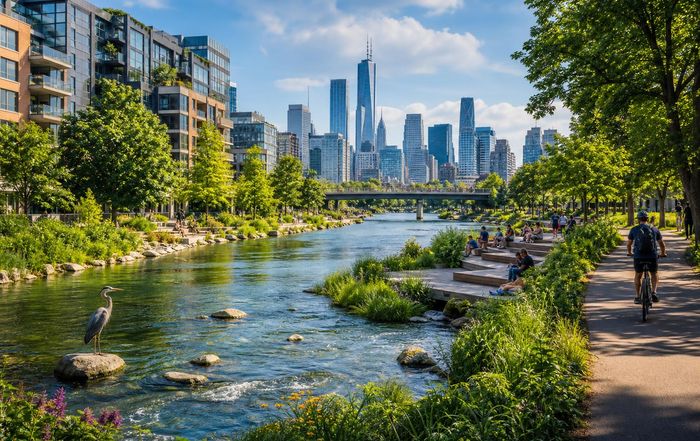
How Restored Urban Rivers Can Revitalize City Life
Urban rivers, once treated as little more than industrial backyards and open sewers, are emerging as some of the most powerful catalysts for reshaping cities into healthier, more inclusive and more resilient places to live. Across continents, from North America and Europe to Asia and Africa, city leaders, community groups and innovators are rediscovering the social, ecological and economic potential of waterways that had long been buried, polluted or neglected. For readers of WorldsDoor, who care deeply about travel, culture, health, lifestyle, environment, technology and the ethical evolution of modern societies, the story of urban river restoration is, in many ways, a story about how cities themselves are learning to heal.
From Industrial Drains to Living Arteries
For much of the nineteenth and twentieth centuries, the dominant relationship between cities and rivers was one of exploitation and control. Rapid industrialization in countries such as the United Kingdom, Germany and the United States turned rivers into transport corridors and waste channels, while engineering projects straightened channels, built embankments and confined water behind concrete. Historical accounts from organizations such as UNESCO and the International Water Association describe how urban rivers in cities like London, New York, Paris and Tokyo became heavily polluted, biologically dead stretches of water that residents avoided rather than embraced. In many cases, smaller tributaries were culverted and buried underground to make way for roads and buildings, a pattern evident in cities as varied as Seoul, Zürich, Los Angeles and London.
By the late twentieth century, however, the costs of this approach were increasingly clear. Public health crises linked to contaminated water, the loss of urban biodiversity and the growing frequency of floods in densely built areas prompted governments and scientists to reconsider the role of rivers in city planning. Evidence compiled by agencies such as the World Health Organization and the United Nations Environment Programme showed that degraded waterways were not only environmental liabilities but also missed opportunities for recreation, climate adaptation and social cohesion. As environmental regulation strengthened in regions including the European Union, North America and parts of Asia, a new paradigm began to emerge: rivers were not obstacles to urban progress but living systems that, if restored, could help cities thrive.
Readers who follow the broader evolution of sustainable cities on WorldsDoor can explore related trends in environmental transformation and global society, where similar shifts in mindset are reshaping how communities view nature in urban life.
The Multi-Layered Benefits of River Restoration
Urban river restoration is not a single technique but a collection of practices that range from improving water quality and removing obsolete dams to re-naturalizing riverbanks, daylighting buried streams and creating accessible riverfront public spaces. Research from institutions such as the European Environment Agency, US Environmental Protection Agency and International Union for Conservation of Nature indicates that when these efforts are carefully planned and sustained, the benefits extend far beyond aesthetics.
One of the most immediate gains is ecological recovery. Many cities have seen the return of fish species, aquatic plants and riparian birds after decades of absence once industrial discharges were regulated, wastewater treatment was upgraded and habitat complexity was restored. Reports from the IUCN and local conservation groups in Europe, North America and Asia document how even heavily modified urban channels can regain ecological function when flow regimes, vegetation and connectivity are improved. This recovery, in turn, supports broader biodiversity corridors that link urban cores to surrounding landscapes, a theme that resonates with the nature-positive vision discussed in WorldsDoor's coverage of innovation and sustainability.
The public health dimension is equally significant. Cleaner rivers reduce the risk of waterborne disease and provide settings for physical activity, which is increasingly important in cities where sedentary lifestyles contribute to chronic conditions. Studies summarized by the World Health Organization on urban green and blue spaces highlight associations between access to natural water bodies and improved mental health, reduced stress and greater social interaction. In cities from Singapore to Copenhagen, riverfront walking and cycling paths, open-air exercise areas and waterside parks have become integral to active lifestyles, aligning closely with the interests of readers who explore health and lifestyle content on WorldsDoor.
Economically, restored rivers can support local businesses, tourism and property values, although these gains must be managed to avoid displacing long-standing communities. Urban economists and planning scholars writing for organizations such as OECD, World Bank and UN-Habitat have noted that riverfront regeneration often attracts investment in hospitality, cultural venues and creative industries, drawing visitors and residents alike. Where governance frameworks include affordable housing, community land trusts or inclusive zoning, these developments can strengthen neighborhoods rather than push out vulnerable populations. The tension between revitalization and gentrification is an area where evidence remains mixed, and many researchers emphasize that outcomes depend heavily on local policy choices rather than river restoration alone.
Global Case Studies: Rivers Reimagined
The global nature of urban river revival is striking. While each city operates within its own cultural, political and climatic context, common themes emerge that are relevant whether one is walking along the Thames in London, the Cheonggyecheon in Seoul, the Isar in Munich or the Yarra in Melbourne.
In South Korea, the restoration of the Cheonggyecheon stream in central Seoul has become one of the most cited examples of daylighting a buried river and replacing a congested elevated highway with a linear park. Reports from the Seoul Metropolitan Government and academic assessments published in peer-reviewed journals describe how the project improved local microclimates, supported biodiversity and created a popular public space that attracts residents and tourists. The project also sparked debate about cost, displacement of informal street vendors and long-term maintenance, illustrating that even widely praised initiatives must navigate complex social trade-offs.
In Europe, cities such as Munich and Zurich have undertaken ambitious river renaturalization projects. The Isar Plan in Munich, documented by the European Centre for River Restoration and local authorities, combined flood protection upgrades with the creation of gravel banks, side channels and accessible riverfronts that now host recreation, cultural events and wildlife. In Zurich, sections of the Sihl and other streams have been partially un-canalized, while in London, organizations like the Thames21 charity and local councils have worked on smaller-scale urban tributaries to improve habitat and community access.
North American cities have followed parallel paths. The revival of the Chicago River, supported by improved wastewater treatment and riverwalk development, has transformed perceptions of a waterway once infamous for pollution. According to information from the Metropolitan Water Reclamation District of Greater Chicago and independent environmental groups, water quality has improved enough to support more aquatic life and recreational uses, though challenges remain in addressing combined sewer overflows during heavy storms. In Los Angeles, the long-term vision to restore ecological function and public access along the concrete-lined Los Angeles River is progressing in stages, with planning documents from the City of Los Angeles and community organizations outlining habitat restoration, park creation and climate resilience goals.
These examples are complemented by emerging efforts in regions such as Latin America and Africa. In Medellín, Colombia, the transformation of the Medellín River corridor and its integration with public transport and green spaces has been highlighted by UN-Habitat and urban design forums as part of the city's broader social urbanism strategy. In Cape Town, Johannesburg and other African cities, initiatives to rehabilitate urban wetlands and rivers are increasingly linked to both ecological health and social equity, though resource constraints and competing development pressures can slow progress.
For WorldsDoor readers interested in exploring these places first-hand, riverfront regeneration is becoming a central theme in urban travel experiences, from guided walks along historic embankments in European capitals to community-led tours of restored waterways in cities across Asia and South America.
Culture, Identity and the Return of the Waterside City
Beyond infrastructure and ecology, restored urban rivers are reshaping cultural identity and everyday life. Many cities historically grew up around rivers that served as trade routes, spiritual sites and social gathering places, and the marginalization of these waters during industrialization created a physical and psychological distance between residents and their natural heritage. As rivers are cleaned and re-opened, they are once again becoming stages for cultural expression.
In cities along the Seine, Thames, Hudson and Han, festivals, art installations, outdoor performances and markets now animate riverbanks, reinforcing a sense of place tied to water. Cultural institutions such as museums and galleries often cluster along waterfronts, leveraging the visibility and foot traffic that restored river corridors provide. For example, the revitalization of New York's Hudson River waterfront has supported a network of parks, performance spaces and piers that host diverse programming, as documented by organizations like the Hudson River Park Trust and local cultural councils. In Paris, ongoing efforts to limit car traffic along the Seine's banks and expand pedestrian zones, reported by the City of Paris and international media, have turned former expressways into promenades for walking, cycling and socializing.
In Asia, the integration of traditional cultural practices with modern riverfront design can be seen in places like Kyoto and Singapore. The Kamo River in Kyoto, while not a recent restoration in the same sense as some industrial rivers, illustrates how careful stewardship of a city's main waterway supports seasonal festivals, hanami gatherings and everyday leisure, reinforcing cultural continuity. Singapore's transformation of the once-polluted Singapore River into a clean, vibrant waterfront has been documented by the National Environment Agency and tourism authorities as a cornerstone of the city-state's modernization narrative, blending historic shophouses with contemporary architecture and public art.
For WorldsDoor's audience interested in culture and food, it is notable that riverfronts often become culinary destinations as well, with open-air dining, night markets and local specialties drawing visitors who want to experience the flavors and rhythms of waterside life. In many cities, these developments also provide opportunities for small, locally owned businesses, though ensuring affordable access to prime riverfront locations remains an ongoing policy challenge.
Health, Lifestyle and the Psychology of Blue Spaces
Scientific understanding of how proximity to water affects human well-being has advanced significantly in recent years. Environmental psychologists and public health researchers, including those associated with institutions like University of Exeter's European Centre for Environment & Human Health, have found that "blue spaces" such as rivers, lakes and coastal areas can have measurable positive effects on mood, stress reduction and perceived restoration from mental fatigue. These findings complement earlier research on green spaces and have been incorporated into urban planning frameworks in countries such as the United Kingdom, Netherlands and New Zealand.
In practical terms, restored urban rivers bring these benefits into the daily routines of city residents. Joggers, cyclists, families with children and older adults all make use of riverfront paths and parks for low-cost exercise and relaxation. In many European and North American cities, cold-water swimming and urban bathing areas along rivers have gained popularity, with safety guidelines and water quality monitoring provided by local authorities and organizations such as Swim England or national health agencies. While these activities require careful management to avoid accidents and ensure hygiene, they reflect a broader reconnection between people and their local waters.
The mental health dimension is particularly important in the high-stress, high-density environments of modern megacities. Studies reviewed by the World Health Organization suggest that accessible natural spaces, including rivers, may help alleviate symptoms of anxiety and depression, especially when combined with social interaction and physical activity. During the COVID-19 pandemic earlier in the decade, many residents in cities around the world turned to nearby parks and riverfronts as essential outlets for fresh air and psychological relief, reinforcing the value of these spaces as part of urban health infrastructure rather than optional amenities.
For those exploring health and lifestyle topics on WorldsDoor, the interplay between urban design, wellness and everyday habits underscores how environmental restoration can translate into tangible improvements in quality of life, particularly when cities ensure that riverfronts are safe, inclusive and accessible to all income groups and abilities.
Climate Resilience and the Science of Living with Water
As the world moves further into the 2020s, climate change is intensifying both drought and flood risks in many regions, making the way cities manage rivers a critical component of adaptation strategies. Hydrologists, engineers and climate scientists, including those contributing to assessments by the Intergovernmental Panel on Climate Change (IPCC), have emphasized that traditional approaches focused solely on hard infrastructure such as levees and concrete channels are often insufficient and can even exacerbate downstream flooding by accelerating water flow.
Urban river restoration, when aligned with climate resilience planning, can help address these challenges by creating space for water to spread out safely during heavy rain events, restoring floodplains, wetlands and permeable surfaces that absorb and slow runoff. Cities such as Rotterdam, Copenhagen and Singapore have become known for integrating "sponge city" concepts and nature-based solutions into their waterfronts, with support from organizations including the Global Center on Adaptation and ICLEI - Local Governments for Sustainability. These approaches can reduce flood risk, enhance groundwater recharge and moderate urban heat, particularly when combined with tree planting and green corridors.
In China, the national "sponge city" initiative, documented by the Asian Development Bank and academic studies, has led to pilot projects in cities such as Wuhan and Shenzhen that incorporate restored river channels, constructed wetlands and permeable pavements into urban districts. While implementation quality varies and some projects are still in early stages, the program reflects a significant policy shift toward working with water rather than simply trying to confine it.
For readers following environmental and climate topics on WorldsDoor, the link between river restoration and broader sustainability and resilience strategies is increasingly central to how cities in Europe, Asia, North America and beyond are preparing for more volatile weather patterns. Restored rivers are not only aesthetic amenities but also functional components of urban climate defense systems.
Technology, Data and Innovative Governance
The revival of urban rivers in 2026 is shaped not only by ecological understanding and community advocacy but also by emerging technologies and new forms of governance. Advances in remote sensing, water quality sensors and data analytics allow city agencies and citizen scientists to monitor river conditions in near real time, improving the ability to detect pollution events, track ecological change and evaluate restoration outcomes. Organizations such as The Nature Conservancy and World Resources Institute have highlighted the role of open data and digital tools in making river management more transparent and participatory.
In some cities, mobile applications and online platforms enable residents to report pollution incidents, illegal dumping or infrastructure failures directly to authorities, strengthening accountability and crowd-sourced stewardship. Low-cost sensors developed by research institutions and start-ups can measure parameters such as temperature, turbidity and nutrient levels, providing a more detailed picture of river health than was feasible in the past. These innovations align with the broader trend of smart city technologies, though experts caution that technology must complement, not replace, the fundamental work of reducing pollution at the source and restoring habitat.
Governance innovations are equally important. Multi-stakeholder river basin councils, participatory budgeting for riverfront projects and cross-border cooperation in transnational river systems are becoming more common, as noted by reports from UN-Water and regional river commissions in Europe and North America. These mechanisms recognize that urban rivers often pass through multiple jurisdictions and serve diverse communities with sometimes competing needs. Inclusive decision-making processes can help balance ecological goals with economic development, cultural heritage and social equity.
WorldsDoor's focus on technology, innovation and ethics finds a natural intersection in these developments, as cities grapple with questions of data ownership, environmental justice and the fair distribution of benefits from restored waterways.
Travel, Learning and the Global Exchange of Ideas
For travelers, restored urban rivers offer new ways to experience cities that go beyond traditional sightseeing. Walking or cycling along a river path from historic districts to emerging neighborhoods provides a continuous narrative of urban transformation, revealing how different eras of architecture, infrastructure and culture intersect along the water's edge. Boat tours, kayaking routes and riverside cultural trails are increasingly common features in city tourism strategies, promoted by organizations such as VisitBritain, Tourism Australia, Destination Canada and local tourism boards in cities across Europe, Asia and the Americas.
These experiences also create opportunities for learning. Interpretive signage, visitor centers and guided tours often highlight the environmental history of the river, the challenges of pollution and flooding, and the community efforts that led to restoration. Educational programs developed by schools, universities and NGOs use urban rivers as outdoor classrooms where students can study ecology, hydrology, urban planning and social history in an integrated way. Initiatives supported by bodies like UNESCO's education programs and local educational networks demonstrate how rivers can serve as platforms for experiential learning that connects science, culture and civic engagement.
Readers who explore education and world affairs on WorldsDoor will recognize that this exchange of ideas is increasingly global. City planners and community leaders from different continents visit one another's riverfront projects, share lessons through international networks and adapt strategies to local conditions. While no model can be copied wholesale, the successes and setbacks of places like Seoul, Munich, Chicago or Singapore inform the next generation of projects in cities from Bangkok to São Paulo and beyond.
A Shared Future Along the Water's Edge
As urban populations continue to grow in regions including North America, Europe, Asia and Africa, the question of how cities relate to their rivers will remain central to debates about livability, equity and resilience. The trajectory observed over the past decades, and visible in 2026, suggests that more and more cities are embracing the idea that rivers are not relics of an industrial past but vital partners in building sustainable futures. Yet the work is far from complete. Many urban rivers, particularly in rapidly growing regions with limited resources, remain heavily polluted and constrained by infrastructure that prioritizes short-term development over long-term ecological health.
The experience of cities that have made progress shows that success depends on sustained political commitment, robust environmental regulation, inclusive public engagement and thoughtful integration of science, design and culture. It also requires an honest reckoning with the risk of displacement and unequal access, ensuring that the benefits of riverfront revitalization are shared rather than concentrated among a privileged few. Organizations such as UN-Habitat, World Bank and local civil society groups continue to explore policy tools that can align river restoration with affordable housing, public transport and community ownership models.
For WorldsDoor and its readers, the story of restored urban rivers is not only a matter of environmental policy or urban design but a reflection of a deeper shift in values. It speaks to a growing recognition that thriving cities must harmonize human activity with the natural systems that sustain them, that beauty and biodiversity are not luxuries but foundations for health and creativity, and that public spaces along the water's edge can foster the encounters and shared experiences that hold diverse societies together.
Whether one is planning a journey to walk the banks of a revitalized river in Europe, exploring local waterways in North America or Asia, or advocating for cleaner, more accessible rivers in one's own community, the emerging global movement toward urban river restoration offers both inspiration and practical pathways forward. Through continued coverage across travel, environment and business and innovation, WorldsDoor will keep following how cities around the world are opening their doors once again to the rivers that have always flowed at their heart.