

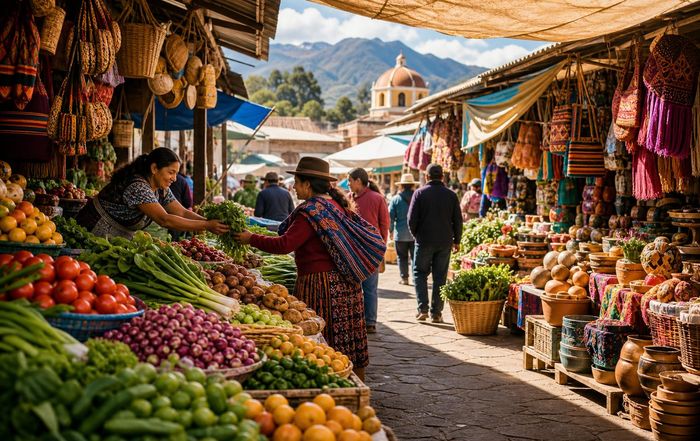
How Public Markets Reflect Local Culture and Community
Public markets, from historic covered halls in Europe to bustling open-air bazaars in Asia and vibrant farmers' markets across North America, have long served as mirrors of the societies that sustain them. In 2026, as digital commerce and global supply chains continue to transform how people buy and sell, these physical marketplaces still reveal a profound story about local culture, community resilience, and shared identity. For readers of WorldsDoor, who explore the world through travel, culture, health, lifestyle, and sustainability, public markets offer a uniquely tangible doorway into the character of a place and the values of its people.
Markets as Living Archives of Local Culture
Public markets are often among the oldest continuously used civic spaces in a city, preserving traditions that might otherwise fade. The layout of stalls, the languages spoken, the negotiation rituals, and even the aromas that fill the air all carry traces of history that no museum label can fully capture.
In cities such as Barcelona, the iconic Mercat de Sant Josep de la Boqueria demonstrates how food markets embody regional identity. The Boqueria, documented by organizations such as UNESCO for its role in intangible cultural heritage, showcases Catalan ingredients, Mediterranean seafood, and local cured meats alongside emerging international influences, reflecting both continuity and change in Catalan society. Similarly, London's Borough Market, which traces its roots back several centuries, has evolved from a wholesale food hub into a curated space where British producers stand alongside global flavors, illustrating how markets adapt to multicultural urban populations while retaining a strong sense of place. Those who wish to explore broader trends in cultural heritage protection can consult resources from UNESCO and the International Council on Monuments and Sites.
From a cultural perspective, public markets reveal what a community values. In Japan, the morning markets of Kanazawa and Takayama highlight seasonality and craftsmanship, with meticulously presented produce and artisanal goods reflecting deep-rooted aesthetic principles such as wabi-sabi and respect for nature. In contrast, the sprawling Chatuchak Weekend Market in Bangkok, one of the largest markets in the world, showcases Thailand's dynamic mix of traditional crafts, street fashion, and contemporary design, mirroring the country's rapid urbanization and youthful creative energy. Travelers seeking a broader understanding of how markets intersect with local traditions can explore related insights on WorldsDoor Culture and WorldsDoor Travel.
Community Hubs in a Digital Age
As e-commerce platforms and supermarket chains expand, many commentators predicted a decline in physical markets. Yet public markets in the United States, Europe, and across Asia have demonstrated remarkable resilience, in part because they offer something digital platforms cannot: genuine human connection and a sense of shared community space. Research from organizations such as Project for Public Spaces indicates that well-designed markets foster social interaction, encourage walking, and help create safer, more vibrant neighborhoods. Readers can learn more about these placemaking principles through Project for Public Spaces.
In cities such as Seattle, the historic Pike Place Market functions simultaneously as a tourist attraction, a working market, and a social safety net. The market's foundation supports low-income housing, a senior center, and a food bank within the market district, demonstrating how public markets can embed social responsibility into their governance structures. This integration of commerce and care reflects a broader trend in community-focused development, where markets are seen not only as retail spaces but as platforms for social innovation, a theme that aligns closely with the values explored on WorldsDoor Society and WorldsDoor Ethics.
In many mid-sized cities, revitalized markets have become anchors for downtown renewal. Examples include Reading Terminal Market in Philadelphia and Time Out Market concepts in Lisbon and other cities, which bring together local chefs and producers under one roof. Analysts at organizations like the Urban Land Institute have noted that such markets often spur investment in surrounding streets, attract creative enterprises, and provide more inclusive entry points for small entrepreneurs who might be priced out of conventional retail leases. While these developments can also accelerate gentrification, thoughtful policies around stall allocation, rent structures, and community representation can help balance economic growth with social equity.
The Taste of Place: Food, Health, and Identity
Perhaps the most immediate way public markets reflect local culture is through food. Markets are where culinary traditions are negotiated daily, where recipes are passed down informally, and where global influences are incorporated into local diets. For travelers and residents alike, markets offer an accessible introduction to the flavors that define a region, from fresh produce and spices to street foods and artisanal specialties.
In Italy, city markets such as Florence's Mercato Centrale or Rome's Testaccio Market reveal the deep connection between regional agriculture and everyday cooking. Shoppers encounter vendors who specialize in particular products-cheese, cured meats, seasonal vegetables-and who often maintain long-standing relationships with nearby farms. This direct link between producer and consumer supports a food culture centered on freshness, traceability, and culinary tradition, themes frequently explored in resources from organizations such as Slow Food International. Those interested in the philosophy of "good, clean, and fair" food systems can explore more through Slow Food.
In North America, the growth of farmers' markets has been closely tied to rising interest in health, sustainability, and local economies. Data compiled by the United States Department of Agriculture (USDA) indicate that the number of farmers' markets has increased significantly over the past two decades, with many cities now supporting year-round markets that prioritize regional produce and organic practices. These markets often serve as educational platforms where nutritionists, chefs, and community organizations host demonstrations and workshops on healthy eating. Readers can explore broader health and wellness perspectives connected to food systems on WorldsDoor Health and WorldsDoor Food.
At the same time, public markets can reveal tensions around food access and inequality. In some cities, markets have become symbols of exclusivity, catering primarily to affluent shoppers and tourists. Public health researchers and urban planners, including those whose work appears through the World Health Organization and the Food and Agriculture Organization of the United Nations, have highlighted the importance of ensuring that markets remain accessible and affordable for diverse communities. Initiatives such as accepting nutrition assistance benefits at farmers' markets in the United States or supporting subsidized stalls for small-scale producers in parts of Europe demonstrate how policy interventions can help markets serve broader public health and equity goals.
Markets as Gateways for Travelers
For travelers seeking an authentic connection to a destination, public markets often provide a more nuanced and grounded experience than many conventional tourist attractions. Instead of curated narratives, visitors encounter everyday life: families shopping for dinner, vendors calling out prices, and local workers grabbing quick meals. This immediacy allows travelers to observe how people interact, what they value, and how they adapt to change.
In France, markets such as Marché d'Aligre in Paris or the weekly markets in Provence offer a window into the ritual of shopping for fresh ingredients, a practice that remains central to French culinary culture. Travelers who visit these markets can gain insight into regional specialties, such as particular cheeses, olives, or pastries, and can engage directly with producers who often take pride in explaining their craft. Organizations like Atout France, the French tourism development agency, highlight markets as key cultural experiences, emphasizing their role in preserving regional diversity. Those planning journeys that prioritize immersive local experiences can find complementary perspectives on WorldsDoor Travel and WorldsDoor Lifestyle.
In Asia, markets can be particularly rich sites of cultural exchange. The night markets of Taiwan, such as Shilin in Taipei, combine food, fashion, and entertainment, reflecting the island's blend of traditional Chinese heritage and contemporary pop culture. In Singapore, wet markets like Tiong Bahru coexist alongside modern supermarkets, illustrating how multicultural food traditions-Chinese, Malay, Indian, and others-continue to shape daily life in a highly globalized city-state. Tourism boards and cultural institutions in these regions, including the Singapore Tourism Board and Taiwan Tourism Administration, increasingly frame markets as essential experiences for visitors seeking to understand local diversity.
For WorldsDoor readers, exploring markets can become a deliberate travel practice: arriving early to see how stalls are set up, observing which products attract local shoppers, sampling simple dishes favored by residents rather than only the most photogenic options, and reflecting on how these observations connect to broader themes of identity, migration, and globalization. This approach transforms market visits from casual outings into meaningful encounters with the living culture of a place.
Sustainability, Environment, and the Local Economy
Beyond culture and tourism, public markets play a growing role in discussions of environmental sustainability and resilient local economies. As climate change and supply chain disruptions draw attention to the vulnerabilities of globalized food systems, markets that prioritize regional sourcing and shorter distribution networks are being reconsidered as critical infrastructure for sustainable cities.
Studies referenced by organizations such as the Ellen MacArthur Foundation and the World Resources Institute have highlighted the environmental benefits of local and seasonal food consumption, including reduced transportation emissions and food waste. Many public markets now integrate circular economy principles, encouraging reusable packaging, composting of organic waste, and partnerships with food rescue organizations. Interested readers can explore broader discussions of sustainable business models and circular systems through resources from the Ellen MacArthur Foundation and the World Resources Institute.
In Europe, policy frameworks such as the European Green Deal and the Farm to Fork Strategy, outlined by the European Commission, emphasize shorter supply chains, agroecology, and support for small producers. Public markets are natural platforms for implementing these ideas, providing direct access points for farmers and fishers who practice sustainable methods. Cities like Copenhagen and Amsterdam have integrated markets into their broader climate and food strategies, promoting organic produce, plant-forward diets, and low-waste retail formats. These initiatives align closely with themes covered on WorldsDoor Environment and WorldsDoor Sustainable, where readers can delve further into the intersection of local commerce and environmental responsibility.
At the same time, sustainability in markets is not limited to environmental metrics. Economic resilience is equally vital. When global crises-from pandemics to geopolitical conflicts-disrupt long-distance trade, communities with robust local markets often have more flexibility to adapt. Reports from institutions such as the World Bank and the Organisation for Economic Co-operation and Development note that small and medium-sized enterprises, many of which operate in or around public markets, are central to job creation and local economic stability. Supporting these enterprises through fair regulations, access to finance, and inclusive governance can enhance both livelihoods and cultural continuity.
Technology, Innovation, and the Evolving Market Experience
While public markets are rooted in tradition, they are also sites of innovation. In 2026, many markets around the world incorporate digital tools to enhance both vendor operations and visitor experiences, demonstrating that heritage and technology can coexist in productive ways.
Some markets have adopted online pre-order systems and click-and-collect services, allowing customers to browse stall offerings through centralized platforms before picking up purchases in person. This hybrid model became particularly visible during the COVID-19 pandemic and has persisted in many locations as a convenience feature. Organizations such as the World Economic Forum have documented how digitalization in retail, including market environments, can expand access for both vendors and consumers while raising important questions about data governance and platform control. Readers can explore broader perspectives on digital transformation and inclusive innovation through the World Economic Forum.
Mobile payment systems, widely used in countries such as China through platforms like Alipay and WeChat Pay, have transformed transaction dynamics in markets, reducing the need for cash and enabling new forms of micro-entrepreneurship. In parts of Africa, mobile money ecosystems have similarly allowed small vendors to participate more fully in the formal economy. At the same time, digital divides remain a concern, as not all vendors or customers have equal access to smartphones, connectivity, or financial literacy. These developments intersect with broader technology and society questions explored on WorldsDoor Technology and WorldsDoor Innovation.
Beyond payments and logistics, technology also influences how markets are discovered and narrated. Social media platforms and travel websites increasingly shape which markets become global destinations, often privileging visually striking locations. This visibility can bring economic benefits but may also pressure markets to cater to external expectations. Responsible storytelling, including the kind promoted by WorldsDoor, can help balance the desire for compelling imagery with respect for local rhythms, privacy, and cultural nuance.
Social Inclusion, Ethics, and Representation
Public markets, as microcosms of society, inevitably reflect questions of inclusion, ethics, and power. Who gets a stall, who sets the rules, whose products are considered "authentic," and who benefits economically are all ethical questions embedded in the everyday functioning of markets.
In multicultural societies such as Canada, the United States, and the United Kingdom, markets often provide crucial platforms for immigrant and minority communities to maintain and share their culinary and craft traditions. Neighborhood markets in cities like Toronto, London, and New York showcase an array of global influences, from Caribbean spices to South Asian textiles, revealing how migration reshapes local culture. Scholars and community organizations, including those featured through the Migration Policy Institute, have highlighted how such economic participation can support social integration while preserving cultural identity.
At the same time, market redevelopment projects can displace long-standing vendors and alter the demographic character of neighborhoods. Ethical governance requires transparent decision-making, meaningful consultation with stakeholders, and attention to affordability. Human rights frameworks, including those promoted by the Office of the United Nations High Commissioner for Human Rights, emphasize the importance of participation and non-discrimination in urban development processes. These principles resonate with the values explored on WorldsDoor Ethics and WorldsDoor Society, where the focus often falls on how communities can pursue progress without erasing the people and histories that made their markets vibrant in the first place.
Fair labor practices and supply chain transparency are also central ethical concerns. Whether a market sells textiles, handicrafts, or specialty foods, questions arise about working conditions, environmental impacts, and cultural appropriation. Certification schemes and fair trade initiatives, supported by organizations like Fairtrade International, attempt to address some of these issues, though their effectiveness varies depending on context. Consumers visiting markets can play a role by asking questions, supporting vendors who prioritize ethical sourcing, and remaining aware of the broader systems behind the products they purchase.
Learning from Markets: Education and Cultural Literacy
Public markets are not only places of commerce; they are also informal classrooms where people of all ages can learn about geography, history, economics, and ecology. Schools in various countries have begun integrating market visits into curricula to teach children about nutrition, local agriculture, and cultural diversity. Educational organizations and museums, including those profiled by the International Council of Museums, recognize markets as valuable resources for experiential learning.
For adults, markets can deepen cultural literacy. Observing which foods are considered everyday staples versus festival specialties, listening to the stories of artisans about their materials and techniques, and noticing how pricing and bargaining work in different contexts can all enhance understanding of a place beyond surface impressions. These learning experiences align with the mission of WorldsDoor Education, which emphasizes continuous, real-world learning as a pathway to empathy and responsible global citizenship.
In some cities, guided tours of markets are now led by chefs, anthropologists, or community organizers who frame the market not just as a shopping destination but as a lens on history, migration, and social change. When thoughtfully designed and locally led, such tours can channel tourism revenue back into the community while offering visitors a richer, more contextualized experience.
A Shared Future: Markets as Bridges in a Fragmented World
In an era marked by rapid technological change, geopolitical tensions, and environmental uncertainty, public markets maintain a quietly radical role: they bring people together in shared physical spaces, across lines of class, culture, and ideology. A single market stall can connect a rural farmer in Germany with an urban family in Berlin, a craftswoman in South Africa with a visitor from Brazil, or a street food vendor in Bangkok with a student from Sweden. These everyday encounters, while modest in scale, foster familiarity and mutual recognition.
For WorldsDoor, which seeks to open pathways between cultures and perspectives, public markets offer a powerful metaphor and a practical starting point. They demonstrate how local knowledge, community resilience, and global curiosity can coexist fruitfully. They remind observers that culture is not static or abstract but negotiated daily through choices about what to grow, cook, wear, and share. They also show that sustainable futures will likely depend as much on strengthening local networks and ethical practices as on technological breakthroughs.
As travelers, consumers, and citizens, readers can support markets that align with these values by seeking out locally rooted venues, engaging respectfully with vendors, learning about the histories of the spaces they visit, and advocating for policies that keep markets accessible, inclusive, and environmentally responsible. Exploring related themes on WorldsDoor Environment, WorldsDoor Business, and the main WorldsDoor portal can further illuminate how these everyday choices connect to wider global patterns.
Ultimately, public markets reveal that culture is not only something to observe but something to participate in. By walking through these vibrant spaces-listening, tasting, asking questions, and supporting local communities-people around the world help sustain the very diversity and creativity they travel to discover.