

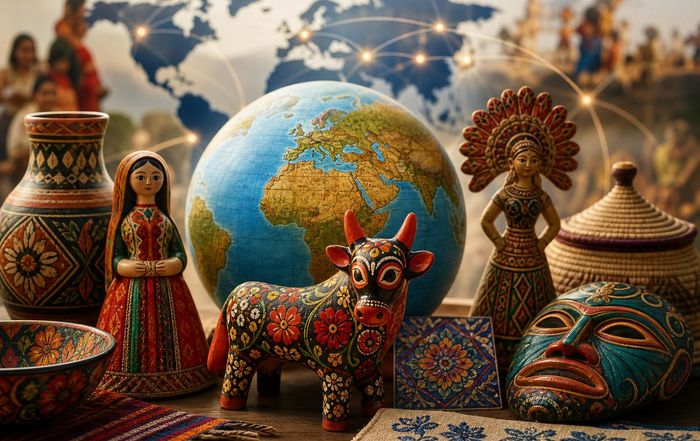
Folk Art Traditions Reaching New Audiences Worldwide
A new global moment for ancestral creativity
Across continents and cultures, folk art is undergoing a quiet but powerful renaissance. Once relegated to local markets, village festivals, or family homes, traditional crafts and community-based arts are now reaching international audiences through digital platforms, ethical tourism, museum collaborations, and innovative education programs. In 2026, this shift is not simply about aesthetics or nostalgia; it reflects a broader rethinking of cultural value, sustainable livelihoods, and how communities choose to tell their own stories in a rapidly changing world.
For our little site, which explores how travel, culture, health, lifestyle, environment, and innovation intersect, folk art offers a uniquely human lens on global change. It reveals how communities in India, Mexico, Scandinavia, West Africa, Japan, and beyond are translating centuries-old practices into new opportunities, while negotiating questions of authenticity, ownership, and dignity.
Defining folk art in a globalized era
Folk art has traditionally been understood as art rooted in community life rather than elite institutions, often passed down through families or guilds, and deeply embedded in local rituals, beliefs, and daily use. The Smithsonian Center for Folklife and Cultural Heritage describes folk and traditional arts as expressions "shaped by values and standards of excellence that are passed from generation to generation," a definition that emphasizes continuity and community rather than individual celebrity.
Yet in a world connected by social media, e-commerce, and global tourism, the boundaries around folk art are more porous than ever. Artists who once sold exclusively at village fairs now operate online shops, collaborate with fashion houses, and exhibit in contemporary art museums. Platforms such as UNESCO's Intangible Cultural Heritage list have also raised awareness of practices ranging from Japanese washi papermaking to Colombian carnival arts, while emphasizing that these are living traditions, not static museum pieces.
At the same time, scholars and practitioners caution against romanticizing "authenticity" in ways that trap artists in the past. Research published by organizations like Routledge and cultural policy institutes highlights how craftspeople must be able to adapt designs, materials, and business models if they are to sustain livelihoods in changing economies. This tension between preservation and innovation runs through many of the most dynamic folk art movements today.
Digital doors: how the internet reshaped folk art access
The most visible transformation in recent years has been digital. Marketplaces such as Etsy, regional platforms, and social media channels have allowed artisans from rural India, the American Southwest, Eastern Europe, and West Africa to reach buyers across the globe with unprecedented directness. While global e-commerce giants present both opportunities and risks, a growing number of cooperatives and fair-trade initiatives are using digital tools to maintain transparent, community-centered models.
Organizations like Fair Trade Federation and World Fair Trade Organization promote standards that aim to ensure artisans receive a fair share of profits, avoid exploitative middlemen, and maintain control over their designs. These frameworks are increasingly important as demand grows for embroidered textiles, handwoven rugs, beadwork, ceramics, and other folk arts in markets across the United States, Europe, and Asia.
For fans here interested in how technology is reshaping culture, the intersection of digital commerce and heritage arts mirrors broader patterns explored on our technology and business pages. It demonstrates how connectivity can empower small producers when paired with ethical standards, storytelling, and long-term partnerships, rather than short-term trends.
Folk art, travel, and the rise of cultural immersion
Travel has long been a bridge between folk artists and new audiences, but the nature of that connection is changing. Cultural tourism initiatives in countries such as Mexico, India, Morocco, Japan, and South Africa are moving beyond souvenir shopping toward deeper engagement with artisan communities. Many travelers now seek workshops, studio visits, and homestays that allow them to understand the stories and techniques behind the objects they encounter.
UN agencies and cultural organizations, including UNWTO, have documented how responsible cultural tourism can support rural livelihoods and incentivize the continuation of traditional arts, provided that local communities are involved in decision-making and benefit fairly from tourism revenue. In Oaxaca, for example, family-run studios producing alebrijes (hand-carved and painted wooden figures) and backstrap-loom textiles have developed tours and classes that attract visitors from North America and Europe, while maintaining community control over how their traditions are represented.
For those exploring new destinations through travel and culture sections, this shift offers a chance to reimagine tourism as a reciprocal exchange rather than a one-way consumption of "local color." Engaged travelers can support artisans by buying directly, respecting cultural protocols, and taking the time to learn about the histories and meanings embedded in the crafts they admire.
Health, identity, and the wellbeing power of making
Beyond economics and tourism, folk art has a profound impact on mental health, social cohesion, and individual identity. Studies highlighted by institutions such as Harvard Medical School and Mayo Clinic have linked creative activities, including traditional crafts, to reduced stress, improved mood, and enhanced cognitive resilience, particularly among older adults. When these activities are rooted in cultural memory, they also help individuals feel connected to something larger than themselves.
Community quilting circles in the United States, batik workshops in Indonesia, and Sámi duodji (traditional handicrafts) gatherings in Scandinavia all illustrate how making can function as a form of social care, reinforcing networks of support and shared meaning. Initiatives documented by organizations such as Creative Scotland and Canada Council for the Arts show that folk arts programs can help address isolation, intergenerational divides, and the trauma of displacement among immigrant and Indigenous communities.
For WorldsDoor, which regularly addresses wellbeing on its health and lifestyle platforms, folk art represents a holistic approach to health that integrates emotional, social, and cultural dimensions. It reminds readers that wellness is not only an individual pursuit but also a collective practice rooted in shared creativity.
Sustainability, slow making, and ecological wisdom
As sustainability becomes a central concern for consumers and policymakers, the environmental dimensions of folk art are attracting renewed attention. Many traditional crafts evolved under conditions of resource scarcity and close ecological observation, resulting in practices that align with contemporary sustainability goals: using local materials, minimizing waste, and designing objects for long-term use or ritual significance rather than rapid disposal.
Reports from organizations such as UN Environment Programme and cultural heritage bodies emphasize how artisanal knowledge can contribute to sustainable development strategies, particularly in rural areas facing climate stress. For example, natural dye traditions in India, West Africa, and Latin America rely on plant-based pigments and water-efficient techniques that contrast sharply with the environmental impact of mass-produced synthetic textiles. Similarly, basketry and woodcarving practices that follow community-managed forestry guidelines can reinforce sustainable land use.
At the same time, climate change threatens many of the ecosystems and raw materials on which folk arts depend, from alpine pastures used for Swiss wool to coastal reeds used in Southeast Asian weaving. International collaborations documented by UNESCO and regional NGOs are working to support artisans in adapting to these changes while maintaining cultural integrity. Readers seeking to deepen their understanding of these dynamics can explore the environment and sustainable pages, where folk art often appears as a practical expression of ecological ethics.
Innovation rooted in tradition
Contrary to the stereotype that folk art is conservative or unchanging, many of the most vibrant developments in the field involve bold experimentation. Young artists and collectives across Europe, Asia, Africa, and the Americas are blending ancestral techniques with contemporary aesthetics, digital tools, and new forms of collaboration.
In Scandinavia, contemporary designers have integrated Sámi patterns and materials into fashion and product design, while Sámi artists assert their rights through organizations and legal frameworks that seek to prevent cultural appropriation. In Japan, practitioners of mingei (folk craft) traditions such as ceramics and woodworking have collaborated with technology companies and design schools to create objects that reference both historical forms and minimalist modern design, a trend discussed by institutions like The Japan Folk Crafts Museum.
Similar innovation is visible in West African textiles, where kente and adire patterns appear in digital prints, streetwear, and visual art, and in Indigenous communities in Canada and the United States, where beadwork and quillwork are used in multimedia installations and social justice projects. Museums such as The Metropolitan Museum of Art and Victoria and Albert Museum have increasingly showcased these hybrid works, acknowledging that tradition is not a static category but a dynamic process of reinvention.
WorldsDoor's innovation coverage often highlights similar patterns in other sectors, and folk art offers a particularly vivid example of how innovation can be grounded in respect for heritage rather than in disruption for its own sake.
Education and intergenerational transmission
One of the most pressing questions facing folk art communities is how to ensure that skills and knowledge are passed on to younger generations who may feel drawn to urban life or different careers. In response, schools, universities, NGOs, and cultural institutions have developed new models for teaching traditional arts that fit contemporary realities.
Programs documented by UNESCO's education sector and national ministries of culture integrate local crafts into school curricula, invite master artisans to teach residencies, and support apprenticeships that combine practical training with business skills. In countries such as India, Mexico, and Norway, specialized institutes and craft schools provide formal recognition for artisan expertise, which can enhance social status and open access to funding.
Digital learning has also opened new pathways, with online workshops, video tutorials, and virtual residencies allowing diaspora communities and international students to learn techniques that were once accessible only in person. While some elders worry that remote learning may dilute the depth of transmission, others view it as a vital tool for keeping traditions alive in a mobile, globalized world.
For readers exploring WorldsDoor's education and society pages, these initiatives illustrate how cultural heritage can be woven into broader conversations about inclusive education, youth empowerment, and community resilience.
Ethics, ownership, and cultural respect
As folk art gains visibility and commercial value, ethical questions become more urgent. Designers and brands in Europe, North America, and Asia have repeatedly faced criticism for copying motifs, patterns, and techniques from Indigenous and local communities without consent or compensation. Cases documented by outlets such as The Guardian and BBC highlight how such practices can cause economic harm and reinforce historical patterns of exploitation.
International frameworks such as the UN Declaration on the Rights of Indigenous Peoples affirm communities' rights to maintain, control, and protect their cultural heritage, but translating these principles into enforceable protections for designs and knowledge remains a complex legal challenge. Some communities have responded by developing their own certification labels, cooperatives, and legal strategies, while supportive organizations work to educate consumers about the importance of ethical sourcing.
For WorldsDoor, which dedicates space to ethics and responsible global engagement, this evolving landscape underscores the importance of informed choices. When readers purchase a hand-embroidered blouse, a carved mask, or a woven rug, they participate in a chain of relationships that can either reinforce or challenge existing inequalities. Transparent partnerships, fair pricing, and respect for cultural protocols are essential to ensuring that the global appreciation of folk art translates into real benefits for the people who sustain it.
Regional perspectives: a brief global overview
While folk art is inherently local, several broad regional patterns can be observed in how traditions are reaching new audiences. In North America and Europe, there has been a notable resurgence of interest in craft as part of a broader "maker movement," with organizations like Crafts Council UK and American Craft Council highlighting both contemporary and traditional practices. This revival often intersects with concerns about sustainability, slow fashion, and mental wellbeing.
In Asia, rapid urbanization and economic growth have created both pressures and opportunities. Countries such as India, Japan, South Korea, and Thailand have invested in national and regional craft councils, design institutes, and export promotion programs that aim to position folk art within global creative industries. At the same time, grassroots initiatives documented by institutions like Asia-Europe Foundation emphasize community agency and cultural rights.
Across Africa and Latin America, folk arts are deeply intertwined with struggles for cultural recognition, land rights, and postcolonial identity. Cooperative models, often supported by NGOs and fair-trade networks, have enabled many artisans in countries such as Mexico, Peru, Ghana, Kenya, and Brazil to access international markets while maintaining local governance structures. However, economic inequalities and climate vulnerabilities continue to pose significant challenges.
In the Nordic countries and other parts of Europe, Indigenous and minority communities, including the Sámi and Roma, are asserting visibility through folk art practices that speak simultaneously to heritage and contemporary politics. Museums, universities, and cultural centers are increasingly partnering with these communities to present more nuanced narratives, although debates about representation and control remain ongoing.
The role of institutions and global recognition
Museums, biennials, and cultural festivals have played a key role in bringing folk art to broader audiences, sometimes blurring the lines between "fine art" and "craft." Events such as the International Folk Art Market in Santa Fe bring together artisans from dozens of countries to showcase and sell their work directly to collectors, curators, and the public. Evaluations of such events suggest that, when well-managed, they can significantly increase artisans' incomes and international networks, while also fostering dialogue across cultures.
Major museums, including The British Museum and Musée du quai Branly - Jacques Chirac, have also expanded their engagement with folk and Indigenous arts, though they face ongoing scrutiny regarding colonial-era collections and the need for restitution and shared curation. Collaborative exhibitions that involve community curators and artists are increasingly seen as a way to balance visibility with respect and accountability.
These institutional shifts complement the grassroots and digital movements already reshaping the field, creating a multi-layered ecosystem in which folk art circulates between local workshops, global marketplaces, academic settings, and public spaces.
What's are the future paths of folk art?
Thanks for reading with curiosity. Fresh ideas and meaningful perspectives can make every return an opportunity to discover something new. As we continue to explore how cultures, environments, and innovations intersect, folk art will remain a vital thread in its storytelling. The platform's global readership, spanning regions from North America and Europe to Asia, Africa, and South America, reflects the same interconnected world in which artisans are now operating. By highlighting positive examples of respectful collaboration, sustainable business models, and community-led initiatives, WorldsDoor aims to inspire readers to engage with folk art not merely as consumers, but as partners in cultural continuity.
Looking ahead, several trends are likely to shape the trajectory of folk art traditions. Climate adaptation will require new materials and methods, even as it underscores the ecological knowledge embedded in many crafts. Digital tools will continue to expand access and visibility, but will also raise questions about intellectual property and cultural context. Young artists will push boundaries, creating hybrid forms that challenge narrow definitions of tradition while honoring the elders who taught them.
In this evolving landscape, trustworthiness, expertise, and lived experience will be essential. Organizations, researchers, and communities that document and share knowledge responsibly-whether through academic studies, museum exhibitions, or platforms like WorldsDoor-will help ensure that the global enthusiasm for folk art translates into lasting support for the people and places at its heart.
Folk art's journey from village squares to international screens and galleries is not a story of disappearance, but of adaptation and resilience. It is a reminder that in an age of automation and mass production, the human hand, guided by memory and imagination, still carries a resonance that crosses borders and generations.