

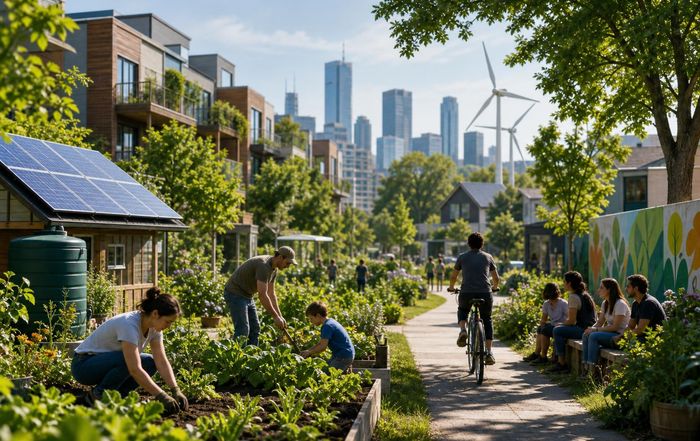
Building Sustainable Neighborhoods Through Local Action
Rethinking "Sustainability" From the Street Level
Across cities and towns on every continent, the idea of sustainability has shifted from an abstract global goal to a very local question: what happens on this street, in this apartment block, in this park, and at this market. In 2026, the most compelling progress is often not found in grand national announcements but in the quiet, steady work of neighbors who decide that their immediate surroundings can and should be healthier, fairer, and more resilient. For WorldsDoor, which brings together stories and insights from travelers, innovators, community leaders, and everyday citizens, the neighborhood has become a powerful lens through which to understand how the world is changing.
International frameworks such as the United Nations Sustainable Development Goals and the Paris Agreement on climate change set broad targets for governments and industries, yet the translation of those commitments into real-world improvements frequently begins at the local level. Residents experiment with urban gardening, mutual aid, community-owned energy, and shared mobility, while municipalities and local organizations provide enabling policies and infrastructure. While global climate data from sources like the Intergovernmental Panel on Climate Change (IPCC) emphasize the urgency of reducing emissions and adapting to extreme weather, it is increasingly clear that neighborhood-scale action is one of the most practical and emotionally meaningful ways for people to participate in that transformation.
For the lovely readers exploring travel, culture, and lifestyle through WorldsDoor, this neighborhood focus is not only about environmental metrics. It is about how people live, what they eat, how they move, how they care for one another, and how they preserve or reinvent local identities in the face of global pressures. The sustainable neighborhood becomes both a destination to visit and a model to adapt at home, connecting the curiosity of travelers with the responsibilities of residents.
The Core Elements of a Sustainable Neighborhood
Although every community has unique geography, culture, and resources, many successful sustainable neighborhoods share a set of recurring features that can be observed in cities from Copenhagen to Curitiba and from Singapore to Seattle. These features tend to align with widely accepted frameworks such as the C40 Cities Climate Leadership Group's urban climate solutions and the World Resources Institute's work on sustainable cities.
At the physical level, sustainable neighborhoods prioritize walkability, safe cycling, and convenient public transport, reducing dependence on private cars and thereby cutting emissions, noise, and air pollution. Research from the World Health Organization (WHO) has consistently linked traffic-related air pollution to respiratory and cardiovascular disease, making the design of streets and public spaces not only an environmental concern but a direct health intervention. Green spaces, from pocket parks to urban forests, provide shade, support mental well-being, and offer habitats for urban biodiversity, aligning with guidance from groups such as the International Union for Conservation of Nature (IUCN) on nature-based solutions.
Energy and buildings form another crucial pillar. Neighborhoods that encourage energy-efficient construction, retrofitting of older housing, and the installation of rooftop solar or community solar projects can significantly reduce their carbon footprint. Organizations like the International Energy Agency (IEA) have documented how building efficiency is one of the most cost-effective paths to emissions reduction, especially when combined with local renewables and district heating or cooling systems. These technical choices intertwine with social and economic considerations, such as keeping energy bills affordable and ensuring that low-income households can access efficiency upgrades.
Social cohesion and inclusion are equally important to the sustainability of any neighborhood, even though they are harder to measure. Research summarized by UN-Habitat in its World Cities Report highlights that neighborhoods with strong social networks, accessible public spaces, and inclusive governance processes tend to be more resilient in the face of crises, whether those crises are climate-related, economic, or public health emergencies. Local initiatives that foster trust-such as neighborhood councils, participatory budgeting, and community festivals-help ensure that sustainability measures do not simply serve the most affluent residents but reflect a shared vision.
For happy people interested in the intersection of environment, lifestyle, and society, WorldsDoor's own sections on lifestyle, environment, and society illustrate how these elements reinforce each other: active mobility improves health, greenery enhances mental well-being, and inclusive public spaces enrich culture.
Local Action as a Driver of Global Change
While climate reports and global summits can feel distant, local action offers a tangible entry point that connects individual choices with systemic change. The OECD has documented in its work on local development and climate that municipalities and regions are responsible for a significant share of public investment in infrastructure, transport, and housing, which means that neighborhood-scale decisions can cumulatively determine whether national climate targets are met.
In practice, this local action often takes the form of partnerships between residents, local businesses, civil society organizations, and municipal governments. For example, community-led energy cooperatives in countries such as Germany, Denmark, and the Netherlands, supported by favorable national policies, have allowed citizens to collectively invest in wind and solar projects, as documented by the European Commission's energy communities initiative. These cooperatives not only decarbonize energy supply but also keep financial benefits within the community and strengthen local governance capacity.
Similarly, neighborhood food initiatives-from community gardens and urban farms to local food hubs-contribute to both sustainability and resilience. Organizations like the Food and Agriculture Organization of the United Nations (FAO) have highlighted how urban and peri-urban agriculture can improve food security, reduce "food miles," and create social spaces where residents learn about nutrition and cultivation. On WorldsDoor, readers exploring food can find stories that connect culinary traditions with sustainable sourcing, showing how local action in food systems preserves culture while reducing environmental impact.
The pandemic years reinforced the value of such local systems, as disruptions to global supply chains and restrictions on movement forced communities to rely more heavily on nearby resources and mutual aid. Studies from institutions such as the Brookings Institution on resilient local economies indicate that neighborhoods with strong local networks, diversified small businesses, and accessible public services were better able to adapt. As the world in 2026 navigates continued climate, health, and geopolitical uncertainties, these lessons remain highly relevant.
Health, Well-Being, and the Design of Everyday Life
Sustainable neighborhoods are not only about carbon and conservation; they are also about how people feel in their daily lives. Public health research has increasingly shown that the built environment-how streets are laid out, where parks are located, how easy it is to walk or cycle, and the availability of healthy food-has profound effects on physical and mental health. The Lancet's Planetary Health initiative has documented correlations between green, walkable neighborhoods and lower rates of obesity, depression, and cardiovascular disease, while also emphasizing that equitable access to such environments is crucial.
In many cities, local campaigns have emerged to reclaim space from cars and convert it into pedestrian zones, bike lanes, and public plazas. Examples in cities like Paris, Barcelona, and Milan have been widely covered by organizations such as ICLEI - Local Governments for Sustainability (ICLEI) and are being studied by urban planners worldwide. Concepts like the "15-minute city," which aims to ensure that residents can meet most of their daily needs within a short walk or bike ride, have gained traction as a way to simultaneously reduce emissions and improve quality of life. While there is debate in some contexts about how such transformations affect housing prices and displacement risks, the underlying principle of proximity and accessibility has broad support among public health and urban planning professionals.
For jet setting individuals seeking to make healthier choices in their own lives, the neighborhood is a powerful starting point. Initiatives such as local walking groups, community sports clubs, and shared gardens encourage physical activity and social interaction, creating a positive feedback loop where improved health enables greater civic participation. WorldsDoor's health and travel coverage often highlights destinations and communities where this alignment between healthy living and sustainable design is most visible, inspiring readers to look for similar opportunities at home.
Culture, Identity, and the Power of Place
Sustainability is often framed in technical or economic terms, yet it is deeply cultural. Neighborhoods are where languages, traditions, and stories are lived and passed on, and any effort to build a sustainable future must respect and nurture that cultural richness. Anthropologists and sociologists have long emphasized that a strong sense of place and belonging can motivate residents to protect and improve their environment. Reports by UNESCO on intangible cultural heritage suggest that when communities feel ownership over their cultural landscape, they are more likely to engage in conservation, adaptive reuse of historic buildings, and community-led tourism that benefits local residents.
In many cities, cultural festivals, local markets, and artistic interventions have become tools for reimagining public space in more inclusive and sustainable ways. Street art projects that highlight environmental themes, neighborhood storytelling initiatives that document climate impacts, and community theaters that explore social justice issues all contribute to a richer understanding of what sustainability means in daily life. These cultural expressions can bridge generational divides, bringing together elders with long memories of a place and younger residents who are eager to innovate.
For WorldsDoor, which dedicates daily updated and significant attention to culture and world perspectives, sustainable neighborhoods are also gateways to more meaningful travel. Instead of focusing solely on iconic landmarks, travelers are increasingly seeking out community-based experiences that allow them to support local enterprises, learn about regional traditions, and contribute positively to the places they visit. Organizations like Global Sustainable Tourism Council (GSTC) provide standards and best practices for destinations and tour operators seeking to align tourism with community well-being and environmental protection, and many of the most promising examples are neighborhood-scale initiatives.
Technology, Innovation, and the Human Factor
Digital technologies and data-driven tools are reshaping how neighborhoods understand and manage their resources, yet the most successful applications tend to be those that amplify, rather than replace, human relationships and local knowledge. Smart sensors can monitor air quality, traffic flows, and energy use in real time, enabling targeted interventions and transparent reporting. Platforms developed in collaboration with organizations such as the Open Data Institute (ODI) and civic tech communities allow residents to visualize local challenges and co-design solutions, from mapping heat islands to identifying unsafe intersections.
At the same time, there is growing awareness that technology must be deployed with careful attention to privacy, equity, and accessibility. The World Economic Forum has highlighted in its work on smart cities governance that without inclusive design and oversight, digital tools can exacerbate existing inequalities, leaving marginalized communities underrepresented in data and underserved in services. Ethical frameworks that emphasize transparency, community consent, and open standards are increasingly seen as essential components of smart neighborhood initiatives.
Innovation in sustainable neighborhoods is not limited to digital tools. Social innovations-such as community land trusts, time banks, repair cafés, and cooperative housing-are gaining recognition as powerful mechanisms for sharing resources and reducing waste. Organizations like the Ellen MacArthur Foundation, which promotes the circular economy, showcase examples of neighborhoods that have embraced reuse, repair, and sharing as everyday practices rather than niche activities. WorldsDoor's innovation and technology sections often highlight these hybrid stories where simple human practices are supported by thoughtful design and, where appropriate, by digital coordination.
Equity, Ethics, and the Risk of "Green Gentrification"
As sustainable neighborhood initiatives have proliferated, a critical conversation has emerged around who benefits and who bears the costs. In some cities, the creation of new parks, bike lanes, and eco-friendly developments has coincided with rising property values and the displacement of long-term residents, a phenomenon sometimes described as "green gentrification." Academic work published in journals such as Urban Studies and research by the Lincoln Institute of Land Policy on equitable urban development illustrate how well-intentioned environmental improvements can inadvertently deepen social inequalities if they are not paired with strong protections for affordable housing and inclusive planning processes.
Ethical neighborhood development therefore requires deliberate strategies to ensure that sustainability is not a luxury reserved for those who can afford higher rents or home prices. Policy tools such as inclusionary zoning, rent stabilization, community benefit agreements, and support for community land trusts can help maintain diversity and prevent displacement. Participatory planning processes, in which residents are involved from the earliest stages of project design, allow communities to articulate their own priorities and identify potential harms before they occur.
For an audience attentive to ethics and sustainability, WorldsDoor's ethics and sustainable sections underscore that the moral dimension of neighborhood transformation is as important as the technical one. Building truly sustainable neighborhoods means confronting historical injustices, acknowledging who has been excluded from decision-making, and designing interventions that actively correct those imbalances rather than ignoring them.
Learning From Global Examples and Local Stories
Around the world, a wide variety of neighborhoods illustrate different facets of sustainable local action, even though no single example is perfect or universally applicable. In Northern Europe, cities such as Copenhagen, Amsterdam, and Stockholm have become emblematic of cycling culture, district heating, and waterfront regeneration, with their experiences frequently cited by organizations like the European Environment Agency (EEA) as models of integrated urban sustainability. In Asia, cities like Singapore and Seoul have invested heavily in green infrastructure, public transport, and digital governance, demonstrating how dense urban environments can still prioritize liveability.
In Latin America, innovative approaches to participatory budgeting and social urbanism, particularly in cities such as Porto Alegre and Medellín, have shown how community engagement can guide investments in public spaces, transit, and social services. Reports by the Inter-American Development Bank (IDB) document how these efforts have improved safety and inclusiveness while also supporting environmental goals. In Africa, rapidly growing cities are experimenting with low-cost, community-driven solutions to housing, water, and waste management, often supported by networks like Slum Dwellers International (SDI) that emphasize resident leadership and knowledge-sharing.
For travelers and readers on WorldsDoor, these examples are not only case studies but invitations. Through features on travel, environment, and business, the platform can highlight how local entrepreneurs, cooperatives, and social enterprises contribute to neighborhood sustainability, and how visitors can support them responsibly. Learning from these stories encourages a mindset in which every journey becomes an opportunity to observe, listen, and bring home ideas that might be adapted in one's own community.
Practical Pathways for Neighborhood Transformation
Although large-scale infrastructure projects and policy reforms are essential, many of the most effective neighborhood changes begin with modest, concrete steps that build momentum over time. Residents, local organizations, and small businesses often start by identifying immediate needs-such as safer crossings for children, better lighting, or cleaner public spaces-and then organize around achievable interventions. Over time, these efforts can evolve into broader initiatives that address energy, mobility, food systems, and cultural programming.
Local governments play a crucial enabling role by providing small grants, technical assistance, and regulatory flexibility for community projects. Guidance from organizations like Local Governments for Sustainability (ICLEI) and the Global Covenant of Mayors for Climate and Energy (GCoM) offers frameworks for integrating neighborhood initiatives into citywide climate and resilience strategies, ensuring that local experiments are supported rather than hindered by formal planning processes. Collaboration between universities, NGOs, and community groups can further enrich these efforts, bringing research, monitoring, and evaluation into the design of neighborhood projects so that successes and failures can be documented and shared.
For individuals wondering how to engage, the answer often lies in starting where they are: joining a local association, attending community meetings, supporting nearby sustainable businesses, or participating in neighborhood cleanups and planting days. WorldsDoor's broad coverage-from education to innovation-can serve as an ongoing resource, connecting personal curiosity with practical knowledge and examples from around the globe.
A Shared Doorway to the Future
Standing at the midpoint of the 2020s, societies are increasingly aware that the window for avoiding the worst impacts of climate change and ecological degradation is narrowing, as highlighted by recent IPCC assessments and the latest climate indicators from agencies such as the World Meteorological Organization (WMO). Yet alongside this sobering reality, there is a growing recognition that the tools, knowledge, and inspiration needed to build more sustainable ways of living already exist in thousands of neighborhoods worldwide.
For WorldsDoor, the positive minded, and sustainable neighborhood is both subject and metaphor: a tangible space where travel, culture, health, lifestyle, environment, technology, food, society, education, and ethics converge, and a doorway through which readers can step into a more engaged relationship with the world. By spotlighting local stories of resilience and creativity, connecting them with global research and policy, and encouraging readers to see their own streets as sites of possibility, WorldsDoor participates in a wider movement that understands sustainability not as a distant ideal but as a daily practice.
Ultimately, building sustainable neighborhoods through local action is less about a final destination and more about an ongoing process of learning, collaboration, and care. Every tree planted, every street redesigned for people rather than cars, every community garden tended, and every inclusive meeting held in a school hall or public library contributes to a larger tapestry of change. As neighbors continue to open their own "worlds' doors" to one another-sharing knowledge, resources, and dreams-they demonstrate that the path to a livable, just, and inspiring future begins right outside the front step.