

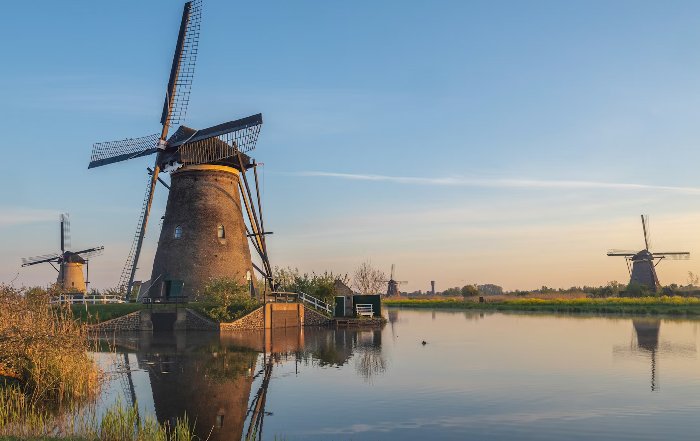
Agricultural Tech Revolutionizing Farms in the Netherlands
A New Agricultural Era at the Heart of Europe
The Netherlands has firmly established itself as a global benchmark for technologically advanced, resource-efficient agriculture, and for sophisticated and intellectual readers of WorldsDoor this transformation offers a compelling lens through which to understand how innovation, ethics, sustainability and business strategy can converge in practice. Despite its small landmass, the country has become one of the world's largest agricultural exporters, demonstrating that intensive production can be reconciled with environmental and social responsibility when data, digital tools and scientific research are integrated into everyday farming. For business leaders, policymakers, technologists and socially conscious consumers from the United States, Europe, Asia and beyond, the Dutch experience offers practical insights into how agricultural technology can reshape food systems, rural economies and global supply chains.
The story of agricultural technology in the Netherlands is not simply one of machines and software; it is a story of systemic change in which universities, startups, established agribusinesses, government agencies and farmers collaborate to address climate pressures, resource scarcity and shifting consumer expectations. Platforms like WorldsDoor have increasingly focused on these intersections, connecting developments in technology, environment, business and society to reveal how innovations in one sector ripple across health, culture, education and global trade. The Dutch agricultural transformation, anchored in technology but guided by ethics and sustainability, exemplifies this interconnected reality.
From Greenhouse Nation to Global Innovation Hub
The Netherlands' reputation as a greenhouse nation has been decades in the making, but the acceleration of agricultural technology since 2020 has fundamentally redefined its role in the global food economy. The country's dense network of high-tech greenhouses, concentrated in regions such as Westland, relies on sophisticated climate control, LED lighting and hydroponic systems that allow year-round production with minimal land and water. Organizations such as Wageningen University & Research have played a pivotal role in developing and testing these systems, and their work is frequently referenced by international bodies seeking to understand sustainable food systems and climate-resilient agriculture.
What distinguishes the Netherlands in 2026 is the integration of these physical infrastructures with digital technologies including artificial intelligence, advanced sensors and robotics. Greenhouses that once depended on manual monitoring now operate as data-rich environments where crop growth, nutrient levels, humidity and pest risks are continuously tracked and optimized. International observers from FAO, OECD and World Bank missions increasingly travel to Dutch research centers and commercial farms to learn more about sustainable business practices and to explore how similar approaches might be adapted to conditions in Africa, Asia and South America. For readers interested in how innovation reshapes global food systems, the Dutch case illustrates how a small country can exert outsized influence through knowledge, exportable technologies and collaborative partnerships.
Precision Farming: Data as the New Fertilizer
Precision agriculture has become one of the defining pillars of the Dutch agricultural tech revolution, transforming farms into data-driven enterprises where every decision is informed by measurements rather than intuition alone. In arable regions of the Netherlands, farmers increasingly deploy GPS-guided tractors, drone-based imaging and soil sensors to apply water, fertilizers and crop protection products only where needed and in precisely calculated amounts. This approach not only reduces input costs but also significantly lowers environmental impact, aligning with European Union goals outlined by institutions such as the European Commission and European Environment Agency.
The integration of satellite data, real-time weather information and machine learning models allows Dutch farmers to predict disease outbreaks, optimize planting schedules and adjust harvesting windows with unprecedented accuracy. Companies like John Deere, Trimble and Dutch agtech firms collaborate with local cooperatives to develop platforms that translate complex data streams into actionable recommendations. For decision-makers examining the future of sustainable innovation, precision farming in the Netherlands demonstrates how data can become a strategic asset, turning farms into sophisticated operations comparable to advanced manufacturing facilities. At the same time, organizations such as Rabobank and ING are rethinking agricultural finance, using data-driven performance indicators to design credit products that incentivize efficiency and environmental stewardship, a development closely watched by global financial institutions and by readers tracking the evolution of responsible business models.
Greenhouse Intelligence: AI, Robotics and Controlled Environments
Nowhere is the fusion of technology and horticulture more visible than in Dutch greenhouses, where artificial intelligence and robotics are redefining how vegetables, fruits and flowers are grown, harvested and distributed. In large-scale facilities operated by companies such as Koppert Cress, Royal Brinkman and Priva, AI-driven climate computers continuously analyze sensor data to fine-tune temperature, CO₂ levels, irrigation and lighting, achieving yields that far exceed traditional open-field farming while using a fraction of the water. Organizations like Google DeepMind and research groups at Wageningen University have collaborated on projects that apply reinforcement learning to greenhouse control, and their experiments have shown how algorithms can sometimes outperform human growers in optimizing complex environmental variables.
Robotics is another frontier in which Dutch horticulture is advancing rapidly. Autonomous robots capable of scouting for pests, monitoring plant health or assisting with harvesting tomatoes and cucumbers are increasingly common, addressing labor shortages and improving consistency. International technology observers who follow developments on platforms such as MIT Technology Review and IEEE Spectrum note that Dutch greenhouses serve as ideal testbeds for such technologies because of their controlled conditions and high economic stakes. For WorldsDoor readers interested in the intersection of technology and lifestyle, this convergence raises important questions about the future of work in rural areas, the skills farmers will need in the coming decade and how societies can ensure that automation enhances rather than erodes human wellbeing.
Sustainability, Circularity and Climate Responsibility
The Dutch agricultural tech revolution is not only a story of efficiency and productivity; it is also a case study in how a country under intense environmental scrutiny attempts to balance economic interests with ecological limits. The Netherlands has faced significant challenges related to nitrogen emissions, biodiversity loss and water quality, and public debates have been intense, involving farmers, environmental groups, policymakers and urban consumers. In response, Dutch agriculture has increasingly embraced circular practices and integrated sustainability metrics into business strategies, aligning with the broader European Green Deal and with global frameworks promoted by organizations such as the United Nations Environment Programme and the World Resources Institute.
Circular agriculture in the Netherlands includes using agricultural residues for bioenergy, recycling nutrients from manure, integrating livestock and crop production systems and designing greenhouses that capture and reuse heat and CO₂ from nearby industrial facilities. The Port of Rotterdam and surrounding industrial clusters have experimented with symbiotic systems in which waste streams from factories become valuable inputs for horticultural enterprises, an example frequently cited in international discussions about industrial ecology and resource efficiency. For readers exploring sustainable futures, Dutch farms offer concrete evidence that circularity can be more than a theoretical concept; it can be embedded in contracts, infrastructure investments and long-term business planning, though not without tensions and trade-offs that continue to generate political and social debate.
Ethics, Animal Welfare and Social License to Operate
As agricultural technology advances, ethical considerations have become central to the Dutch public conversation, especially in relation to livestock production, data ownership and the social consequences of automation. The Netherlands has long been a major exporter of meat and dairy, and intensive livestock farming has drawn criticism from environmental organizations and animal welfare advocates. In response, many Dutch producers have invested in technologies that improve animal health monitoring, reduce antibiotic use and enhance living conditions, guided in part by standards promoted by entities such as the World Organisation for Animal Health and by consumer expectations in high-income markets including Germany, the United Kingdom and Scandinavia.
Digital tools now allow continuous monitoring of animal behavior, feed intake and health indicators, enabling early interventions and more targeted veterinary care. However, these same tools raise questions about data ownership, farmer privacy and the potential for increased surveillance by regulators, retailers or financial institutions. Ethical frameworks discussed on platforms like World Economic Forum and ETH Zurich's ethics initiatives are increasingly relevant for Dutch stakeholders who must navigate a complex landscape in which technological capability outpaces regulatory adaptation. For WorldsDoor readers engaged with ethics and society, the Dutch experience underscores that technological leadership must be accompanied by transparent governance, inclusive dialogue and respect for the dignity of both humans and animals involved in food production.
Education, Skills and the Future Dutch Farmer
The transformation of Dutch agriculture into a high-tech sector has profound implications for education and workforce development. The archetype of the farmer as primarily a manual laborer has been replaced by an image of a data-literate entrepreneur who must understand agronomy, business management, digital tools and international markets. Institutions such as Wageningen University & Research, HAS Green Academy and Aeres University of Applied Sciences have expanded programs that blend agricultural science with data analytics, robotics and sustainability studies, attracting students from across Europe, Asia, Africa and the Americas who seek to learn about future-ready education models.
Vocational schools and training centers in the Netherlands collaborate closely with technology providers and farmer organizations to ensure that curricula reflect real-world needs, from operating autonomous machinery to interpreting satellite imagery and managing complex certification requirements. International organizations such as the International Labour Organization emphasize the importance of reskilling in the face of automation, and the Dutch case provides a concrete example of how this can be implemented in rural sectors. For readers of WorldsDoor exploring education and societal change, Dutch agricultural training illustrates how lifelong learning becomes essential when technology continuously reshapes professional roles, and how inclusive access to such education can determine whether innovation deepens or reduces social inequality.
Health, Nutrition and Consumer Expectations
Technological change on the farm inevitably influences health and nutrition outcomes for consumers in the Netherlands and worldwide. Dutch producers increasingly tailor crops and products to meet demand for healthier, more sustainable and traceable foods, responding to scientific evidence disseminated by organizations such as the World Health Organization and the Harvard T.H. Chan School of Public Health. Controlled-environment agriculture, for example, allows precise management of nutrient content and pesticide use, offering vegetables with consistent quality and safety profiles that appeal to health-conscious consumers in markets from the United States to Singapore.
Digital traceability systems, often based on blockchain or advanced databases, now enable retailers and consumers to track products from greenhouse or barn to supermarket shelf, enhancing trust and allowing verification of sustainability or welfare claims. This development complements broader lifestyle trends covered on WorldsDoor's health and lifestyle sections, where readers explore how diet, environment and technology interact to shape wellbeing. At the same time, public health experts and social scientists caution that technological solutions alone cannot address inequalities in access to nutritious food, and they call for integrated policies that connect agricultural innovation with urban planning, education and social protection, an agenda reflected in reports from institutions such as the Lancet and the World Food Programme.
Global Influence: From Dutch Fields to Worldwide Food Systems
The impact of Dutch agricultural technology extends far beyond its borders, influencing policies, investments and farming practices across continents. Dutch companies and research institutions are active in greenhouse projects in the Middle East, vertical farming ventures in Asia, dairy modernization programs in Africa and sustainable horticulture initiatives in North and South America. International development agencies and philanthropic organizations, including Bill & Melinda Gates Foundation, often consult Dutch experts when designing interventions aimed at improving productivity and resilience in smallholder systems, while also considering the risks of technological dependency and the importance of local adaptation.
Global trade dynamics further amplify this influence. The Netherlands serves as a logistical hub for European food distribution, with the Port of Rotterdam and Schiphol Airport playing central roles in the movement of perishable goods. As sustainability and carbon accounting become more prominent in international trade agreements and corporate reporting frameworks promoted by entities such as the Task Force on Climate-related Financial Disclosures and the Global Reporting Initiative, Dutch exporters increasingly integrate environmental data into their value propositions. For readers following world developments on WorldsDoor, the Dutch case illustrates how a nation can leverage technological excellence and logistical strength to shape global norms around quality, safety and sustainability, while also facing pressures to continually reduce its environmental footprint.
Tourism, Culture and the Image of the High-Tech Countryside
The transformation of Dutch agriculture has also influenced how the country presents itself to international visitors and how rural communities perceive their own identity. Agricultural tourism, once focused on traditional farm stays and flower fields, now increasingly includes visits to high-tech greenhouses, experimental farms and innovation campuses. Travelers from Germany, the United Kingdom, the United States, China and other regions are drawn to guided tours that showcase robots harvesting tomatoes, AI-controlled climate systems and vertical farms integrated into urban landscapes, experiences that complement more conventional attractions described in travel and culture features on WorldsDoor.
This evolving image of the countryside raises cultural questions about what is gained and what might be lost when traditional practices are replaced or augmented by technology. Local communities must balance the economic opportunities of agritourism and innovation branding with the preservation of heritage, landscapes and social cohesion. Cultural institutions and researchers, including those associated with Leiden University and University of Amsterdam, explore how narratives of progress, sustainability and national identity intersect in these rural transformations. For global readers, the Dutch experience offers a nuanced perspective on how technology can reshape not only production systems but also the stories societies tell about themselves, the values they prioritize and the ways in which rural and urban worlds remain interconnected.
Business Strategy, Investment and Risk Management
For investors, corporate strategists and entrepreneurs, the Dutch agricultural tech ecosystem provides a rich case study in building competitive advantage through innovation while managing regulatory, environmental and market risks. Venture capital firms and corporate venture arms from Europe, North America and Asia have increasingly targeted Dutch agtech startups, drawn by the country's dense network of research institutions, pilot facilities and export-oriented companies. Reports from organizations such as McKinsey & Company, Boston Consulting Group and PwC highlight the Netherlands as a leading cluster for agricultural innovation, comparable in some respects to technology hubs like Silicon Valley or Shenzhen, albeit with a strong emphasis on sustainability and food security.
However, the rapid pace of innovation also introduces strategic uncertainties. Regulatory changes related to emissions, land use and animal welfare can significantly impact business models, while geopolitical tensions and supply chain disruptions affect export markets and input availability. Climate risks, from sea-level rise to extreme weather, add further complexity, prompting Dutch firms to invest in resilience and adaptation strategies aligned with frameworks from bodies such as the Intergovernmental Panel on Climate Change. For readers using WorldsDoor's business insights to navigate investment decisions, the Dutch agricultural sector demonstrates that long-term value creation in food and farming now depends on integrating environmental, social and governance considerations into core strategy rather than treating them as peripheral concerns.
Lessons for a Connected / Even more, a Connected AND Sustainable Future
The agricultural tech revolution in the Netherlands stands as a powerful illustration of how a country can harness innovation to address global challenges while grappling with its own environmental and social constraints. From AI-driven greenhouses and precision farming to circular resource systems and advanced education programs, Dutch agriculture reveals what is possible when technology, policy and entrepreneurship align around a shared vision of sustainable prosperity. Yet it also underscores that such transformations are complex, contested and ongoing, requiring continuous dialogue among farmers, citizens, scientists, businesses and governments.
For the global audience of WorldsDoor, spanning interests in health, travel, culture, lifestyle, business, technology, environment, ethics, society, education and food, the Dutch experience offers both inspiration and caution. It shows that technological leadership can enhance food security, reduce environmental impact and create new economic opportunities, but only if guided by transparent governance, inclusive participation and a commitment to long-term planetary wellbeing. As readers explore interconnected themes across WorldsDoor, from environmental innovation to societal change and sustainable lifestyles, the Dutch agricultural story serves as a reminder that the future of food will be shaped not only in laboratories and boardrooms, but also in the values and choices of communities worldwide.
In an era defined by climate uncertainty, demographic shifts and rapid technological change, the Netherlands has opened a door to a new model of agriculture-one that other nations in Europe, North America, Asia, Africa and South America are studying closely, adapting to their own contexts and, in some cases, surpassing with locally grounded innovations. The role of platforms like WorldsDoor is to follow these evolving narratives, connect them across regions and sectors and provide a trusted space where decision-makers and citizens alike can understand how the transformation of farms in a small European country resonates across the broader, interconnected world.