

A First-Time Visitor's Guide to Britain's Coastal Towns
Britain's coastline is far more varied than its postcard clichés suggest. Yes, there are pastel beach huts and piers with fish and chips, but there are also slate-grey cliffs battered by Atlantic swells, subtropical gardens warmed by the Gulf Stream, Victorian spa resorts, working fishing harbours, and creative hubs where artists and surfers share the same beaches. For a first-time visitor, this variety can be both exciting and overwhelming. This wonderful guide focuses on helping newcomers understand the different "types" of British seaside experiences, how to choose where to go, and how to make sense of the practicalities-weather, transport, costs, and culture-so that a coastal trip becomes a highlight rather than a logistical puzzle.
Understanding Britain's Coast: Regions and Character
Although the UK coastline forms one long, jagged line on the map, in practice it feels like several different worlds. Broadly, England's south coast-from Kent through Sussex, Hampshire, Dorset, and into Devon and Cornwall-offers the most sunshine and some of the country's most popular holiday towns. Resorts such as Brighton, Bournemouth, Torquay, and St Ives are relatively well connected by rail and coach, making them convenient for visitors based in London or other major cities. The south coast tends to feel more "holiday resort" in character: promenades, piers, pebble or sandy beaches, and a high concentration of restaurants, bars, and nightlife. It is also where many first-time visitors start, especially those interested in culture, food, and easy day trips.
Move north and west, and the atmosphere shifts. The south-west peninsula-especially Cornwall and North Devon-is defined by rugged cliffs, sweeping bays, and a strong surf culture. Towns like Newquay, Bude, and Woolacombe attract surfers and younger travellers, while places like Falmouth, Padstow, and St Ives combine working harbours with art galleries and high-end dining. The weather is milder but more changeable, and the sea is colder than Mediterranean visitors might expect. Inland roads are winding, public transport can be slower, and planning becomes more important, but the rewards include quieter coves and more dramatic scenery.
On the north-west coast, from North Wales through Merseyside, Lancashire, and up to Cumbria, seaside towns reflect Britain's industrial history. Places such as Llandudno and Blackpool have long traditions as working-class holiday resorts, with piers, amusement parks, and large promenades. Further north, the Cumbrian coast offers access to the Lake District, blending mountains and sea in a way that appeals to hikers and outdoor travellers. Across in Scotland, coastal towns range from the elegant waterfront of North Berwick near Edinburgh to remote fishing villages in the Highlands and Islands, where ferries, single-track roads, and sparse services create a very different rhythm of travel.
The east coast, from Kent up through Essex, Suffolk, Norfolk, Lincolnshire, Yorkshire, and into Northumberland, often feels gentler and more understated. Towns such as Whitstable, Southwold, Aldeburgh, Scarborough, and Whitby are known for seafood, maritime history, and big skies. The North Sea can be bracing, but this coast offers atmospheric walks, birdlife, and historic sites, from ruined abbeys to World War defences. For visitors interested in the intersection of travel, culture, and the environment, these areas can be particularly rewarding, and they link naturally to broader explorations of world and environmental issues such as coastal erosion and sea-level rise.
Classic Seaside Resorts vs Hidden Harbours
First-time visitors often picture Britain's seaside through images of Brighton's pebble beach or Blackpool's illuminated tower. These classic resorts developed with the arrival of the railways in the 19th century and were designed for mass tourism. They tend to have wide promenades, traditional piers, amusement arcades, fish-and-chip shops, and a dense cluster of hotels and guesthouses. For those curious about British social history or nostalgic seaside culture, they are an obvious starting point. Brighton, for example, blends Regency architecture and the eccentric Royal Pavilion with a strong nightlife and arts scene, while Blackpool offers a more unabashedly entertainment-driven experience with its tower, pleasure beach, and autumn light displays.
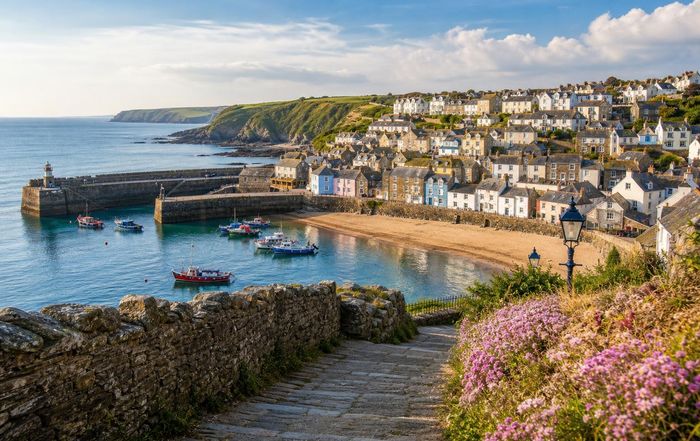
By contrast, many smaller harbours and villages feel more intimate and less obviously "resort-like." Places such as Robin Hood's Bay in North Yorkshire, Polperro in Cornwall, or Port Isaac on the north Cornish coast are built around steep lanes and tiny quays, often with limited parking and a handful of pubs, cafés, and local shops. These locations can be particularly appealing to travellers interested in slower, more sustainable forms of tourism, and they invite connections with themes explored in sustainable travel and culture. However, they can also be logistically trickier: public transport is less frequent, accommodation is more limited, and services may close early outside the summer season.
Choosing between resort towns and quieter harbours depends largely on what kind of experience is desired. Resorts are better suited to visitors who want a straightforward, social, and lively introduction to the British seaside with a wide range of food and nightlife options. Smaller harbours are ideal for those who prioritise scenery, walking, and a sense of escape, and who are comfortable planning ahead and potentially renting a car. In both cases, expectations around weather and water temperature should be realistic; even in midsummer, the sea is cool by global standards, and wind can make beaches feel colder than the air temperature suggests.
Weather, Seasons, and When to Go
The single biggest surprise for many first-time visitors is how much Britain's coastal experience is shaped by the weather. According to the UK Met Office at metoffice.gov.uk, average summer highs in many coastal towns range from around 18-22°C, with cooler conditions in northern and western areas. Heatwaves do occur, but they are not guaranteed, and even in July or August it is common to experience a mix of sunshine, cloud, showers, and wind in a single day. The sea temperature is typically between 15-19°C at peak in the warmest locations, considerably cooler than Mediterranean waters. This means that wetsuits are common for swimmers and surfers, and visitors should pack layers rather than relying on beachwear alone.
Seasonality also affects the feel of coastal towns. July and August are peak months, especially during English school holidays, when accommodation prices rise, beaches are busier, and popular towns can feel crowded. For visitors who value atmosphere and long evenings, this can be enjoyable, but those seeking quieter experiences may prefer late spring (May-June) or early autumn (September). In these shoulder seasons, daylight hours remain relatively long, sea temperatures are still tolerable for short swims, and walking conditions are often ideal. Winter by the sea is a different proposition: many attractions close or reduce their hours, and storms can disrupt travel, but for some travellers the austere beauty of empty beaches and dramatic waves is precisely the appeal.
Climate change is subtly reshaping these patterns. The UK Climate Projections from the Met Office and the Environment Agency at gov.uk suggest that summers are likely to become warmer and drier on average, while winter storms and coastal flooding risks may increase. For visitors, this means that heatwaves and intense rainfall events are becoming more common, and it is wise to monitor forecasts closely in the days before travel. The Royal National Lifeboat Institution (RNLI) at rnli.org and the Maritime and Coastguard Agency at gov.uk provide safety information and alerts that are particularly relevant for those planning coastal walks or water activities.
Getting There and Getting Around
For many international visitors, the easiest entry point to Britain's coast is from London or other major cities such as Manchester, Bristol, Edinburgh, or Glasgow. The national rail network, described by National Rail at nationalrail.co.uk, connects numerous seaside towns directly. For example, fast trains link London to Brighton in about an hour, to Bournemouth in around two hours, and to destinations such as Whitstable or Margate in roughly 80-90 minutes. Further afield, services to Cornwall, North Wales, or the Scottish coast can be longer and sometimes require changes, but they remain feasible for weekend trips or longer stays.
Coaches, including services from operators listed via nationalexpress.com or megabus.com, often provide cheaper, if slower, alternatives to rail. They can be particularly useful for direct routes to major resorts or for budget-conscious travellers. Once at the coast, local buses may connect towns and villages, but frequencies can drop in the evening and outside peak seasons. For visitors planning to explore multiple small harbours, remote beaches, or inland attractions such as national parks, renting a car can significantly increase flexibility. However, driving in rural areas involves narrow lanes, limited parking in some villages, and the need to be comfortable with left-hand traffic.
Active travellers increasingly combine coastal visits with cycling and walking. The National Cycle Network, coordinated by Sustrans at sustrans.org.uk, includes routes that pass through or near many seaside towns. The England Coast Path, being developed by Natural England and documented at gov.uk, aims to create a continuous walking route around the entire English coastline, linking numerous resorts and villages. For first-time visitors, using short sections of these routes can offer a different perspective on the seaside, connecting beaches and clifftops in ways that are not always obvious from road or rail maps.
What to Expect: Culture, Food, and Daily Rhythm
British coastal towns carry layers of tradition that may be unfamiliar to visitors from other parts of the world. Food is central to the experience, and while classic fish and chips remain a staple, the range of options has expanded considerably. Many towns now offer high-quality seafood restaurants, vegetarian and vegan cafés, and international cuisines, reflecting broader shifts in British food culture and society. In fishing harbours, locally landed crab, lobster, and shellfish are often available from simple shacks or small eateries, and in some areas, such as Whitstable or Falmouth, oysters and mussels are particular specialities. Ice cream, often from regional dairies, is another near-universal seaside ritual.
Culturally, the seaside has long been associated with entertainment and escape. Piers host amusement arcades, small theatres, and fairground rides; promenades are lined with kiosks selling rock (a traditional hard candy), doughnuts, and souvenirs. In many towns, especially Brighton, Margate, and St Ives, there is also a strong arts presence, with galleries, studios, and festivals that draw visitors beyond the beach. This intersects with a broader conversation about regeneration and business, as former industrial or declining resorts attempt to reinvent themselves through creative industries and tourism. Visitors may notice contrasts between newly renovated seafronts and areas still marked by economic challenges.
The daily rhythm in coastal towns can differ from large cities. Many independent cafés and shops keep shorter hours, particularly outside the summer season, and it is not unusual for some businesses to be closed midweek in quieter months. Pubs often serve food only at certain times, and booking restaurants in advance is advisable at weekends or during holidays. On the other hand, early morning walks along promenades or beaches are part of local life, with dog walkers, swimmers, and surfers out well before typical tourist hours. For those interested in lifestyle and wellbeing, joining this early routine-perhaps with a coffee from a seafront kiosk-can be a memorable way to experience the coast.
Safety, Health, and Environmental Awareness
The British seaside is generally safe, but first-time visitors should be aware of specific coastal risks. Tides in some areas, particularly around estuaries and rocky bays, can be fast and strong, and it is essential to check local tide times before walking across beaches or causeways. The RNLI at rnli.org provides clear guidance on beach flags, rip currents, and what to do in an emergency, and many popular beaches have lifeguard patrols in the summer months. Warning signs about unstable cliffs, strong currents, or restricted areas should be taken seriously, as rockfalls and sudden changes in sea conditions do occur.
Cold-water shock is another consideration. Even when the air feels warm, the sea can be cold enough to cause a rapid physical reaction when entering the water, affecting breathing and movement. The NHS at nhs.uk and water safety campaigns highlight the importance of entering the sea slowly, staying within your depth, and avoiding alcohol before swimming. For visitors interested in cold-water swimming as a health trend, it is sensible to research local groups, understand basic safety principles, and treat the sea with respect rather than as a swimming pool.
Environmental issues are increasingly visible along Britain's coast. Concerns about water quality, plastic pollution, and coastal erosion have prompted campaigns by organisations such as Surfers Against Sewage at sas.org.uk and the Marine Conservation Society at mcsuk.org. Some beaches hold regular community clean-ups, and many towns promote reusable cups and containers to reduce single-use plastics. For travellers who care about sustainability, choosing businesses that support local supply chains, minimise waste, and engage with environmental initiatives is one practical way to align tourism with broader environmental and ethical concerns.
Choosing the Right Coastal Town for You
With hundreds of options, narrowing down where to go can be challenging. One useful approach is to think in terms of interests and travel style rather than chasing a single "best" destination. Those who value nightlife, independent shops, and a strong cultural scene might gravitate towards Brighton, Margate, or St Ives, where galleries, live music, and festivals complement time on the beach. Families with children could look at Bournemouth, Scarborough, or Tenby, where beaches are broad, facilities plentiful, and attractions such as aquariums or small theme parks are close at hand. Hikers and nature enthusiasts may prefer bases such as Falmouth, North Berwick, or Oban, which offer access to coastal paths, islands, and wildlife watching.
Budget and logistics also shape choices. Major resorts are often easier to reach by public transport and offer a wide range of accommodation, from hostels and budget hotels to boutique guesthouses. Smaller villages may have fewer options and higher prices in peak season, but they can deliver a stronger sense of place and quieter evenings. For those planning multi-stop trips, combining a larger town with one or two smaller harbours can provide contrast: for example, a few days in Brighton followed by time in a Sussex or Kent fishing village, or a stay in Falmouth paired with visits to nearby coves and villages by bus, boat, or car.
Resources such as VisitBritain at visitbritain.com, VisitEngland at visitengland.com, VisitScotland at visitscotland.com, and VisitWales at visitwales.com provide overviews of coastal regions, suggested itineraries, and information about seasonal events. Cross-referencing these with independent travel reporting from outlets like bbc.com or theguardian.com can help visitors balance promotional material with more critical perspectives, especially when considering issues such as overtourism, housing pressures, and the economic realities facing some seaside communities.
Making the Most of a Short Coastal Break
Many first-time visitors experience Britain's seaside as a weekend or two- to three-day break rather than a long holiday. With limited time, a little planning can make the difference between a rushed checklist and a satisfying introduction. It can be helpful to structure each day around one or two main activities-such as a coastal walk, a visit to a local museum or gallery, or a boat trip-while leaving space for unplanned wandering. Allowing time simply to sit on the beach, watch the tide, or explore backstreets often reveals more about local life than racing between attractions.
Packing sensibly is part of this preparation. Regardless of season, a waterproof layer, comfortable walking shoes, and at least one warm jumper or fleece are advisable. Sun protection is also important; UV levels can be higher than the air temperature suggests, especially when reflected off water and sand. For those interested in swimming or surfing, hiring wetsuits and boards locally is straightforward in many towns, and it supports local businesses rather than requiring travellers to bring bulky equipment. Visitors who are curious about wellbeing and health trends might consider joining a guided cold-water swim or yoga session on the beach, activities that are increasingly common in popular resorts.
Engaging with local culture can also enrich short stays. This might mean attending a small gig in a seafront bar, visiting a local history museum, joining a guided walking tour, or simply chatting with café staff about their favourite spots. In many towns, noticeboards and social media pages advertise community events such as beach cleans, markets, or small festivals, offering opportunities to connect beyond the standard tourist circuit. For travellers who see tourism as part of a broader exploration of education, environment, and community, these interactions can be as meaningful as any view or attraction.
Why Britain's Seaside Still Matters
Britain's coastal towns occupy an interesting place in the country's imagination. They are at once nostalgic and contemporary, shaped by Victorian railways and modern surf culture, by climate change and regeneration projects, by local traditions and global tourism. For first-time visitors, they offer a compact way to explore many of the themes that define modern Britain: changing work patterns, questions of regional identity, debates about sustainable development, and the search for health and balance in everyday life. Standing on a pier or clifftop, watching the weather roll in from the sea, it is easy to see why these places continue to fascinate.
This sunny and happy story ends now, but there is no need to stop exploring. Approached with realistic expectations about weather, transport, and costs-and with an openness to both their charms and their complexities-Britain's coastal towns can be deeply rewarding destinations. Whether the priority is walking along windswept cliffs, tasting fresh seafood in a working harbour, exploring art galleries in a regenerated resort, or simply experiencing a slice of everyday seaside life, there is a stretch of coast to match. For many visitors, that first trip becomes the beginning of a longer relationship with the British shoreline, returning in different seasons and to different regions, each time opening another door onto the varied landscapes and cultures that line the edge of these islands.