

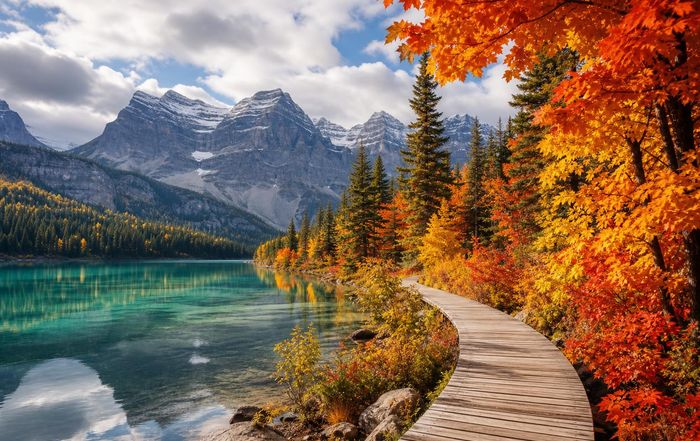
Where to Experience Canada's Most Beautiful Autumn Landscapes
Canada's autumn is brief, dramatic, and surprisingly varied. From sugar maple forests that glow scarlet to golden larch valleys in the Rockies and tundra turning crimson in the Arctic, the season rarely looks the same twice. For travelers willing to time their trip carefully and move beyond a single famous viewpoint, fall becomes one of the most rewarding times to explore the country.
This guide focuses on where to find the most striking autumn landscapes across Canada, when to go, and how to combine scenic drives, hiking, and cultural experiences in a way that fits different travel styles. It draws on regional climate data from agencies such as Environment and Climate Change Canada and provincial tourism boards, as well as park authorities like Parks Canada, to reflect typical timing and conditions-while acknowledging that climate change is making peak foliage harder to predict. For inspiration on planning seasonal trips and cultural journeys, folks can also explore the travel and culture sections at Travel and Culture.
Understanding Canada's Fall: Timing, Climate Shifts, and Foliage Types
Autumn in Canada generally runs from early September to late October in most populated regions, with the Arctic and high mountains turning earlier and coastal regions often holding onto green longer. Historically, peak foliage in many eastern forests has been around late September to mid-October, according to long-term patterns noted by Environment and Climate Change Canada at https://www.canada.ca/. However, climate change is altering this rhythm: warmer falls can delay color change and shorten the peak, while extreme weather, drought, or heavy rain can cause leaves to brown or drop quickly.
In eastern Canada, especially Ontario, Québec, and the Atlantic provinces, the show is dominated by deciduous hardwoods-sugar maple, red maple, yellow birch, beech, and oak. These forests produce the classic palette of deep reds, bright oranges, and clear yellows often associated with North American fall. In western and northern Canada, conifer forests dominate, so autumn color often comes from trembling aspen, cottonwood, and the unusual golden larch, as well as shrubs and tundra vegetation that turn crimson and copper. The result is a patchwork of very different autumn landscapes: tunnel-like maple roads in Ontario, open river valleys in Alberta, and vast subarctic hillsides in Yukon and Nunavut.
Travelers planning a fall trip should track local foliage reports from provincial tourism boards such as Destination Ontario at https://www.ontario.ca/, Bonjour Québec at https://www.quebec.ca/, and Nova Scotia's tourism arm at https://novascotia.ca/. Although these sites do not guarantee peak timing, they often provide weekly updates and regional suggestions. For broader travel logistics and safety information, Parks Canada at https://www.pc.gc.ca/ and Travel.gc.ca at https://travel.gc.ca/ are valuable starting points.
For travelers balancing fall scenery with wellness and pacing, the seasonal guides and tips at Health and Lifestyle can help support comfortable, sustainable journeys.
Ontario: Classic Maple Forests and Scenic Drives
Ontario delivers some of the country's most accessible and iconic fall foliage, especially for visitors starting in Toronto or Ottawa. The province's mix of hardwood forests, large lakes, and rolling shield country produces classic postcard scenes, and several routes are easy to tackle as weekend road trips.
One of the most famous destinations is Algonquin Provincial Park, about three hours north of Toronto. Its highlands, dominated by sugar maple and yellow birch, usually reach peak color from late September to early October. The Highway 60 corridor, which cuts through the park, offers numerous roadside lookouts and short hikes, while canoe routes reveal reflections of red and orange hills on still lakes at dawn. As Algonquin is not a national park, it is managed by Ontario Parks, but visitors often combine it with trips to Bruce Peninsula National Park or Georgian Bay Islands National Park, both overseen by Parks Canada at https://www.pc.gc.ca/. Bruce Peninsula's rugged cliffs and turquoise water contrast with golden hardwoods and conifers, creating a cooler-toned but equally dramatic fall landscape.
The Muskoka and Haliburton Highlands regions, north of Toronto, are also renowned for fall drives, cottage stays, and lake views. Their mix of small towns, local food, and forested backroads can be ideal for travelers who want to balance scenic photography with slower-paced stays. While these areas are heavily visited, midweek trips and early morning outings can reduce crowding. For those interested in how tourism shapes small communities and local economies in such regions, the analysis at Society and Business offers broader context.
Further east, the Ottawa Valley and Thousand Islands region along the St. Lawrence River provide softer, more riverine fall scenery. Rolling farmland, mixed forests, and historic towns like Brockville and Gananoque are framed by warm-toned trees and morning fog over the water. This area suits travelers who prefer moderate hikes, cycling, and boat cruises over more rugged backcountry trips.
Québec: Fiery Hillsides and Francophone Fall Culture
If Ontario is known for accessible cottage-country foliage, Québec is celebrated for its dramatic, mountainous landscapes and the way autumn weaves into local food and cultural life. From the Laurentians just north of Montréal to the fjord-like Saguenay and the shores of the St. Lawrence, the province offers both intense color and a strong sense of place.
The Laurentian Mountains (Les Laurentides) are among the most popular fall destinations, reachable by car or bus from Montréal in under two hours. Towns like Mont-Tremblant sit amid hills that blaze with maple and birch, and gondolas, hiking trails, and lakeside walks all provide different vantage points. While the ski resort infrastructure can make the area feel busy, it also offers accessible viewpoints for visitors who might not want or be able to tackle steep hikes. Québec's tourism information at https://www.quebec.ca/ often highlights fall festivals, farmers' markets, and harvest events that complement foliage trips, from apple picking to maple-themed menus.
Further northeast, Charlevoix and the Saguenay-Lac-Saint-Jean region provide a wilder feel. The combination of steep river valleys, cliffs, and mixed forests along the Saguenay Fjord creates layered views of red, orange, and yellow hills dropping into deep blue water. In Charlevoix, the St. Lawrence shoreline, rolling farmland, and small villages form one of Canada's most scenic drives, particularly between Baie-Saint-Paul and La Malbaie. This region is also home to Charlevoix Biosphere Reserve, recognized by UNESCO at https://www.unesco.org/, where fall colors overlay a landscape shaped by both glaciation and meteorite impact.
Québec's fall is not only visual; it is also culinary. The harvest season sees a focus on local cheeses, ciders, and game, and many restaurants take advantage of regional products. Travelers interested in how food, culture, and environment intersect during harvest season may find additional context in the coverage at Food and Environment.
Atlantic Canada: Coastal Color, Cliffs, and Quiet Roads
Atlantic Canada's maritime climate means fall can be milder and more variable than in central Canada, with fog, storms, and bright, crisp days sometimes arriving in the same week. The payoff, though, is a rare combination of coastal scenery, Acadian and Celtic cultural threads, and quieter roads once summer beach crowds have gone home.
Nova Scotia's Cabot Trail on Cape Breton Island is one of the country's best-known fall drives. Winding through Cape Breton Highlands National Park, it alternates between cliff-edge coastal views, highland plateaus, and river valleys lined with hardwoods. The mix of red maples, yellow birches, and evergreens creates a patchwork that changes around each curve. Peak color typically occurs from late September to early October, but local tourism information at https://novascotia.ca/ and Parks Canada at https://www.pc.gc.ca/ provide annual guidance. Beyond driving, short hikes such as Skyline Trail offer elevated views over the Gulf of St. Lawrence, while coastal villages host music sessions that evoke the island's Scottish and Acadian heritage.
In New Brunswick, the Fundy region stands out. The area around Fundy National Park and the Fundy Trail Parkway combines some of the world's highest tides with steep, forested cliffs that turn orange and gold in autumn. Tidal flats, waterfalls, and river canyons provide varied photography opportunities, and the cooler temperatures can make hiking more comfortable than in midsummer. The province's tourism information at https://www2.gnb.ca/ (Government of New Brunswick) often highlights fall color drives that link coastal and inland routes.
Prince Edward Island offers a gentler fall landscape of rolling fields, hedgerows, and small woodlots, where color tends to be more patchy than in heavily forested provinces but still charming, especially when combined with red-sand beaches and lighthouses. Newfoundland and Labrador, with its more boreal vegetation, sees fewer broadleaf forests but offers tundra-like color in places such as Gros Morne National Park, where shrubs and groundcover turn shades of red and orange against dramatic rock formations and fjords.
For travelers interested in how coastal communities in Atlantic Canada are adapting to changing weather patterns, fisheries shifts, and tourism seasonality, the reporting at World and Sustainable can provide a wider lens beyond the scenic views.
The Rockies and Western Canada: Golden Larches and High Alpine Light
While eastern Canada is dominated by maple forests, the Rocky Mountains and interior ranges of western Canada are defined by conifers-spruce, fir, and pine-that remain green through fall. Yet here, autumn is no less spectacular; it simply looks different. The stars are trembling aspens, cottonwoods, and, especially, subalpine larches, a rare conifer that turns brilliant gold before dropping its needles.
In Banff and Yoho National Parks, larch season is a short, sometimes crowded window, typically from mid-September to early October. Trails such as Larch Valley, Lake Agnes, and Healy Pass climb through forests that shift from green to luminous gold, especially striking against snow-dusted peaks. Because these parks are among Canada's busiest, Parks Canada at https://www.pc.gc.ca/ increasingly emphasizes shuttle systems, parking restrictions, and Leave No Trace principles to protect fragile alpine ecosystems. Travelers hoping to see larches should monitor park advisories and consider less-famous but equally beautiful trails in nearby Kootenay National Park or provincial parks in Kananaskis Country.
Beyond the Rockies, the Okanagan Valley in British Columbia offers a different autumn mood. Vineyards, orchards, and lakes are framed by golden hillsides, and grape harvest season overlaps with fall colors in the valley's limited deciduous forests. The region's semi-arid climate means fewer dense hardwood stands, but the contrast between yellow vineyards, blue lakes, and sagebrush hillsides can be striking. For those interested in how climate change is affecting wine regions and wildfire risk, resources from Natural Resources Canada at https://www.nrcan.gc.ca/ and BC's provincial government at https://www2.gov.bc.ca/ offer detailed background.
On the coast, Vancouver and Victoria experience a milder, often longer fall season. Urban parks like Stanley Park and Queen Elizabeth Park in Vancouver, and Beacon Hill Park in Victoria, feature ornamental maples, ginkgos, and other plantings that turn brilliant colors, set against evergreen forests and ocean views. While not as wild as interior landscapes, these urban autumn scenes are accessible for travelers who want to combine city culture, food, and mild weather with seasonal color. For a broader look at how cities are adapting green spaces to changing climates and population pressures, the coverage at Innovation and Ethics can provide useful context.
The North: Tundra Fire and Early Autumn Light
Autumn arrives earliest and feels most fleeting in Yukon, Northwest Territories, and Nunavut, often starting in late August and peaking by early September. Instead of towering maples, the show is in the shrubs, dwarf birch, willows, and groundcover of the tundra and taiga. Hillsides and valleys can turn deep red, orange, and gold, especially when illuminated by low-angle sunlight and under clear, cold skies.
In Yukon, areas around Tombstone Territorial Park and the Dempster Highway are particularly known for fall color. The rolling tundra and jagged peaks of the Ogilvie Mountains create a dramatic setting, and on clear nights, travelers may also see the aurora borealis. Territorial information from the Government of Yukon at https://yukon.ca/ and Northwest Territories at https://www.gov.nt.ca/ can help with planning, as conditions can change quickly and services are limited. In these regions, fall travel often requires more preparation, including attention to road conditions, wildlife, and cold-weather gear.
In Nunavut, much of the territory is only accessible by air or seasonal boat, and organized tours are common. Autumn landscapes here are vast and open, with lichen, moss, and shrubs providing splashes of color on rocky ground. The interplay of snow, ice, and fall vegetation can be subtle but powerful, especially for travelers interested in photography and northern cultures. For information on Indigenous communities, land rights, and environmental change in the Arctic, organizations such as Inuit Tapiriit Kanatami at https://www.itk.ca/ and research from Polar Knowledge Canada at https://www.canada.ca/ (via the federal government portal) provide important context beyond tourism.
These northern trips intersect closely with questions of sustainability, cultural respect, and climate change, making it especially valuable to engage with Indigenous-led operators and local guidance-an approach aligned with themes regularly explored in Sustainable and World coverage.
Urban Autumn: Parks, Culture, and Walkable Color
Not every traveler can or wants to rent a car and drive into remote parks. Fortunately, several Canadian cities offer compelling urban autumn experiences that combine parks, architecture, and cultural events.
Montréal is one of the most rewarding urban fall destinations. Mount Royal Park, designed by Frederick Law Olmsted, turns into a canopy of red and gold, with lookouts over the city and the St. Lawrence River. Neighborhoods like Plateau-Mont-Royal and Outremont feature tree-lined streets where brick façades and colorful leaves create a cinematic backdrop. Autumn often coincides with a rich calendar of festivals and cultural events, many of which can be explored via the city's public transit system. For broader perspectives on North American urban culture and public space, CBC/Radio-Canada at https://www.cbc.ca/ provides in-depth coverage.
In Toronto, ravine systems such as Don Valley, High Park, and the Humber River offer extensive fall color within city limits. Trails wind through mixed forests, and some sections feel surprisingly wild despite being close to subway lines. The city's waterfront and the Toronto Islands also provide autumn views of the skyline framed by changing trees. For visitors interested in how large cities integrate nature, public health, and recreation, resources from Public Health Agency of Canada at https://www.canada.ca/ (federal portal) and municipal planning departments can be helpful.
Further west, Vancouver and Calgary offer their own interpretations of urban fall. Vancouver's combination of ornamental plantings, Pacific Northwest forests, and mountain backdrops creates diverse scenes within a compact area. Calgary's Bow River pathways and nearby Fish Creek Provincial Park highlight golden aspens and cottonwoods lining the water. These cities also serve as gateways to larger fall landscapes in the Rockies and coastal mountains.
Planning a Responsible and Rewarding Fall Trip
As autumn travel to Canada becomes more popular, questions of sustainability, safety, and cultural respect grow more pressing. Many of the country's most photogenic fall locations are ecologically sensitive or located near small communities with limited infrastructure. Travelers can help reduce their impact and support local well-being through a few key practices.
First, it is important to follow guidance from park authorities and local governments. Parks Canada at https://www.pc.gc.ca/ and provincial park agencies outline trail closures, wildlife advisories, and seasonal restrictions. These rules are not just bureaucratic; they protect habitats, reduce human-wildlife conflict, and help ensure that popular viewpoints remain accessible in the long term. In areas with shuttle systems or timed-entry reservations, planning ahead can also reduce congestion and improve visitor experience.
Second, autumn often coincides with increased wildlife activity as animals prepare for winter. Bears, moose, and elk can be more mobile and sometimes more defensive. Safety information from organizations such as Wildlife Conservation Society Canada at https://www.wcscanada.org/ and provincial wildlife agencies explains how to store food, move through bear country, and keep safe viewing distances. Respecting wildlife is not only ethical but also essential for personal safety, a theme that intersects with broader discussions of outdoor ethics and human-nature relationships covered at Ethics and Environment.
Third, travelers can make conscious choices about transport, accommodation, and consumption. Taking trains or buses where practical, staying longer in fewer places instead of rushing between many, and supporting locally owned lodgings and restaurants can reduce environmental impact while contributing more directly to local economies. For those interested in aligning travel habits with global climate goals and sustainable development frameworks, organizations like the United Nations Environment Programme at https://www.unep.org/ and the World Tourism Organization (UNWTO) at https://www.unwto.org/ provide high-level context on sustainable tourism trends and best practices.
Finally, autumn weather can change quickly. Checking forecasts from Environment and Climate Change Canada at https://www.canada.ca/ and local authorities before hikes or drives is essential, particularly in mountain or northern regions where early snow is common. Dressing in layers, carrying basic emergency supplies, and informing someone about travel plans are simple steps that can transform a potentially risky outing into a safe, memorable experience. Travelers can find broader health and safety advice for outdoor activity in the seasonal guides at Health.
Choosing the Right Autumn Landscape for You
Canada's fall is not a single spectacle but a mosaic of regional seasons. Those drawn to classic, high-saturation foliage and cozy small towns may gravitate toward Ontario's Algonquin and Muskoka or Québec's Laurentians and Charlevoix. Travelers who prefer coastal cliffs and quieter roads may find their ideal trip along Nova Scotia's Cabot Trail or New Brunswick's Fundy shores. Hikers and photographers seeking alpine drama and golden larches will likely focus on the Rockies, while those curious about vast, sparsely populated landscapes and northern cultures may look to Yukon, Northwest Territories, or Nunavut, accepting greater logistical complexity in exchange for a more remote experience.
The key is to match expectations and abilities with the realities of distance, weather, and infrastructure. Canada is large, and even a focused two-week trip benefits from narrowing the scope to one or two regions rather than attempting to "see it all." Whatever the choice, autumn offers an opportunity to experience not only color but also the seasonal rhythms of communities, wildlife, and landscapes as they prepare for winter. For travelers planning their next journey, the daily coverage across Travel, Culture, and Sustainable can help turn a short season into a richer, more connected experience.