

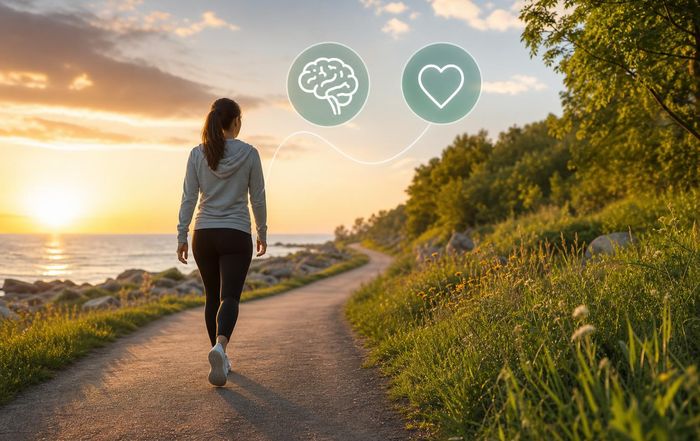
How Walking Supports Physical and Mental Well-Being
Walking, one of humanity's oldest forms of movement, is quietly re-emerging as a powerful, science-backed tool for health and happiness. In an era defined by digital acceleration, urban stress and sedentary work, a simple walk-through a city park, along a coastal path, across a village square or even on a treadmill-has become a vital counterbalance. For online fans, who are curious about travel, culture, health, lifestyle and the evolving relationship between people and their environments, walking offers a uniquely accessible gateway to better living.
The Science of Walking: Why Movement Matters
Modern research consistently shows that regular walking is associated with longer life, reduced risk of chronic disease and improved mental health. Organizations such as the World Health Organization recommend at least 150 to 300 minutes of moderate-intensity aerobic activity per week for adults, including brisk walking, to support cardiovascular and overall health. Readers can explore these global activity guidelines directly through the World Health Organization physical activity recommendations.
Large cohort studies in the United States, United Kingdom, Europe and Asia have examined step counts and health outcomes, helping to refine the once-popular but somewhat arbitrary "10,000 steps per day" target. Research published in journals such as JAMA Internal Medicine and The Lancet Public Health indicates that health benefits start to accumulate well below 10,000 steps, with many studies finding substantial reductions in all-cause mortality and cardiovascular risk around 6,000 to 8,000 daily steps for most adults, and in some older populations even lower step counts still show protective effects. For those who wish to delve into peer-reviewed evidence, resources like PubMed's database of walking studies provide extensive access to current research.
While exact thresholds vary by age, fitness level and health status, the consensus across reputable sources such as the U.S. Centers for Disease Control and Prevention, the National Health Service in the UK and Health Canada is that moving more and sitting less is the critical message. A short daily walk, even if broken into multiple brief sessions, can lower blood pressure, improve blood sugar regulation and support healthier body weight over time. Those seeking practical guidance can refer to the CDC's recommendations on physical activity and similar guidance from the UK NHS walking for health resources.
Cardiovascular, Metabolic and Musculoskeletal Benefits
From a physiological perspective, walking activates large muscle groups in the legs and trunk, increases heart rate moderately and stimulates circulation, all without the high impact that can accompany more intense sports. Studies summarized by organizations such as the American Heart Association show that regular walking can reduce the risk of coronary heart disease, stroke and hypertension, while also improving cholesterol profiles by raising HDL ("good") cholesterol and lowering triglycerides. Interested readers can explore these findings through the American Heart Association overview of walking and heart health.
For metabolic health, walking plays a crucial role in glucose management and insulin sensitivity. Research involving people with type 2 diabetes, prediabetes and metabolic syndrome has shown that post-meal walking, even for as little as 10 to 15 minutes, can help moderate blood sugar spikes, a finding replicated in multiple clinical trials. Organizations such as Diabetes UK and the American Diabetes Association highlight walking as a cornerstone of lifestyle management; those seeking more detailed guidance can consult resources like Diabetes UK's advice on walking and diabetes.
Walking also supports musculoskeletal health by maintaining joint mobility, strengthening muscles that stabilize the hips, knees and spine, and helping preserve bone density, particularly when walking on varied terrain or inclines. The International Osteoporosis Foundation notes that weight-bearing activities such as walking can contribute to bone health, especially when combined with adequate nutrition and strength training. Readers interested in bone health science can review materials from the International Osteoporosis Foundation.
For many visitors to WorldsDoor's health section, one of the most compelling aspects of walking is its adaptability. It can be gentle rehabilitation for someone recovering from illness, daily commuting exercise for professionals in New York, London, Berlin or Tokyo, or a performance-oriented training tool for Nordic walkers in Scandinavia or hikers in the Alps and Rockies. Because walking requires minimal equipment, it offers a low-barrier entry point for people across diverse cultures, income levels and age groups.
Walking and Mental Health: A Natural Antidote to Stress
Beyond the physical benefits, walking exerts a profound influence on mental well-being. In recent years, mental health organizations and academic institutions have intensified research into how movement, and walking in particular, affects mood, anxiety and cognitive function. The American Psychological Association and research groups at universities such as Stanford, Harvard and University College London have reported that regular walking is associated with lower levels of depression and anxiety symptoms, better stress management and improved self-esteem.
A widely discussed study from Stanford University found that walking, whether indoors on a treadmill or outdoors, increased creative output during and shortly after the activity compared with sitting. While creativity is difficult to measure precisely, and not all studies replicate the same magnitude of effect, the general pattern that walking can stimulate divergent thinking and problem-solving appears in multiple research settings. Those interested in the intersection of movement and cognition can explore work summarized by organizations such as the American Psychological Association's coverage of exercise and mood and articles from the Harvard Health Publishing division of Harvard Medical School.
In the domain of clinical mental health, meta-analyses of randomized controlled trials suggest that structured walking programs can reduce mild to moderate depressive symptoms, sometimes with effect sizes comparable to those of low-intensity antidepressant interventions, particularly when walking is sustained over several weeks and combined with social support. While walking is not a replacement for professional treatment in severe or complex mental health conditions, organizations such as Mind in the UK and the National Alliance on Mental Illness in the US recognize it as a valuable component of self-care and recovery plans. Readers can learn more about the role of physical activity in mental health through such organizations.
The psychological benefits of walking are amplified when the environment itself supports restoration. Walks through green spaces, forests or along blue spaces like rivers, lakes and coastlines have been associated with reduced stress hormone levels, better mood and enhanced feelings of connectedness. Research in environmental psychology, including work from University of Exeter and University of Tokyo, suggests that exposure to natural environments during walking may provide additional benefits compared with urban streets alone, although well-designed city parks and tree-lined avenues can also be highly restorative. The European Environment Agency and organizations such as Natural England have documented how access to green and blue spaces correlates with public health indicators across many countries, and readers may find further detail through resources like the European Environment Agency's green spaces and health pages.
Walking Cultures Around the World
One of the most fascinating aspects of walking is how deeply it is woven into cultural identity and daily life across continents. In Japan, for example, the tradition of shinrin-yoku, often translated as "forest bathing," encourages unhurried immersion in woodland environments, and walking is a central component of this practice. Research supported by the Japanese Society of Forest Medicine has examined how guided forest walks can lower blood pressure and stress markers; interested readers can explore more about forest bathing and health research in scientific overviews.
In Europe, historic pilgrimage routes such as the Camino de Santiago in Spain, the Via Francigena from Canterbury to Rome, and the St. Olav Ways in Norway and Sweden combine walking with spiritual reflection, cultural exchange and slow travel. Pilgrims and long-distance walkers often report transformative experiences that blend physical exertion with introspection, intercultural encounters and a renewed appreciation of landscapes and heritage sites. Cultural institutions and tourism boards, including Spain's official tourism portal and UNESCO, highlight these routes not only as religious or historical paths but also as contemporary trails for well-being; readers can explore, for example, the official information on the Camino de Santiago.
In North America, the rise of urban walking tours, community walking groups and charity walks has contributed to a renewed walking culture in cities like New York, Toronto, San Francisco, Vancouver and Chicago, where local organizations and city governments promote walkability as part of broader public health and sustainability agendas. The non-profit America Walks, for instance, advocates for safer, more walkable communities across the United States, offering resources that readers can explore through America Walks' programs and research.
For the WorldsDoor audience that values travel, the relationship between walking and exploration is especially strong. Walking allows travelers to move at human scale, noticing architectural details, street art, local markets and everyday life that might be missed in faster modes of transport. The travel insights at WorldsDoor often echo this perspective, emphasizing journeys that invite deeper engagement with place rather than merely ticking off destinations. From strolling along the Seine in Paris to hiking the Great Ocean Walk in Australia or wandering historic neighborhoods in Singapore, walking becomes a way to connect with culture, history and community.
Urban Design, Walkability and Public Health
The benefits of walking are not determined solely by individual motivation; they are also shaped powerfully by urban design, infrastructure and policy. Walkability-typically defined by factors such as sidewalk quality, street connectivity, traffic safety, access to public transport and nearby amenities-has emerged as a key dimension of sustainable and healthy cities. Organizations such as UN-Habitat, C40 Cities and the World Bank have highlighted walkability as a central pillar of climate-friendly urban development, because walking reduces reliance on motor vehicles, lowers greenhouse gas emissions and supports more vibrant street life.
Public health research indicates that residents of walkable neighborhoods tend to have higher physical activity levels, lower obesity rates and better self-reported health, although socioeconomic factors, air quality and access to green spaces also play important roles. Tools such as Walk Score and academic indices of walkability help compare neighborhoods and guide planning decisions; those interested can explore how walkability is measured and why it matters through resources provided by the CDC and other agencies.
Cities in Europe, North America, Asia and Australia are experimenting with pedestrian-focused initiatives such as car-free zones, "15-minute city" concepts, expanded sidewalks, protected crossings and urban greenways. Examples include Paris's efforts to reduce car traffic along the Seine, Barcelona's "superblocks," Oslo's reduction of downtown parking, and Seoul's transformation of former highways into pedestrian corridors. Such projects are documented by organizations like C40 Cities and ICLEI - Local Governments for Sustainability, which provide case studies that readers can explore through resources such as C40's reports on walking and active mobility.
For the editorial team, which also focuses on environmental topics and sustainable living, the intersection of walking, public health and climate resilience is particularly important. Encouraging walking not only supports individual well-being but also aligns with broader goals of reducing emissions, improving air quality and fostering equitable access to public spaces. When sidewalks are safe, parks are accessible and public transport is well integrated, walking can become the natural first choice for short trips, benefiting both people and the planet.
Walking, Lifestyle and Everyday Rituals
Walking is not merely a form of exercise; it is a lifestyle practice that can be woven into daily routines, cultural rituals and personal reflection. Many people across Canada, Germany, Italy, South Korea, Brazil and beyond have adopted walking as a daily habit for commuting, errands or leisure, often supported by wearables and smartphone apps that track steps, distance and heart rate. While technology can motivate some individuals, health organizations caution against over-fixation on metrics, emphasizing that consistency and enjoyment matter more than achieving a specific number.
Lifestyle medicine practitioners, including those associated with the American College of Lifestyle Medicine and similar bodies in Europe and Asia, increasingly recommend walking as a foundational habit alongside nutrition, sleep, stress management and social connection. Evidence suggests that walking with others-whether family members, friends, colleagues or community groups-can enhance adherence and amplify mental health benefits by fostering social bonds. Readers interested in integrating walking into a broader lifestyle transformation may find inspiration in our lifestyle coverage, which often highlights practical strategies for aligning daily choices with long-term well-being.
In many cultures, walking has long been intertwined with food, socializing and tradition. Evening passeggiata in Italian towns, weekend rambles in the English countryside, market walks in Bangkok or Kuala Lumpur, and coastal promenades in Spain or Portugal all illustrate how walking can frame culinary and cultural experiences. For readers exploring food and culture at WorldsDoor, walking becomes a way to discover local flavors more mindfully, from stopping at a bakery in Paris after a morning stroll to sampling street food in Seoul or Mexico City while wandering between neighborhoods.
Nature, Environment and the Ethics of Walking
As environmental awareness grows, walking is increasingly seen as an ethical and sustainable way to move through the world. Compared with motorized transport, walking has an almost negligible carbon footprint, and when combined with public transit, it can dramatically reduce personal emissions. Environmental organizations such as Friends of the Earth, Greenpeace and the World Resources Institute emphasize active transport, including walking, as part of climate mitigation strategies, and readers can learn more about sustainable transport and climate goals through such institutions.
However, the relationship between walking, tourism and the environment is complex. Popular hiking destinations, from national parks in the United States, Canada and New Zealand to mountain trails in the Alps, Andes and Himalayas, can experience erosion, wildlife disturbance and overcrowding if not managed responsibly. National park services, including the U.S. National Park Service, Parks Canada and National Parks UK, provide guidelines on low-impact hiking, trail etiquette and conservation, encouraging visitors to practice Leave No Trace principles. Those planning walking-focused trips can consult resources such as the Leave No Trace Center for Outdoor Ethics to minimize their environmental impact.
For this site, which also explores ethics and innovation, walking raises broader questions about how people inhabit public spaces, share natural resources and balance individual well-being with collective responsibility. Ethical walking involves respecting local communities, staying on designated paths, supporting conservation efforts and acknowledging the rights of indigenous peoples whose lands often host iconic trails and pilgrimage routes. It also involves advocating for equitable access to safe walking environments, as not all neighborhoods-whether in Los Angeles, Johannesburg, Mumbai or São Paulo-offer the same level of safety, greenery or infrastructure.
Walking, Technology and the Future of Mobility
In 2026, walking coexists with rapid technological change, from autonomous vehicles and micromobility solutions to augmented reality navigation and health tracking devices. Rather than replacing walking, many of these technologies can either support or undermine it, depending on how they are designed and deployed. Health apps and wearables from companies such as Apple, Samsung, Garmin and Fitbit encourage step counting and activity goals, sometimes integrating with healthcare providers and wellness programs. Reviews and guidelines from organizations like the Mayo Clinic and Cleveland Clinic help users interpret this data and understand how to use fitness trackers wisely.
Simultaneously, urban mobility planning increasingly incorporates digital tools to map pedestrian flows, optimize crosswalk timing and design safer intersections. Smart city initiatives in Singapore, Copenhagen, Amsterdam and Seoul use data to improve walkability, sometimes integrating wayfinding apps that highlight low-traffic or shaded routes. Transport research institutions and think tanks, such as the Institute for Transportation and Development Policy (ITDP), provide analyses of how to prioritize walking and cycling in future mobility systems, which readers can explore through resources like the ITDP's walking and cycling programs.
At the same time, there are concerns that increased screen time, remote work and digital entertainment may reduce incidental walking in daily life. Public health organizations continue to emphasize the importance of breaks from screens and regular movement throughout the day, encouraging practices such as walking meetings, walking commutes and short walking breaks between tasks. For readers engaged with WorldsDoor's technology coverage, the challenge is to harness digital tools in ways that support, rather than displace, human movement and connection.
Integrating Walking into a Holistic Vision of Well-Being
Walking, in its simplicity, invites a holistic view of health that resonates strongly with the values of the WorldsDoor travel community. It touches nearly every domain that matters to modern global citizens: personal health, mental resilience, cultural exploration, environmental sustainability, social connection and ethical responsibility. Whether one lives in New York, London, Berlin, Singapore, Cape Town, São Paulo, Sydney or a small town in Finland or Thailand, the act of putting one foot in front of the other can become a daily practice of presence and care.
For individuals seeking to improve health, walking offers a realistic starting point that requires minimal equipment and can be adapted to different abilities and life stages. For travelers, it provides the most intimate way to experience new places, aligning with WorldsDoor's commitment to meaningful, culturally sensitive exploration as reflected in its culture and world sections. For communities and policymakers, investing in walkable environments is a powerful strategy to enhance public health, reduce emissions and foster inclusive cities. For educators and social innovators, walking can be integrated into school programs, workplace wellness initiatives and community-building activities, themes that intersect with WorldsDoor's interest in society and education.
As research continues to evolve, the core message remains remarkably consistent across continents and disciplines: regular walking, especially when combined with supportive environments and social connection, is one of the most reliable and accessible ways to support both physical and mental well-being. In a world that often feels rushed and fragmented, the simple act of walking-through a city street, a forest trail, a seaside promenade or a neighborhood park-offers a chance to slow down, reconnect with one's body, notice the surrounding world and move toward a healthier, more balanced life.
For fans of WorldsDoor, the invitation is clear. Whether planning a cultural journey, redesigning daily routines, advocating for greener cities or simply seeking a moment of calm amid the noise, walking can be both a practical tool and a quiet form of everyday inspiration.