

Respectful Travel Photography Across Different Cultures
Why Respectful Photography Matters More Than Ever
As international travel rebounds and digital connectivity deepens, the world is witnessing an unprecedented volume of images shared across social media, news outlets and personal archives. Every journey is now potentially a visual story, instantly broadcast from Bangkok to Berlin, from Cape Town to California. This explosion of visual documentation brings enormous opportunities for cultural understanding, yet it also raises complex questions about privacy, consent, representation and power. Respectful travel photography has therefore become not just an artistic concern but an ethical imperative, especially for global storytellers and platforms such as WorldsDoor, which seek to connect audiences with the world in a way that is curious, compassionate and fair.
The camera, whether a professional DSLR or a smartphone, can be a bridge between cultures, but it can also be a barrier or even a weapon when used without sensitivity. International organizations, cultural institutions and photographers' associations increasingly emphasize that images taken in one moment can circulate for years, far beyond their original context. Guidance from groups such as UNESCO and the World Tourism Organization (UNWTO) underscores that travelers are not merely consumers of visual experiences; they are participants in a shared global narrative that can either reinforce stereotypes or help dismantle them. For readers of WorldsDoor, this evolving landscape invites a thoughtful re-examination of how to approach photography while exploring diverse societies, landscapes and traditions.
The Ethics of the Lens: Consent, Dignity and Power
At the heart of respectful travel photography lies the question of consent. While legal standards vary widely between countries, a growing consensus among ethicists, human rights organizations and professional photography bodies is that the minimum standard for ethical practice is informed, voluntary consent wherever reasonably possible, particularly when individuals are identifiable and especially when they belong to vulnerable groups such as children, displaced communities or people in medical or religious settings.
The UN Office of the High Commissioner for Human Rights notes that images can affect a person's dignity, safety and future opportunities, even when taken in public spaces. Travelers who assume that public visibility equals unlimited photographic freedom often overlook the asymmetry of power embedded in image-making: the visitor usually has greater mobility, greater control over how images are edited and shared, and greater distance from any unintended consequences. Ethical frameworks promoted by organizations such as Amnesty International and Human Rights Watch emphasize that the right to privacy and dignity does not end at the edge of a tourist's frame.
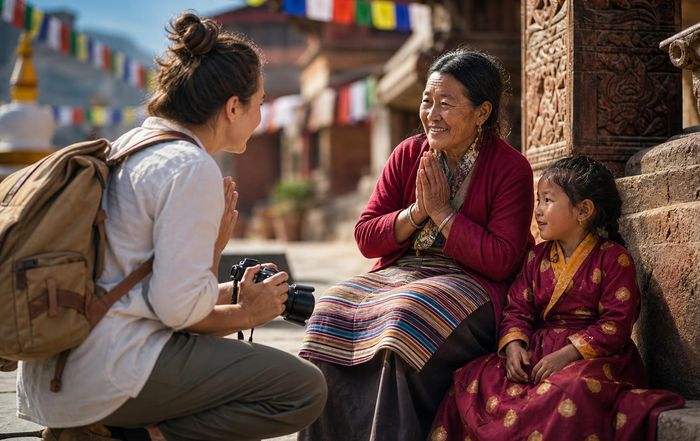
For our fans, this means that a respectful photographer does more than simply ask, "May I take your photo?" whenever possible; they also consider how the person might feel about the image being shared online, whether the situation could expose them to stigma or risk, and whether the moment is primarily about the traveler's desire for a striking image or about honoring the subject's own story. In many cultures across Asia, Africa, Europe and the Americas, a brief conversation, a smile, or even showing the subject the photo and offering to share it can transform the act of photography from extraction into exchange.
Those seeking deeper guidance can explore discussions on ethical visual storytelling from institutions such as the National Press Photographers Association and resources on digital privacy from organizations like the Electronic Frontier Foundation, which highlight how easily images can be repurposed or misused once they are online.
Cultural Context: Understanding Local Norms Before You Click
Respectful travel photography is inseparable from cultural literacy. Norms around images are shaped by religion, history, politics and community values, and these can differ sharply not only between countries but within them. In some regions, such as parts of the Middle East, South Asia and North Africa, photographing women without consent can be particularly sensitive and is sometimes considered deeply disrespectful or even dangerous. In certain Indigenous communities in Australia, North America and elsewhere, there may be restrictions on photographing sacred sites, ceremonies or specific individuals, especially the deceased. In parts of Europe, strict data protection and privacy laws, such as the EU's General Data Protection Regulation (GDPR), influence how photographs of identifiable individuals can be used commercially.
Cultural organizations and tourism boards, including VisitBritain, Tourism Australia and Japan National Tourism Organization, increasingly publish guidelines on visitor behavior, which often include advice about photography in religious sites, markets or residential neighborhoods. Many temples, mosques, churches and shrines in countries such as Thailand, Italy, India and Japan have clear signage indicating whether photography is allowed, restricted or prohibited. Respectful travelers not only follow these rules but also recognize that unwritten norms may extend beyond posted signs; for instance, photography might be permitted technically but frowned upon during moments of prayer or mourning.
For those planning journeys, learning about cultural norms is as important as researching health or safety. Resources on the culture section at worldsdoor.com/culture.html can help travelers understand local customs, while global references such as UNESCO's World Heritage Centre offer background on the historical and spiritual significance of major sites, guiding visitors toward more informed and sensitive visual storytelling.
Portraits with Permission: Building Genuine Human Connections
Some of the most memorable travel images are portraits that reveal the character, resilience or joy of people encountered on the road. Yet, when portraits are taken without consent or cultural awareness, they can slip into voyeurism or exploitation, particularly in communities facing poverty, conflict or marginalization. Ethical travel photography, increasingly discussed in platforms like National Geographic and BBC Travel, encourages photographers to move from the mindset of "capturing" people to one of collaborating with them.
In practice, this often means slowing down. Instead of raising a camera at the first glimpse of a colorful market vendor in Morocco or a street musician in Berlin, a respectful photographer might start with a greeting in the local language, a brief conversation, or a purchase that supports the person's livelihood. In many regions, from the Andean highlands to Southeast Asian floating markets, some individuals expect or request a small tip in exchange for being photographed. While opinions differ on whether this practice commodifies human subjects, many travel ethics experts suggest that transparent, mutually agreed exchanges can be acceptable, provided they do not pressure individuals or encourage staged poverty.
Professional organizations such as World Press Photo have highlighted that the most powerful human-centered images often emerge from trust built over time. Even short-term travelers can adopt a similar ethos by returning to the same neighborhood, cafe or workshop, allowing relationships to develop. Sharing printed photos or digital copies, when feasible, helps ensure that the person photographed receives something tangible in return, reinforcing the sense of partnership rather than extraction.
Readers can deepen their understanding of respectful portraiture by exploring visual storytelling resources on WorldsDoor's society pages at worldsdoor.com/society.html, where human stories are treated with nuance and care.
Sacred Spaces and Spiritual Sensitivity
Religious and spiritual spaces are among the most photographed places on earth, from the cathedrals of France and Italy to the temples of Thailand, the mosques of Turkey and the shrines of Japan. Yet these are also environments where the potential for disrespect is highest if visitors prioritize images over reverence. Many faith communities report concerns about tourists treating places of worship as mere backdrops, ignoring dress codes, using flash during ceremonies or intruding on private rituals.
Interfaith and heritage organizations such as the Parliament of the World's Religions and the Council of Europe's cultural heritage programs stress that sacred sites are living spaces of devotion, not museums. When photography is allowed, respectful practice often involves avoiding flash, refraining from photographing people in prayer without explicit consent, and being particularly cautious around children. In some Buddhist and Hindu temples, for instance, photography of specific statues or inner sanctums is restricted out of respect for the deity or tradition rather than for reasons of security.
Travelers can benefit from reading local signage carefully and asking guides or custodians when in doubt. Many major religious sites, including St. Peter's Basilica in Vatican City or the Blue Mosque in Istanbul, provide online visitor guidelines that include photography rules. Platforms like WorldsDoor's travel section at worldsdoor.com/travel.html can help visitors prepare by highlighting cultural expectations in destinations where spiritual life is central to daily experience, encouraging photographers to let reverence shape their visual choices.
Documenting Daily Life Without Turning It into a Spectacle
Street scenes, markets, festivals and everyday routines often provide the richest visual stories for travelers. However, the line between documenting daily life and turning it into a spectacle can be thin, particularly in communities that have experienced a long history of being observed and judged by outsiders. Anthropologists and sociologists, including those writing for institutions such as the Royal Anthropological Institute and the American Anthropological Association, note that images can perpetuate narratives of "exoticism" or "backwardness" when they focus exclusively on difference, poverty or perceived strangeness.
Respectful travel photography therefore involves intentional framing choices. Instead of seeking only images that dramatize hardship in a township, favela or rural village, photographers can aim to portray the full spectrum of life: work, play, family, creativity, joy and resilience. In urban centers from New York to Nairobi, Berlin to Bangkok, residents increasingly voice concerns about "poverty tourism" where visitors photograph people in vulnerable circumstances without engagement or context. Ethical travel practitioners, including many responsible tour operators and NGOs, encourage travelers to ask themselves whether they would feel comfortable if a stranger took and shared a similar photo of them or their family at home.
Media literacy organizations such as The Poynter Institute emphasize the importance of context in visual narratives. A single image of a crowded street or informal settlement can mislead if presented as the defining reality of a city or country. Platforms like WorldsDoor's world section at worldsdoor.com/world.html strive to balance depictions of challenge with stories of innovation, culture and everyday normalcy, encouraging photographers to adopt a similarly holistic perspective.
Health, Humanitarian and Crisis Settings: Do No Harm with the Camera
Photography in hospitals, clinics, refugee camps and disaster zones raises some of the most sensitive ethical issues. Humanitarian organizations such as the International Committee of the Red Cross (ICRC) and Médecins Sans Frontières (Doctors Without Borders) have established strict policies on photographing patients, survivors and aid recipients, emphasizing that dignity and safety must always come before storytelling or fundraising needs. In many countries, health privacy laws similar to the United States' HIPAA regulations restrict the sharing of identifiable medical information, including images.
For travelers, this means that photographing in or near healthcare facilities, shelters or emergency scenes should be approached with extreme caution or avoided altogether unless one is working in a professional capacity with clear ethical guidelines and consent procedures. Even then, organizations increasingly encourage the use of anonymization techniques, such as avoiding full faces or distinctive details, especially when images could expose individuals to stigma related to illness, disability or displacement.
Journalistic codes of ethics, including those from the Society of Professional Journalists, stress the principle of "do no harm" and urge image-makers to balance the public's need for information with the potential harm that publication might cause. For readers here today, this underscores that not every powerful moment needs to become a photograph, and not every photograph needs to be shared widely, particularly when it involves vulnerable individuals or communities.
Technology, AI and the New Frontiers of Image Responsibility
The rapid evolution of digital technology has transformed not only how travelers take photos but also how those photos can be altered, analyzed and distributed. The rise of sophisticated editing tools and generative artificial intelligence has made it increasingly easy to manipulate images or even create entirely synthetic scenes. Organizations such as The Partnership on AI and research centers like the MIT Media Lab have highlighted the risks of deepfakes, miscaptioned images and synthetic media in spreading misinformation or distorting public understanding of events and cultures.
For travel photographers, this new landscape raises questions about authenticity and trust. Minor edits for exposure or color balance are widely accepted, but heavy manipulation that changes the reality of a scene, such as adding or removing people or altering cultural elements, can mislead audiences and misrepresent communities. Ethical guidelines from bodies like World Press Photo and Reuters generally prohibit such alterations in documentary work, reflecting a broader expectation that travel imagery should be grounded in reality, not fantasy, when presented as non-fiction.
Privacy concerns are also amplified by technologies such as facial recognition and geotagging. Cybersecurity and privacy advocates, including the Electronic Frontier Foundation and Privacy International, warn that detailed location data and identifiable faces in publicly shared photos can be exploited by malicious actors. Responsible photographers increasingly consider disabling automatic geotagging in sensitive locations, avoiding the sharing of images that could reveal private addresses or routines, and being transparent about any AI enhancements applied to their work.
For those interested in the intersection of travel, technology and ethics, WorldsDoor's technology pages at worldsdoor.com/technology.html and its dedicated innovation section explore how emerging tools can be harnessed for good while minimizing harm, encouraging a culture of digital responsibility.
Sustainability, Overtourism and the Visual Footprint
Sustainable travel is no longer limited to carbon footprints and plastic waste; it also encompasses what some scholars call the "visual footprint" of tourism. Popular destinations from Iceland to Bali, from Barcelona to Kyoto, have grappled with overtourism, where certain viewpoints or neighborhoods become overwhelmed by visitors seeking the same iconic photograph. Organizations such as UNWTO and The Travel Foundation note that social media-driven tourism can strain local infrastructure, erode residents' quality of life and even damage fragile ecosystems.
Responsible photography can play a role in mitigating these pressures. Instead of reproducing the same overexposed images, travelers can seek less crowded perspectives, visit at off-peak times, or explore lesser-known but equally meaningful locations. Conservation groups like the International Union for Conservation of Nature (IUCN) and WWF emphasize that respecting physical boundaries, staying on marked trails and avoiding disturbance to wildlife are essential when photographing nature and wildlife, whether in the national parks of the United States, the savannas of South Africa or the fjords of Norway.
For folks committed to environmental responsibility, the environment pages at worldsdoor.com/environment.html and its sustainable travel and lifestyle section offer insights into how visual storytelling can support conservation, highlight local stewardship and shift attention away from overcrowded "must-see" spots toward more balanced, community-friendly itineraries.
Food, Festivals and the Intimacy of Everyday Culture
Food photography and festival documentation have become central to how travelers share their experiences, from street food stalls in Bangkok and Mexico City to wine regions in France, Italy and South Africa, and from music festivals in the United States to religious celebrations in India and Brazil. While photographing meals and public festivities might seem straightforward, cultural sensitivity still matters deeply, as food and ritual are often intertwined with identity, memory and belief.
Culinary organizations such as Slow Food International and cultural bodies like UNESCO, which recognizes certain food traditions and festivals as intangible cultural heritage, emphasize that these practices deserve respect beyond their visual appeal. In some cultures, it may be considered impolite to photograph people while they are eating unless there is a prior relationship or explicit consent. In others, certain ritual foods or moments in a ceremony might be off-limits to cameras. Asking hosts, vendors or guides about what is appropriate not only prevents missteps but can also lead to richer conversations and a deeper understanding of local traditions.
Travelers can find inspiration in platforms that treat food as a window into culture rather than a mere trend, including a food section at worldsdoor.com/food.html and global resources such as The World's 50 Best Restaurants or National Geographic's food features, which often highlight the people and histories behind dishes as much as the visuals themselves.
Learning, Reflecting and Growing as a Global Storyteller
Respectful travel photography is not a fixed set of rules but an evolving practice that grows with each journey and each encounter. Educational institutions and photography schools, including programs highlighted by the International Center of Photography and leading universities in Europe, North America and Asia, increasingly integrate ethics and cultural sensitivity into their curricula. Online courses and workshops, many of them accessible worldwide, offer travelers tools to improve both their technical skills and their ethical awareness.
Self-reflection is a vital part of this learning process. After each trip, photographers can review their images and ask whether they have represented people and places fairly, whether they have relied on clichés or stereotypes, and whether they have sought consent in situations where it was feasible. Discussing these questions with peers, local guides or community members can deepen understanding and refine future practice. For those interested in broader personal development, the lifestyle pages at worldsdoor.com/lifestyle.html and its education-focused content provide perspectives on cultivating empathy, cross-cultural competence and responsible creativity.
Ethics-focused organizations, including Transparency International and various media-ethics institutes, remind us that integrity is built through consistent everyday choices rather than grand gestures. In the context of travel photography, this means choosing not to take a particular shot when it feels intrusive, choosing to ask permission even when others do not, and choosing to share images that uplift and inform rather than exploit or sensationalize.
Fresh Thinking Perspective = Opening Doors, Not Taking Without Asking
As a site dedicated to connecting people with the richness of global travel, culture, health, lifestyle and the environment, WorldsDoor views photography as both a privilege and a responsibility. The unique images that accompany stories here aim to reflect not only the beauty of destinations but also the humanity of the people who inhabit them. That commitment aligns with broader conversations in journalism, tourism and digital ethics, where stakeholders from around the world are working to articulate standards that keep pace with technological change and social awareness.
When almost every traveler carries a camera in their pocket and global audiences are more attuned than ever to issues of representation, the most inspiring travel photographers are those who see themselves as guests and collaborators rather than spectators or collectors. They recognize that each person they photograph has a life as complex and valuable as their own, and that every image shared through updated sites like WorldsDoor contributes to a larger mosaic of how cultures, communities and environments are perceived.
Respectful travel photography across different cultures is ultimately about relationship: between visitor and host, between storyteller and subject, between the moment and its memory. By grounding their practice in consent, cultural understanding, humility and care for both people and planet, travelers can ensure that their images do more than document where they have been; they can help open doors to mutual respect, deeper learning and a more connected, compassionate world.