

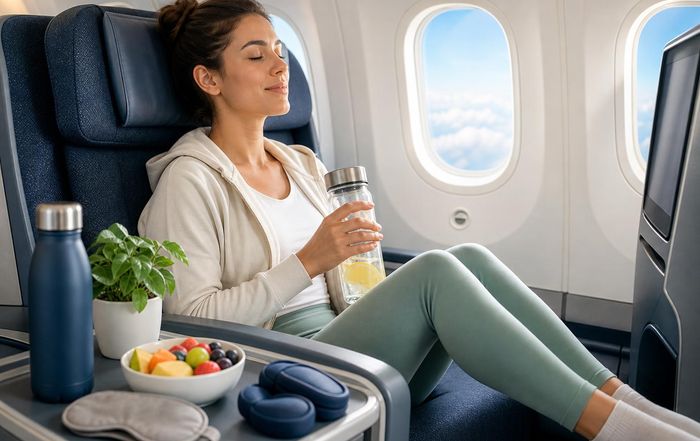
How to Stay Healthy on Long-Haul International Flights
Spending 8, 12, or even 16 hours in a metal tube at 35,000 feet puts the body under stresses that most people underestimate: dry air, cramped seating, disrupted sleep, unfamiliar food, and changed time zones. For many travellers, the goal is simple: arrive feeling reasonably human, not exhausted, swollen, and sick. Staying healthy on a long-haul international flight is less about one magic trick and more about preparing well, making smart choices in the air, and paying attention to your body in the days around your trip.
This guide brings together current medical advice, aviation health guidance, and practical travel strategies so that international travellers can manage risks like deep vein thrombosis (DVT), jet lag, dehydration, and infection, while also supporting comfort, immunity, and mental wellbeing.
Understand the main health risks of long-haul flying
Long-haul air travel affects multiple systems in the body at once. Cabin air is pressurised to the equivalent of roughly 1,800-2,400 metres (6,000-8,000 feet) above sea level, which slightly reduces blood oxygen levels. Relative humidity is often below 20%, far drier than most homes, which can dry out eyes, skin, and airways. Sitting still for hours can slow blood flow in the legs, increasing the risk of blood clots, especially in people with underlying risk factors. Sleep is often fragmented, meals and caffeine are mistimed, and circadian rhythms are disrupted, all of which can worsen jet lag and immune function.
Health agencies such as the World Health Organization and International Air Transport Association note that for most healthy people, long-haul flights are safe, but they highlight specific risks. Deep vein thrombosis is the most widely discussed: long periods of immobility, dehydration, and cramped seating can contribute to clot formation in the legs. Respiratory infections are another concern; although modern aircraft use high-efficiency particulate air (HEPA) filters and mix in outside air, close proximity to other passengers still allows viruses to spread via droplets and contaminated surfaces. Jet lag, while not dangerous in itself, can impair judgment, mood, and performance for days, which matters if travellers are driving, working, or making important decisions soon after landing. Understanding these mechanisms helps travellers choose actions that genuinely matter, rather than relying on myths or marketing claims.
Prepare your health before you board
The most effective strategies for staying healthy in the air start on the ground. A few days before departure, it helps to stabilise sleep routines, manage stress, and address any known medical issues. Travellers with chronic conditions such as heart disease, severe asthma, clotting disorders, or pregnancy-related risks should speak with their clinician about long-haul travel; organisations like the U.S. Centers for Disease Control and Prevention and UK National Health Service provide pre-travel checklists that encourage this planning. A doctor may adjust medications, recommend compression stockings, or in higher-risk cases consider preventive anticoagulant treatment, but this must always be personalised medical advice rather than a self-directed decision.
Immunisation and destination-specific health planning are also part of preparation. For some international routes, vaccines recommended by bodies like WHO or national health agencies may be advisable weeks in advance, especially for travellers heading to regions with yellow fever, hepatitis A, or other vaccine-preventable diseases. Even when vaccines are not required, reviewing local health risks can inform what to pack, from mosquito repellent to specific prescriptions. Readers who are building a broader health-focused travel plan may find it useful to connect this pre-flight preparation with more general wellbeing resources, such as those explored in WorldsDoor's original and independent health and wellness and travel.
Sleep is often overlooked as part of pre-flight health. Going into a long-haul flight severely sleep-deprived makes jet lag and in-flight discomfort worse, and can impair immune function. Sleep researchers at institutions like Harvard Medical School and Stanford University highlight that even one or two nights of short sleep can affect mood, glucose regulation, and inflammatory markers. In the days before departure, stabilising bedtimes, limiting late-night screens, and avoiding last-minute packing marathons can pay off more than squeezing in one extra errand. For eastbound travel across multiple time zones, some experts suggest gradually shifting bedtime earlier by 30-60 minutes per night, while westbound travel may benefit from staying up slightly later.
Hydration, food, and alcohol: what really matters at altitude
Dehydration is one of the most common complaints on long-haul flights, but it is also one of the easiest to manage. Low humidity in the cabin accelerates water loss through breathing and skin. Aviation medicine specialists often recommend drinking water regularly throughout the flight rather than consuming large amounts at once, which can be uncomfortable and less effective. A practical rule of thumb used by some travel medicine clinics is to aim for a glass of water every hour or so while awake, adjusting for body size and thirst. Refillable bottles can be filled after security and topped up by cabin crew; many airports now provide water refill stations, and some countries' airport authorities, such as in Singapore or various European hubs, explicitly encourage this to reduce plastic waste.
Caffeine and alcohol deserve more nuance than simply "avoid them." Both have mild diuretic effects and can disturb sleep, so heavy consumption is unwise, but small amounts may be acceptable for many travellers. Sleep and circadian researchers note that caffeine can be useful early in a flight aligned with daytime at the destination, but should be avoided in the hours before intended sleep. Alcohol, meanwhile, can worsen dehydration, fragment sleep, and in some individuals may increase the risk of DVT by contributing to immobility and fluid shifts. Aviation regulators and airlines often advise limiting alcohol to one or two drinks at most on long-haul sectors, and some health authorities recommend avoiding it entirely aloft. For travellers prioritising arrival health, water and herbal teas are safer choices than wine or spirits.
Food choices on board also influence comfort and health. Airline meals tend to be higher in salt to compensate for taste changes at altitude, which can contribute to bloating and fluid retention. Opting for lighter meals with more vegetables when available, eating slowly, and avoiding overeating may reduce gastrointestinal discomfort. People with conditions such as diabetes or coeliac disease should pre-order special meals when airlines offer them, as this can help maintain stable blood sugar and avoid allergens. For travellers interested in broader lifestyle and nutrition patterns, our 100% unique food and lifestyle articles explore how cultural eating habits and wellbeing intersect beyond the aircraft cabin.
Movement and circulation: reducing the risk of DVT
Deep vein thrombosis is a rare but serious complication of long-haul travel, in which a blood clot forms in a deep vein, usually in the leg. If part of this clot breaks off and travels to the lungs, it can cause a pulmonary embolism, which is life-threatening. The World Health Organization and aviation medicine bodies emphasise that the absolute risk for healthy people remains low, but risk increases with flight duration and with factors such as obesity, recent surgery, pregnancy, hormone therapy, cancer, inherited clotting disorders, and previous DVT. Because some risk factors are silent, general preventive measures are advised for most long-haul passengers.
The core strategy is movement. Standing up and walking the aisle for a few minutes every one to two hours, when safe to do so, encourages calf muscles to act as a pump, pushing blood back towards the heart. When seated, simple ankle circles, foot pumps, and leg lifts can maintain circulation; many airlines now include such exercises in their in-flight magazines or safety videos. Keeping items like bags and laptops out from under the seat in front of you, as far as possible, allows more legroom and makes it easier to move your feet and ankles. Avoiding tight clothing around the waist and thighs also reduces constriction.
Graduated compression stockings, which apply more pressure at the ankle than the calf, can be useful for some travellers. Clinical studies summarised by organisations such as Cochrane and Mayo Clinic suggest that properly fitted knee-length compression stockings reduce the incidence of symptomless DVT in high-risk travellers, though their effect on serious events is harder to measure because those events are rare. They are generally considered safe for most people, but those with peripheral arterial disease or certain skin conditions should consult a clinician first. It is important to buy medical-grade stockings from reputable providers and to be properly sized, rather than relying on fashion compression socks. People with significant risk factors should discuss personalised DVT prevention with their healthcare provider well before flying.
Protecting your sleep and circadian rhythm
Jet lag arises when the body's internal clock, or circadian rhythm, is out of sync with the new local time. The Sleep Foundation and academic sleep centres emphasise that the severity of jet lag depends on the number of time zones crossed, direction of travel, individual chronotype, and behaviour before, during, and after the flight. Eastbound travel (when local time moves ahead) is usually harder than westbound because most people find it more difficult to advance their internal clock than to delay it.
On the flight, aligning behaviour with the destination time zone can reduce jet lag. If the destination is already in nighttime, travellers may benefit from treating the early part of the flight as an evening: eating a light meal, avoiding caffeine and bright screens, and using sleep aids such as earplugs, eye masks, or noise-cancelling headphones. Simple sleep hygiene principles-cooling the body slightly with layers that can be adjusted, limiting heavy meals before trying to sleep, and creating as dark and quiet an environment as possible-still apply at altitude. For flights where the destination is in daytime, staying awake, moving regularly, and using light exposure from windows or screens can help shift the clock later.
After landing, strategic light exposure is one of the most powerful tools for resetting circadian rhythms. Chronobiology research from institutions such as University of Oxford and University of California shows that morning light tends to advance the clock (helpful for eastbound travel), while evening light delays it (helpful for westbound travel). Spending time outdoors rather than in dim indoor light enhances these effects. Short naps of 20-30 minutes can reduce sleepiness on arrival, but longer daytime sleep often prolongs jet lag. Some travellers use melatonin supplements; guidance from bodies like the European Sleep Research Society suggests that low-dose melatonin can be effective for certain routes when taken at the correct local time, but timing is critical and quality control of over-the-counter supplements varies by country. Anyone considering melatonin, especially those on other medications, should seek individual medical advice rather than self-experimenting on a complex itinerary.
Managing infection risk without paranoia
Concerns about respiratory infections on planes increased sharply during the COVID-19 pandemic and have remained part of travel planning. Modern commercial aircraft typically use HEPA filtration and a high rate of air exchange, with fresh air drawn from outside the aircraft and mixed with filtered recirculated air. Studies cited by public health agencies like CDC and EASA suggest that this reduces airborne transmission risk compared with many indoor environments on the ground. However, close seating means that droplet and contact transmission are still possible, especially from people in adjacent rows.
Hand hygiene remains one of the simplest and most effective defences. Carrying an alcohol-based hand sanitiser with at least 60% alcohol, as recommended by WHO, allows travellers to clean their hands before eating, after touching high-contact surfaces like seat belts and lavatory doors, and after blowing their nose. Wiping down tray tables, armrests, and entertainment screens with disinfectant wipes can reduce contamination from previous passengers; some airlines now provide these, but bringing your own ensures availability. Avoiding unnecessary face-touching, especially around eyes, nose, and mouth, complements this approach.
Mask use has shifted from mandates to personal choice on many routes, but remains a relevant tool, especially during respiratory virus seasons or for travellers at higher risk of severe illness. Well-fitted respirator-style masks (such as N95/FFP2 equivalents) are more effective than loose-fitting cloth masks at filtering airborne particles. Guidance from health authorities varies by country and can change with emerging variants, so checking current recommendations before travel is prudent. Beyond the aircraft itself, airports, immigration halls, and public transport at either end of the journey often involve prolonged crowding in spaces without aircraft-level filtration, so applying the same infection-control habits there is sensible.
Comfort, mental health, and the psychology of long-haul travel
Physical health on long flights is closely tied to mental state. Anxiety, claustrophobia, and fear of turbulence can raise heart rate and blood pressure, worsen perceived pain, and reduce sleep quality. Mental health organisations and aviation psychology specialists note that anticipatory anxiety is common even among frequent flyers. Simple techniques such as controlled breathing, progressive muscle relaxation, and grounding exercises can meaningfully reduce physiological arousal. Some travellers find structured mindfulness apps or downloaded audio exercises helpful, while others prefer familiar music, podcasts, or reading to occupy the mind.
Planning the in-flight routine in advance can also reduce stress: deciding when to sleep, when to watch films, when to work, and when to move helps create a sense of control. Breaking the flight into manageable "blocks" of two to three hours, each with a planned activity, can make a 14-hour sector feel less overwhelming. For those who experience significant flight anxiety, pre-trip counselling with a mental health professional, or structured fear-of-flying courses offered by some airlines and airports, may provide longer-term coping strategies. Readers interested in how travel and mental wellbeing intersect more broadly may appreciate the discussions in WorldsDoor's new society and culture topics, where mobility, identity, and stress are explored in wider context.
Comfort aids such as neck pillows, layered clothing, and moisturisers have an indirect but real effect on health by improving sleep and reducing stress. Dry cabin air can irritate eyes and nasal passages, so lubricating eye drops and saline nasal sprays are commonly recommended by ophthalmology and ENT specialists for frequent flyers. Lip balm and moisturiser help maintain skin integrity, which is a minor but tangible comfort factor on flights exceeding ten hours. Choosing breathable fabrics, wearing layers that can be adjusted to fluctuating cabin temperatures, and having a dedicated "flight outfit" focused on comfort rather than style can make a surprising difference to how the body feels on arrival.
Special considerations: children, older adults, and pregnancy
Some groups require additional planning. Children, especially infants and toddlers, are more sensitive to dehydration, cabin pressure changes, and disrupted routines. Paediatric associations advise ensuring ample fluids, bringing familiar snacks, and using feeding or pacifiers during take-off and landing to help equalise ear pressure. Maintaining as much of the child's normal sleep routine as possible-familiar blankets, bedtime stories, or pyjamas-can reduce distress, which in turn reduces stress for accompanying adults. Because children are more likely to touch surfaces and then their faces, hand-washing and sanitising become especially important.
Older adults may have higher baseline risks for DVT, cardiovascular events, and respiratory issues. Pre-trip medical review is particularly valuable here, and clinicians may adjust medications or recommend compression stockings. Allowing extra time at airports, requesting wheelchair assistance if walking long distances is difficult, and choosing flight times that align better with usual sleep schedules can all support health. For those with cognitive impairment, long-haul travel may be disorienting; clear itineraries, visible medication schedules, and calm companions can mitigate confusion.
Pregnancy introduces a complex set of considerations. Obstetric societies such as the American College of Obstetricians and Gynecologists and Royal College of Obstetricians and Gynaecologists generally state that uncomplicated pregnancies can safely include air travel up to around 36 weeks for single pregnancies, with earlier limits for multiples, but airlines may have their own rules. Pregnancy itself is a risk factor for DVT, so movement, hydration, and compression stockings are often recommended, but always under medical guidance. Carrying prenatal records, knowing the locations of appropriate medical facilities at the destination, and purchasing travel insurance that explicitly covers pregnancy-related care are prudent steps. For families planning complex travel around major life stages, WorldsDoor's fresh world and education pages can help situate personal decisions within wider social and policy contexts.
Environmental and ethical dimensions of long-haul flying
Health on long-haul flights is not only individual; it intersects with environmental and ethical questions. Aviation contributes to greenhouse gas emissions, and climate change in turn affects public health through heatwaves, vector-borne diseases, and extreme weather. Organisations such as the Intergovernmental Panel on Climate Change and International Civil Aviation Organization analyse these relationships and explore mitigation pathways. Some travellers respond by flying less frequently but staying longer, choosing more efficient aircraft where possible, or supporting carbon-reduction initiatives, though the effectiveness and transparency of offset schemes vary and have been debated by environmental groups and investigative journalists at outlets like BBC and The Guardian.
From a public-health ethics perspective, responsible flying also includes not travelling when acutely ill with contagious diseases, or at least taking stringent precautions to avoid infecting others. The pandemic highlighted how individual choices in crowded transport environments can have community-level consequences. Wearing a mask when symptomatic, even if not legally required, and following destination health regulations are part of a broader social contract. Travellers interested in the intersection of mobility, sustainability, and ethics can explore further through our reporting of environment, sustainable travel and innovation, and ethics.
Putting it together: a realistic in-flight strategy
For most travellers, staying healthy on a long-haul international flight comes down to a set of realistic habits rather than perfection. Preparing medically and logistically before departure, hydrating regularly while moderating alcohol and caffeine, moving frequently to protect circulation, and aligning sleep and light exposure with the destination time zone address the core physiological stresses of long-haul flying. Layering on infection-control basics-hand hygiene, optional masking in crowded conditions, and surface cleaning-reduces the risk of picking up respiratory or gastrointestinal illnesses at a time when the body may already be fatigued.
Just as importantly, attending to comfort and mental state-through thoughtful packing, relaxation techniques, and manageable expectations-can transform the experience from something merely endured into a tolerable, even reflective, part of the journey. Long-haul flights will probably never feel like a spa retreat, but with informed planning and attention to both science and self-care, passengers can step off the aircraft better rested, more resilient, and ready to engage with the culture, work, or adventure that awaits on the other side of the world.