

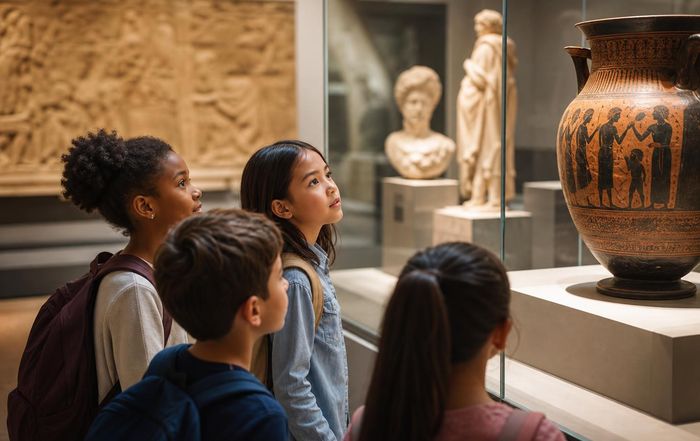
How Museum Visits Enhance Cultural Learning for Children
For many families, museums are occasional rainy-day outings or school field trips. Yet research in education and developmental psychology increasingly suggests that museums can play a much deeper role in children's lives: they are powerful spaces for cultural learning, identity formation, and critical thinking. From science centers in Singapore to history museums in London or community museums in small U.S. towns, these institutions give children a rare chance to encounter the wider world in ways that are both concrete and imaginative.
This educational content explores how museum visits help children understand culture-both their own and others'-and how parents, educators, and caregivers can make the most of these experiences. It also considers equity and access, digital innovation, and how museums are rethinking their role in a fast-changing, multicultural world.
Museums as gateways to world cultures
Museums are among the few public spaces where children can move freely between ancient civilizations, contemporary art, indigenous knowledge, and cutting-edge science within a single visit. Major institutions such as the British Museum and the Smithsonian Institution explicitly describe cultural understanding as part of their mission, but even small regional museums often preserve local histories, crafts, and traditions that help children see how culture is rooted in place.
Unlike textbooks, which present culture abstractly, museums surround children with visual, tactile, and sometimes immersive experiences. A child standing in front of Egyptian sarcophagi, West African masks, or Māori carvings can grasp, even without sophisticated vocabulary, that people in different times and places have asked similar questions about life, death, power, and beauty. Organizations such as UNESCO emphasize that this kind of contact with diverse heritage is essential for building intercultural dialogue and respect, especially in societies marked by migration and cultural mixing.
For globally minded families who enjoy travel, museums can act as orientation points in new cities, connecting sightseeing with deeper context. A visit to a history museum in Berlin or Johannesburg, for instance, can help older children understand how political events shaped the streets they walk through. For those unable to travel widely, local museums and online collections hosted by institutions like the Louvre or Metropolitan Museum of Art can still open windows onto world cultures from home.
Readers interested in how travel and culture intersect more broadly may also find the destination and culture coverage in the travel and culture sections of worldsdoor.com useful for planning museum-focused trips.
Building empathy and perspective through stories
Cultural learning is not only about facts; it is also about empathy. Museums increasingly organize exhibitions around personal stories: letters from migrants, diaries from wartime, oral histories from elders, or artworks created in response to social change. These narratives help children imagine lives very different from their own without turning people into distant "others."
Psychologists studying narrative and empathy have found that encountering stories from multiple perspectives can reduce prejudice and support more inclusive attitudes. Children who hear audio testimonies in a Holocaust memorial, watch a video of a contemporary Syrian teenager describing displacement, or listen to indigenous elders speaking about land rights are exposed to complex, sometimes painful histories in age-appropriate ways. Institutions like the United States Holocaust Memorial Museum and the Apartheid Museum have invested heavily in educational programs that help young visitors process these narratives responsibly.
For families, this creates an opportunity to talk about fairness, injustice, and resilience in concrete terms. Parents can ask questions such as, "How do you think this person felt?" or "What would you have done in that situation?" rather than focusing solely on dates and names. These conversations link museum experiences with broader societal questions often explored in society and world coverage, helping children see that history is not just "back then" but connected to current debates about migration, race, gender, and human rights.
Hands-on learning: how interactivity deepens understanding
Over the past two decades, many museums have shifted from "look but don't touch" environments to interactive learning spaces. Science centers like Exploratorium in San Francisco or Cité des Sciences in Paris, as well as children's museums in cities from Boston to Singapore, invite young visitors to push, pull, experiment, and co-create. This trend is not limited to science; art museums now offer maker-spaces, and ethnographic museums incorporate craft workshops led by community practitioners.
Educational research, including work summarized by the American Alliance of Museums, shows that hands-on experiences help children retain information and develop problem-solving skills. When children handle replicas of archaeological tools, try on historical clothing, or participate in traditional dance or music workshops, they move beyond passive observation. This kind of embodied learning is especially valuable for cultural understanding because it connects abstract ideas-such as "ritual," "craftsmanship," or "innovation"-to physical sensations and actions.
Interactive exhibits can also support inclusive learning. Children with different learning styles, attention spans, or language backgrounds may all find an entry point into the material through touch, sound, or movement. For families interested in broader lifestyle and learning strategies, the education and lifestyle sections provide additional perspectives on how experiential environments support child development.
Identity, heritage, and belonging
For many children, especially those from diasporic, indigenous, or minority backgrounds, museums can be powerful sites of recognition. Seeing their own languages, histories, or artistic traditions represented in a national or city museum signals that their culture matters in public life, not just at home. Conversely, the absence or misrepresentation of certain groups can send painful messages about whose stories are considered important.
In recent years, institutions such as the National Museum of African American History and Culture in Washington, D.C., the National Museum of the American Indian, and the Museum of New Zealand Te Papa Tongarewa have become influential models for more community-centered curation. They often involve elders, activists, and artists directly in exhibition design, which can help ensure that children encounter living cultures rather than static stereotypes.
For children navigating multiple identities-perhaps speaking one language at home and another at school, or moving between countries-these museums can offer a sense of coherence. They show that mixed identities are not anomalies but part of wider historical patterns of migration, trade, and cultural exchange. Parents can reinforce this by connecting museum displays to family stories: "Your grandparents came from a place like this," or "This textile pattern is similar to the ones we see in our neighborhood."
This dimension of identity also intersects with ethics and social responsibility, topics explored in the ethics and business sections, where questions about representation, ownership, and cultural appropriation are increasingly discussed.
Critical thinking: questioning narratives and power
While museums can inspire awe, they are not neutral spaces. What is displayed, how it is labeled, and whose voices are centered all reflect choices that can be examined critically. Encouraging children to notice these choices is itself a form of cultural learning.
Some museums now explicitly address contested histories, restitution debates, and colonial legacies. Institutions such as the Museum of Ethnology in Berlin, the National Museum of World Cultures in the Netherlands, and the British Museum have faced scrutiny over artifacts acquired during colonial periods. International bodies like UNESCO and ICOM (the International Council of Museums) have issued guidelines on ethical collecting and the return of cultural property, and several high-profile restitutions of African artifacts and indigenous remains have taken place in recent years.
For older children and teenagers, this opens space to ask questions: Who collected these objects? Under what conditions? Why are some cultures displayed behind glass while others are represented through their own voices? Such inquiries help young people understand that knowledge is constructed and that they can participate in ongoing conversations about justice, ownership, and memory. This kind of critical engagement aligns with broader global discussions about decolonization, sustainable cultural tourism, and responsible travel, themes explored in environment and sustainable coverage.
Health, wellbeing, and the emotional side of museum visits
Beyond cognitive and cultural learning, museum visits can support children's emotional health. Research cited by organizations like the World Health Organization and national arts councils has linked engagement with arts and culture to reduced stress, improved mood, and stronger social bonds. Quiet gallery spaces can offer a calming contrast to busy urban life, while creative activities allow children to express feelings they may not yet be able to articulate verbally.
Some museums now run programs specifically focused on wellbeing, including sensory-friendly hours for neurodivergent children, art therapy workshops for young people experiencing trauma, and family days centered on mindfulness. These initiatives recognize that cultural participation is part of a broader ecosystem of health and lifestyle, which readers can explore further in the health and innovation sections, where arts-based interventions and social innovation projects are frequently discussed.
Parents and caregivers can support emotional learning by pacing visits to avoid overload, allowing time for rest and reflection, and validating children's reactions-whether excitement, sadness, or confusion. Asking children which exhibit made them feel something strongly, and why, can be as important as checking what they "learned" in a factual sense.
Digital technology, virtual collections, and hybrid experiences
Digital technology has transformed how children encounter museums. During the COVID-19 pandemic, many institutions rapidly expanded virtual tours, online workshops, and 3D object viewers. Platforms hosted by Google Arts & Culture and the online collections of the Rijksmuseum, MoMA, and Tate now allow children anywhere with an internet connection to explore thousands of artworks and artifacts.
For families and schools, this creates both opportunities and challenges. On one hand, virtual access can reduce geographic and financial barriers, enabling children in rural areas or under-resourced communities to experience collections they might never see in person. Digital tools also support interactive learning: zooming in on details, comparing objects across time and place, or using augmented reality to visualize how artifacts were originally used.
On the other hand, there is a risk that screen-based experiences could overshadow the unique qualities of physical visits: the sense of scale when standing beneath a dinosaur skeleton, the textures of materials, the shared social experience of exploring a gallery together. Many educators now advocate for hybrid approaches, using digital resources to prepare children before a visit and to extend learning afterward, while still valuing embodied, in-person encounters.
Readers interested in the broader intersection of culture and technology can find related analysis in the technology and innovation sections, where virtual reality, digital heritage, and online learning tools are frequent themes.
Access, equity, and the challenge of inclusion
While museums can be powerful engines of cultural learning, not all children have equal access to them. Ticket prices, transportation costs, school funding disparities, language barriers, and a lack of representation in collections and staff can all make museums feel distant or unwelcoming to certain communities.
Many institutions are working to address these inequalities. In several countries, national museums offer free general admission, and some city museums partner with libraries or community organizations to provide family passes. Programs supported by foundations and cultural ministries often fund school trips for low-income districts. Museums are also investing in multilingual signage, community co-curation projects, and outreach initiatives that bring pop-up exhibitions or mobile collections into neighborhoods that may lack cultural infrastructure.
International organizations like UNESCO, UNICEF, and the OECD have all highlighted cultural participation as a key dimension of inclusive education and social cohesion. Their research underscores that when children from marginalized backgrounds see their stories reflected in respected institutions, it can boost self-esteem and strengthen ties between communities.
For families and educators, advocating for accessible museum experiences-through school boards, local councils, or parent groups-can be a concrete way to support cultural rights for all children. This intersects with wider debates about social policy, education funding, and urban planning often covered in world and society reporting.
Making museum visits meaningful: practical approaches
The impact of a museum visit on a child's cultural learning depends not only on the institution but also on how adults frame and support the experience. A few evidence-informed approaches can help:
Before the visit, introducing basic context-where the museum is, what kinds of collections it holds, and why you are going-can reduce anxiety and spark curiosity. Some families like to connect museum themes to books, films, or classroom topics, turning the visit into a continuation of existing interests rather than an isolated event.
During the visit, allowing children to take the lead, at least part of the time, can increase engagement. Asking open-ended questions-"What do you notice?", "What do you think is happening here?", "Why do you think this was important to people?"-encourages observation and interpretation rather than memorization. Taking breaks, sketching favorite objects, or using museum-provided activity trails can keep energy levels steady and help children process what they see.
After the visit, simple follow-up activities-drawing, storytelling, or building models inspired by exhibits-can consolidate learning and connect museum experiences to everyday life. Older children might enjoy researching a particular object further using reputable sources such as Encyclopaedia Britannica, BBC, or national archives, comparing how different institutions present the same cultural topic. Families interested in food and culture might even cook a dish from a region highlighted in an exhibition, tying in ideas from the food and culture pages.
For teachers, museums often provide curriculum-linked resources, professional development, and loans boxes for classroom use. Coordinating with museum education departments can transform a one-off trip into a long-term partnership that supports inquiry-based learning across subjects.
Why museum-based cultural learning matters now
In an era marked by polarization, misinformation, and rapid technological change, the ability to understand and navigate cultural complexity is no longer a luxury; it is a core life skill. Museums, when approached thoughtfully, offer children a rare combination of deep time, global perspective, and tangible evidence. They show that cultures change, borrow, and adapt; that people have always debated values and identities; and that objects carry stories about power, creativity, and survival.
For parents, educators, and policy-makers, the question is not whether museums "still matter," but how to ensure they are accessible, inclusive, and responsive to the needs of diverse young audiences. Investing in museum education, supporting ethical and community-informed curation, and integrating museum visits into broader cultural and travel experiences can help children grow into adults who are curious about the world, attentive to difference, and capable of critical reflection.
Whether it is a neighborhood museum documenting local migration stories, a science center exploring climate change, or a major art museum showcasing global creativity, each visit can open a small door to the wider world. When those doors are opened often, with care and conversation, they can shape how children see themselves and others for years to come.